
← Back
05/21/1948 • 11 views

Television's First Modern News Anchor Debuts on May 21, 1948
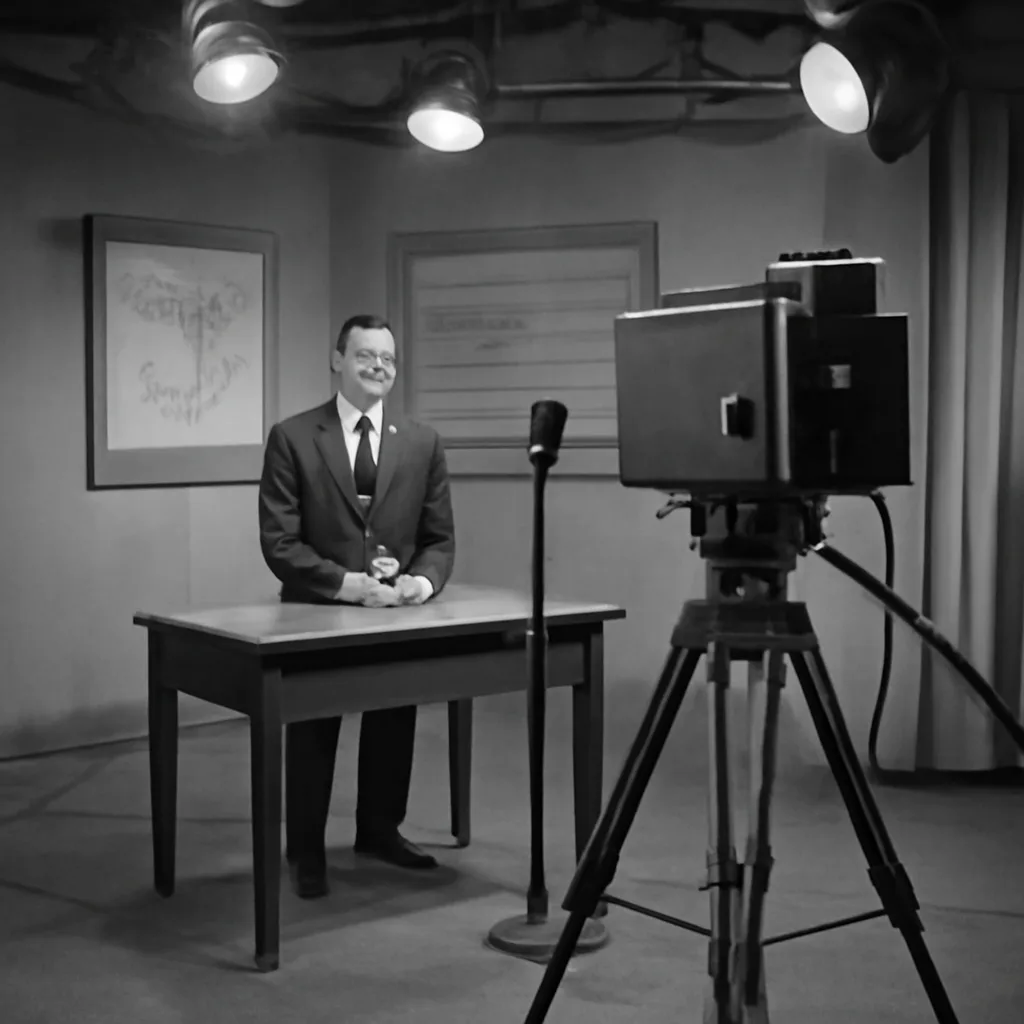
Black-and-white 1940s television studio with a suited news presenter standing beside a camera and control equipment, studio lights overhead, and a backdrop suggesting maps or headlines.

On May 21, 1948, television broadcaster John Daly anchored the first regularly scheduled television news program presented in a format recognizable today, marking a key step in the shift of news delivery from radio and print to television.


On May 21, 1948, John Daly anchored a program that is widely recognized as the first regular television news broadcast presented in a modern anchor-led format. The program, aired by ABC from WJZ-TV in New York, followed developments in national and international news and used studio presentation techniques — a single presenter introducing and summarizing filmed and live reports — that would become standard for television journalism.

Context: By the late 1940s, television was transitioning from experimental broadcasts to scheduled programming as stations resumed and expanded service after World War II. Radio remained the dominant broadcast news medium, but television’s visual capacity suggested new possibilities for presenting news. Early television news often consisted of filmed newsreels, short announcements, or adaptations of radio scripts. The May 1948 broadcasts featuring John Daly are significant because they demonstrate the consolidation of a presenter-centered format: an anchor in the studio framing stories and guiding viewers through disparate reports.

Format and practices: The emerging anchor role combined elements of radio newscasting, newsreel narration, and live studio presentation. Anchors introduced filmed segments, read headlines or summaries, and provided connective narration. Early television news depended heavily on newsreel footage shot and processed for theatrical release, wire reports adapted for on-air reading, and occasional live interviews or remote feeds when available. Production values were modest by later standards: single or few camera setups, basic studio lighting, and limited editing capability. Nevertheless, the notion of a central, on-screen journalist who connected stories and provided continuity became a defining feature.

Significance: The anchor-led format helped shape audience expectations for broadcast news and established routines — opening headlines, scripted transitions, and the visible presence of a journalist as intermediary between events and viewers. Over subsequent decades television news would professionalize, expand its newsgathering infrastructure, and develop distinctive visual and editorial conventions, but the late-1940s anchor broadcasts represent an important origin point for that trajectory.

Attribution and caveats: Historical accounts identify several early television news efforts and pioneering figures; some scholarly and journalistic histories credit Jay Nelson, Douglas Edwards, and others with early televised newscasts in various forms. John Daly is often cited in sources as a prominent early television anchor associated with broadcasts in 1948. The precise designation of “first modern television news anchor” can vary depending on how one defines “modern” (regular scheduling, anchor-centric presentation, use of film segments, etc.) and on whether local or experimental broadcasts are counted. Where definitions differ, historians note a cluster of innovations in the 1947–1949 period rather than a single, unambiguous inaugural program.

Legacy: The anchor concept introduced in this period became central to television journalism’s identity. By the 1950s and 1960s, network evening newscasts with named anchors reached nationwide audiences and established journalistic norms, visual style, and editorial authority that persisted into later eras. The May 21, 1948 broadcasts are therefore best understood as a formative moment within a broader shift from radio and print primacy toward television as a dominant news medium.

Share this

Email Share on X Facebook Reddit

Did this surprise you?