
← Back
03/22/1989 • 7 views

Clint Malarchuk Survives a Devastating Neck Injury During NHL Game
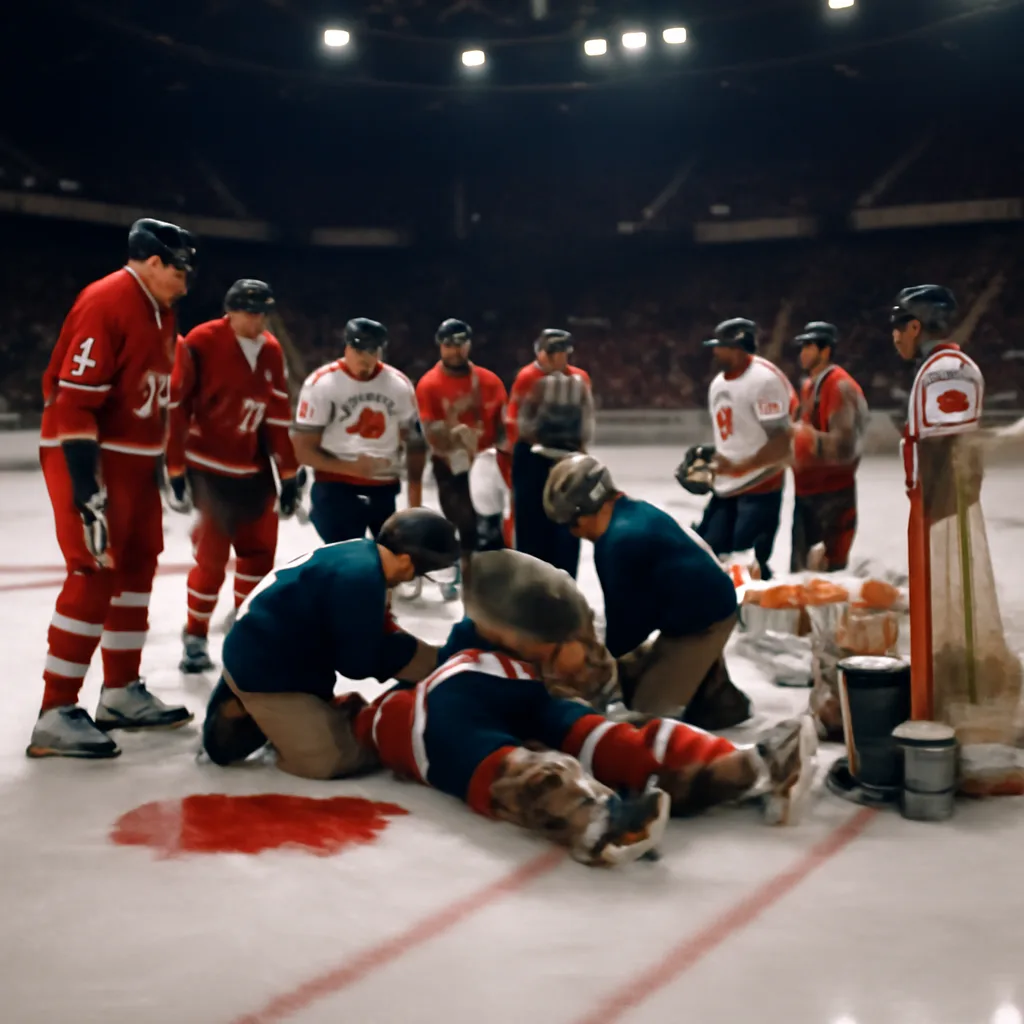
Ice-rink scene showing emergency responders and players gathered around a goaltender on the ice during a 1980s-era NHL game, with blood on the ice and arena seating in the background.

On March 22, 1989, Buffalo Sabres goaltender Clint Malarchuk suffered a life-threatening neck laceration when a skate blade cut his jugular vein during a game against the Quebec Nordiques; quick action by teammates, trainers and doctors saved his life.


On March 22, 1989, in a National Hockey League regular-season game at Buffalo Memorial Auditorium, Buffalo Sabres goaltender Clint Malarchuk sustained a near-fatal neck injury when the skate of opposing forward Steve Tuttle accidentally struck him during a play behind the Sabres’ net. The blade severed or partially severed Malarchuk’s right internal jugular vein and cut his carotid artery sheath, producing massive external bleeding that stunned players, officials and spectators.

The injury occurred late in the first period. Television replays and contemporaneous reports show Malarchuk collapsing to the ice and blood pooling rapidly on the playing surface. His teammates immediately attempted to apply pressure despite the chaos; Sabres trainer Jim Pizzutelli and team physician Dr. Terry Malone reached the ice within moments. Malone and Pizzutelli applied direct pressure and improvised tourniquets while the arena’s medical team prepared to transport Malarchuk to a hospital. A co-worker and later accounts make clear that prompt, decisive action to control bleeding and maintain airways was critical to his survival.

Malarchuk was rushed by ambulance to a nearby hospital where surgeons repaired the damage. He lost a significant amount of blood but did not die; records and news coverage from the time indicate he was stabilized and released from acute peril. He recovered enough to return to play in the NHL later that season, though the incident had lasting physical and psychological effects.

The injury prompted immediate and long-term conversations about player safety and emergency preparedness in professional hockey. Teams reviewed medical protocols, on-ice emergency response and equipment considerations. While the NHL did not immediately mandate systemic equipment changes—Malarchuk was not wearing a neck guard at the time—the event raised awareness about the risk of skate-blade injuries and contributed to discussion of protective options such as neck guards, improved training for trainers and quicker access to advanced medical care during games.

Malarchuk’s personal aftermath included ongoing physical recovery and mental-health challenges. In later interviews and public statements (which are quoted in many contemporary accounts), he discussed symptoms consistent with post-traumatic stress. He continued his professional hockey career and later worked as a goalkeeping coach, remaining involved in the sport.

The March 22, 1989 incident remains one of the most widely reported on-ice medical emergencies in NHL history, cited in discussions of both the extreme risks of skate-blade injuries and the importance of rapid medical intervention during sporting events. Some details—such as exact surgical descriptions—are medical in nature and vary across sources; the core fact of a severe neck laceration from an opponent’s skate and Malarchuk’s survival after urgent care is well documented.

Share this

Email Share on X Facebook Reddit

Did this surprise you?