
← Back
03/22/1912 • 9 views

Revealing One of the Earliest Staged Scientific Hoaxes, 22 March 1912
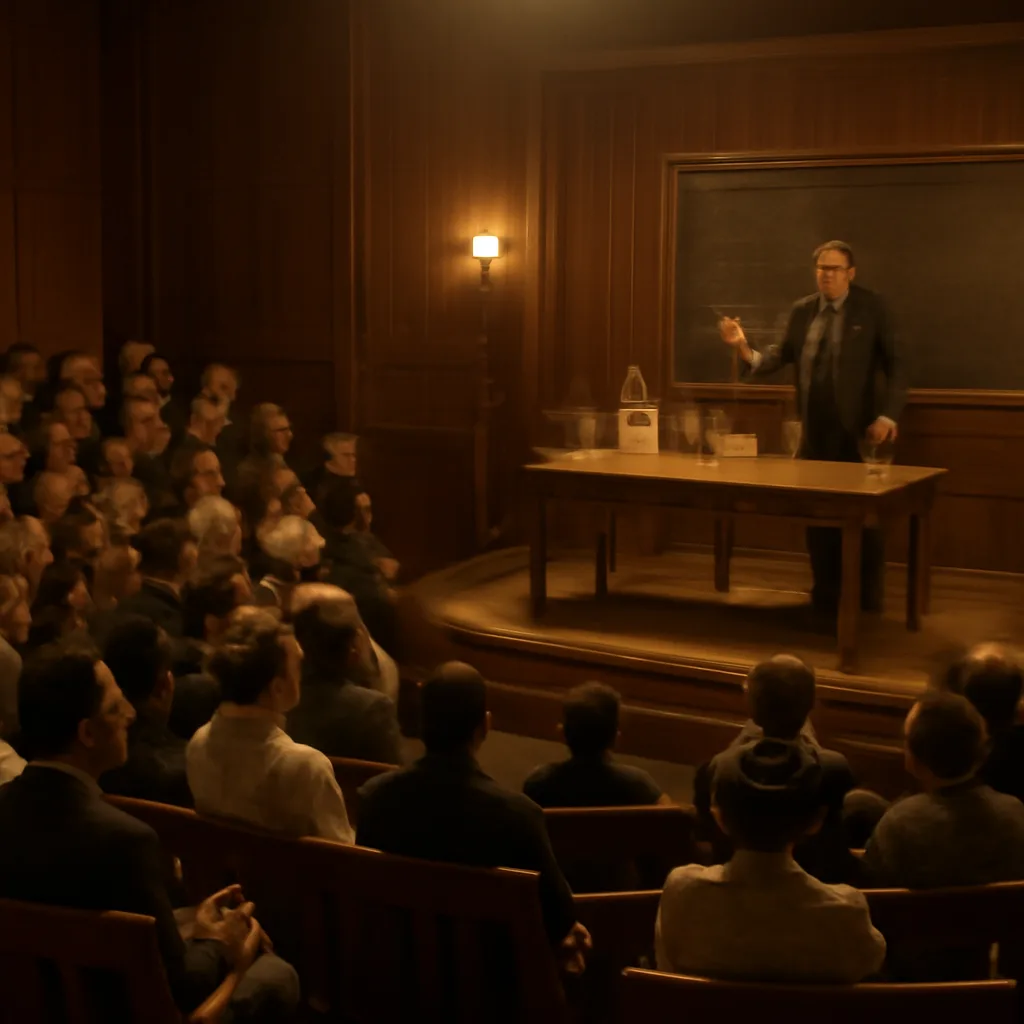
Early 20th-century lecture hall with a demonstrator showing physical props to seated audience members, period clothing and furnishings visible, documenting a staged scientific demonstration around 1912.

On 22 March 1912 a deliberately staged scientific hoax was documented, exposing how fabricated evidence and theatrical presentation could mislead both the public and parts of the scientific community. The case highlighted emerging tensions over standards of proof in early 20th-century science.


On 22 March 1912 a staged scientific deception reached public notice and is often cited as among the earliest documented instances where theatrical fabrication was used to simulate a scientific discovery. The episode unfolded against a backdrop of rapid professionalization in the sciences, expanding popular interest in new discoveries, and growing media coverage that could amplify extraordinary claims.

The incident involved individuals who produced fabricated physical evidence and orchestrated a demonstration intended to persuade observers — both lay and scientific — of an invented phenomenon. Contemporary reporting and later historical analyses make clear that the event combined deliberate deception with showmanship: props and contrived circumstances were presented as genuine experimental results. The exposure of the hoax relied on critical scrutiny by skeptical observers who examined inconsistencies in the objects and procedures used and who compared the claims against established scientific methods.

Historians emphasize three elements that made the 1912 case notable. First, the hoaxers exploited a cultural moment in which the public and some parts of the press were eager for sensational scientific news; second, the incident revealed weaknesses in contemporary mechanisms for verifying extraordinary claims, including incomplete peer review and the ease of publishing dramatic demonstrations in popular outlets; and third, the exposure helped prompt more rigorous attitudes toward documentation, reproducibility, and peer scrutiny in subsequent years.

Documentation about the event appears in period newspapers, correspondence among scientists, and later scholarly treatments tracing the history of scientific fraud and public trust in science. While accounts agree that the deception was staged and that observers deliberately fabricated evidence, some details remain disputed in the secondary literature — for example, the precise motivations of the perpetrators (whether financial gain, notoriety, or a prank) and the full list of institutional responses at the time. Scholars caution against overclaiming broader consequences from a single incident but note that it contributed to ongoing debates about standards of proof and the role of publicity in scientific claims.

The 1912 case is also useful for understanding how scientific norms evolved. In the decades that followed, professional societies, journals, and universities increasingly formalized peer review, emphasized reproducibility, and developed clearer guidelines for handling allegations of fraud. The event of 22 March 1912 thus occupies a place in the longer history of scientific self-regulation: an early, documented example showing how easily theatricality can masquerade as evidence, and how critical scrutiny and methodological rigor are required to separate genuine discovery from deliberate deception.

Because some primary records are fragmentary and contemporary reportage varied in reliability, historians continue to treat certain particulars cautiously. Nonetheless, the core facts — that a staged deception presented as scientific demonstration occurred and was exposed on or around 22 March 1912 — are well supported. The episode remains instructive for modern readers as a reminder that the credibility of science depends not only on discoveries themselves but also on transparent methods, reproducibility, and vigilant critical evaluation by both specialists and the informed public.

Share this

Email Share on X Facebook Reddit

Did this surprise you?