An 1894 Parisian Theater Panic Often Cited as the First Mass Hypnosis Case
On 12 February 1894, reports from Paris describe an episode in which a large audience in a popular theater fell into a trance-like state during a performance—an event contemporaries and some later writers labeled an instance of 'mass hypnosis', though interpretations have varied.
On 12 February 1894 a widely reported incident in Paris drew attention from physicians, journalists and early psychologists as a possible example of collective suggestion or “mass hypnosis” in a public entertainment venue. The episode occurred in the context of fin-de-siècle Paris, where popular theaters, variety shows and public lectures regularly brought together large urban audiences and where interest in hypnosis, suggestion and nervous disorders was high.
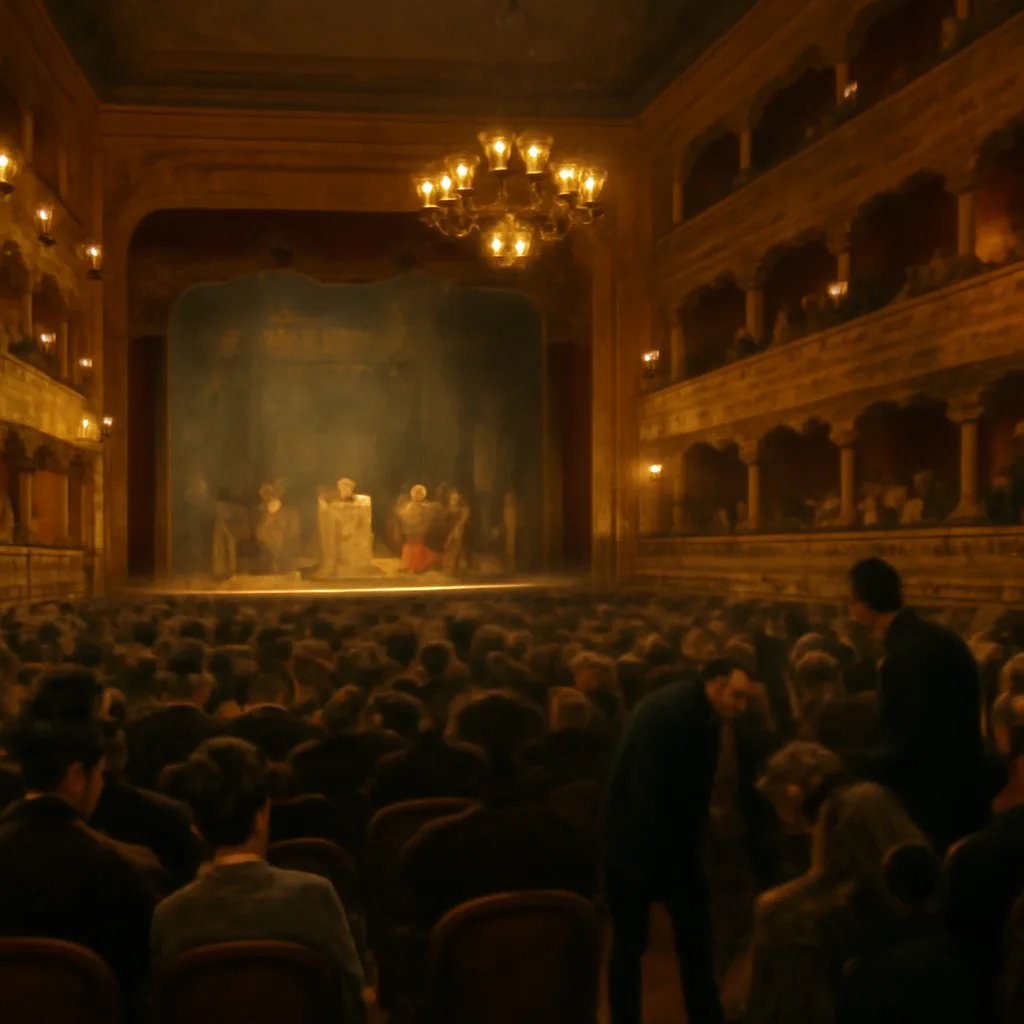
Contemporary press accounts describe that, during a performance at a well-attended Parisian theater, a portion of the audience became unusually still, some appearing to faint or enter trance-like states. Physicians called to the scene examined several affected people and reported symptoms such as pallor, unresponsiveness, and a tendency to follow suggested commands or mimic others. The events were reported across French and European newspapers and were discussed in medical journals and popular periodicals alongside debates about hysteria, suggestion and crowd psychology.
Scholars of the period note that the late nineteenth century was a moment when hypnotism—stemming from the work of Mesmer earlier in the century and later refined by figures such as J. M. Charcot, Hippolyte Bernheim and Ambroise-Auguste Liébeault—had both medical advocates and skeptical critics. Theories of “suggestion” became influential: Bernheim and the Nancy School emphasized suggestion as a normal psychological mechanism that could induce somatic changes, while Charcot and his followers at the Salpêtrière linked hypnotic phenomena to underlying neurological or pathological states. These competing frameworks shaped interpretations of the 1894 incident.
Important methodological caveats apply. Primary sources from the time are journalistic and medical reports that often mixed observation with sensational language, and exact details—such as the number of people affected, the duration of their symptoms, and whether deliberate suggestion by an actor or speaker precipitated the episode—vary between accounts. Some contemporary observers framed the event as a form of mass hysteria or moral panic; others saw it as evidence of the contagious power of suggestion in crowded spaces. Later historians have treated the incident cautiously, acknowledging its significance for public and professional anxieties about suggestion while avoiding definitive claims that it was an experimentally produced or scientifically documented case of mass hypnosis by modern standards.
The 1894 episode mattered because it fed broader cultural conversations about the vulnerability of crowds, the authority of medical experts, and the social reach of new forms of entertainment and public oratory. It also contributed to the professionalization of psychology and neurology: specialists debated whether such events were best understood as psychiatric pathology, social contagion, or psychological suggestion. This debate influenced subsequent research into crowd behavior, suggestibility and the ethical limits of therapeutic and performative uses of hypnotic techniques.
In sum, the event of 12 February 1894 is often cited as an early documented instance in which a theater audience exhibited trance-like, collectively patterned reactions that contemporaries associated with hypnosis or suggestion. Modern historians treat the reports as historically significant but ambiguous: they reflect contemporary theories and anxieties about suggestion more than they constitute unambiguous empirical demonstration of mass hypnosis by current scientific criteria.