
← Back
02/12/2008 • 6 views

Vatican Issues First Official Statement on Extraterrestrial Life (2008)
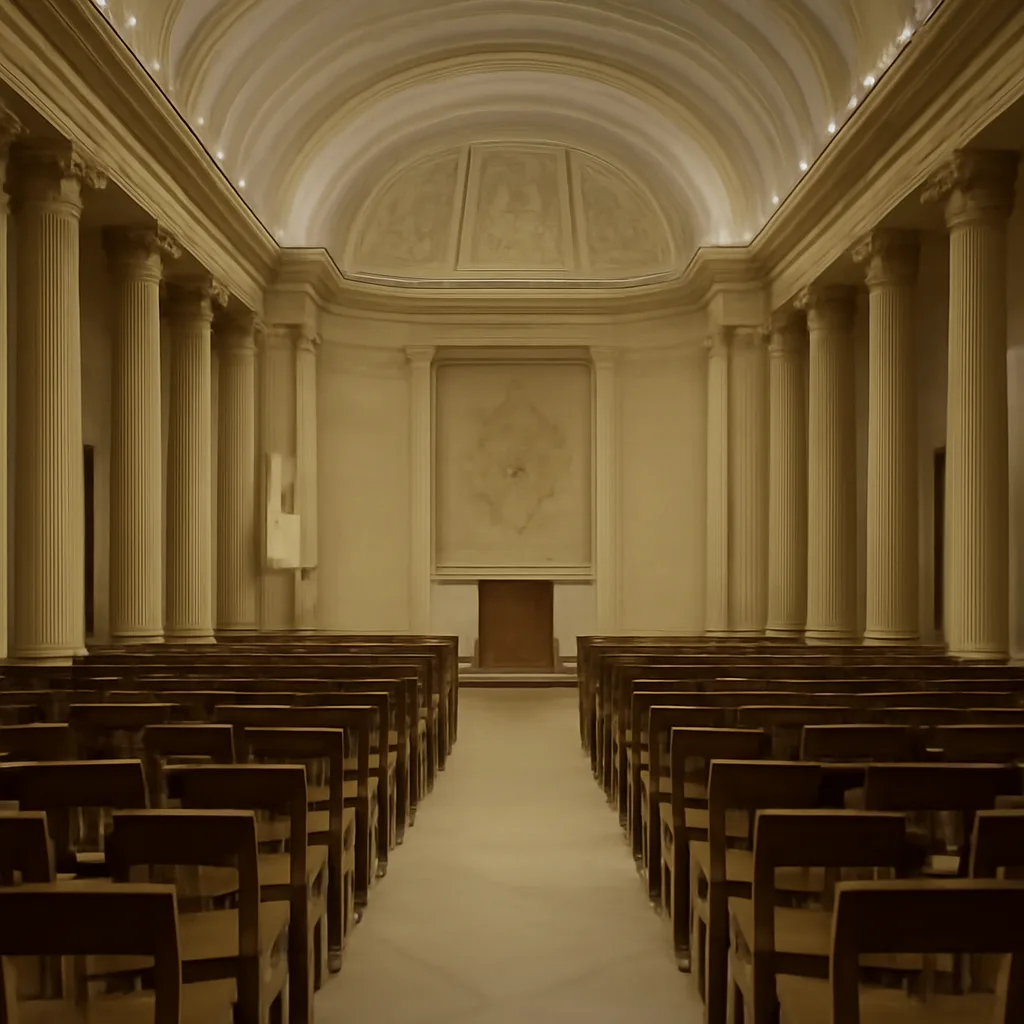
Interior view of the Pontifical Academy of Sciences meeting hall at the Vatican, empty lectern and rows of chairs with papal flags and classical architecture visible.

On 12 February 2008 the Vatican’s Pontifical Academy of Sciences and related Vatican offices publicly addressed the possibility of extraterrestrial life for the first time in an official capacity, framing the question in theological and scientific terms without endorsing any specific discovery.


On 12 February 2008 the Vatican made what has been widely reported as its first formal public statement engaging the question of extraterrestrial life. The statement emerged from a symposium hosted by the Pontifical Academy of Sciences and reflected contributions from theologians and scientists who considered how the existence of life beyond Earth would intersect with Roman Catholic doctrine and scientific understanding.

Context

Discussion of life beyond Earth had occasionally surfaced within Catholic thought and among individual clergy for decades, but the 2008 event marked a coordinated, institutional engagement. The Pontifical Academy of Sciences — an advisory body to the Holy See composed of scholars across the natural sciences — convened experts to examine astrobiology from multiple perspectives. The gathering signaled that the Vatican recognized the scientific legitimacy of the search for extraterrestrial life and wished to clarify theological implications.

Content and emphases

The Vatican’s communication was careful and measured. It did not claim that extraterrestrial life had been discovered. Instead, speakers and official reflections emphasized two main themes: first, that scientific inquiry into extraterrestrial life is a legitimate and valuable pursuit; and second, that Catholic theology could accommodate such a discovery without necessitating doctrinal upheaval. Participants explored analogies and theological questions — for example, how doctrines about creation, incarnation, and salvation would be interpreted if nonhuman life were confirmed — but no authoritative doctrinal pronouncements were issued.

Significance

The 2008 statement is significant for several reasons. Institutionally, it showed the Vatican engaging proactively with contemporary science rather than remaining silent or dismissive. Theologically, it opened public conversation about how core Catholic beliefs might relate to cosmic discoveries, signaling a willingness among some Church intellectuals to integrate new empirical findings into ongoing theological reflection. Culturally, the statement contributed to broader public debates by lending a major religious institution’s voice to questions typically discussed in scientific and philosophical contexts.

Caveats and later developments

Accounts of the 2008 statement sometimes conflate remarks by individual clerics or scientists with binding Church teaching; readers should not assume the Vatican altered doctrine at that time. The event represented scholarly and pastoral engagement rather than a change in magisterial pronouncements. In subsequent years, Vatican officials and theologians have continued to comment on astrobiology and extraterrestrial life in conferences, interviews, and writings, reflecting an ongoing dialogue rather than a single definitive judgment.

Conclusion

The 12 February 2008 Vatican statement stands as an important early institutional acknowledgment that the search for life beyond Earth is both scientifically credible and theologically relevant. It framed the issue in terms of inquiry and reflection rather than dogmatic response, laying groundwork for continued conversation between scientists, theologians, and the wider public about humanity’s place in the universe.

Share this

Email Share on X Facebook Reddit

Did this surprise you?