
← Back
05/07/1891 • 4 views

Congress Expands Yellowstone to Protect Its Geothermal Wonders (May 7, 1891)
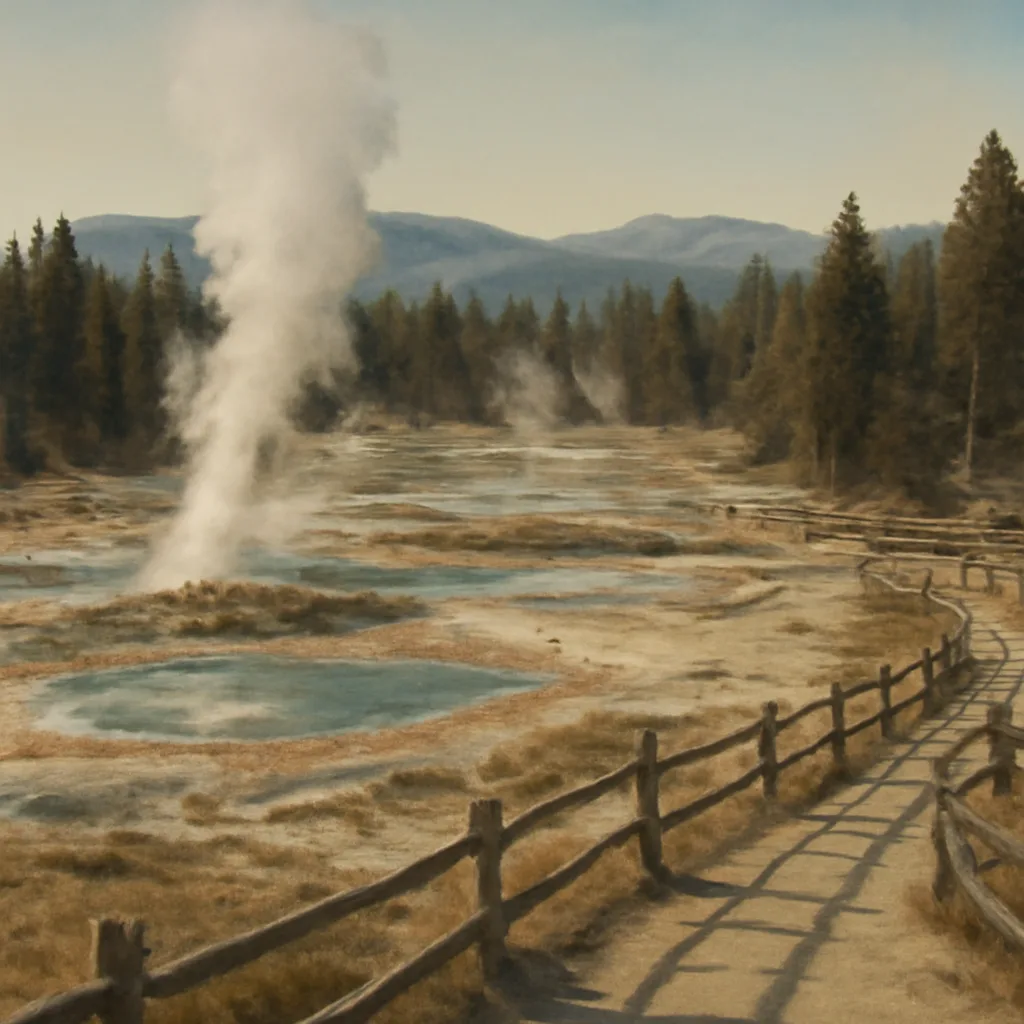
Historic-era wide view of Yellowstone landscape c. 1890s showing geothermal steam rising from hot springs amid pine forests and mountains, with no identifiable people.

On May 7, 1891, the U.S. government enlarged the Yellowstone area to include surrounding forest and watershed, strengthening protections for the park’s geothermal features and wildlife amid rising threats from development and exploitation.


On May 7, 1891, legislation signed by President Benjamin Harrison expanded the area of federal protection around Yellowstone, the nation’s first national park. Congress approved additions that incorporated adjacent forests and watersheds to provide more comprehensive protection for the park’s distinctive geothermal features, landscapes, and wildlife. The action reflected growing recognition that protecting geothermal basins alone was insufficient without safeguarding the surrounding environment that influenced water flow, wildlife movements, and access routes.

Yellowstone had been established by the 1872 Act of Congress as “a public park or pleasuring-ground for the benefit and enjoyment of the people.” In the two decades after its creation, pressures increased from private interests, settlers, miners, timber harvesters, and hunters seeking access to valuable resources within and near park boundaries. Early park superintendents and conservation-minded lawmakers argued that enlarging the park would help prevent resource damage and poaching and would secure the park’s scenic and scientific values for the public.

The 1891 enlargement did not create a modern national-park management system—such an administrative structure developed gradually over the following decades—but it did mark an important policy shift. By extending federal protection beyond the original thermal basins and known scenic enclaves, Congress acknowledged the interconnected nature of ecosystems and the need for landscape-scale stewardship. The move also set precedents for later boundary adjustments and additions to other public lands intended to preserve ecological integrity rather than only isolated attractions.

Implementation and enforcement, however, remained uneven. Park administration in the late 19th century faced limited funding, sparse staffing, and jurisdictional ambiguity. Rangers and civilian administrators struggled to enforce rules across the expanded, rugged terrain. Conflicts continued with commercial interests and local settlers who contested federal authority. Over time, evolving legislation, administrative reforms, and the establishment of the National Park Service in 1916 would professionalize management and clarify responsibilities, but the 1891 expansion stands as an early legislative step toward those later developments.

Historians view the 1891 expansion as part of a broader conservation movement that included forest reserves and wildlife protection efforts in the late 19th century. While the specific acreage and boundary descriptions in early documents reflect the legal practices of the era, the essential result was a shift in federal intent: toward conserving not only landmark features but the environmental contexts that sustain them. That principle—protecting whole ecosystems rather than isolated sites—remains central to contemporary park policy and restoration efforts at Yellowstone and elsewhere.

Because recordkeeping and cartographic standards of the period differ from modern practices, some details about exact boundary lines and administrative authority during the immediate post-enlargement years are treated cautiously by scholars. Nonetheless, the May 7, 1891, action is reliably recorded as a key moment in the park’s early legal history and in the development of federal conservation policy in the United States.

Share this

Email Share on X Facebook Reddit

Did this surprise you?