
05/07/1945 • 7 views
Germany Surrenders, Ending World War II in Europe
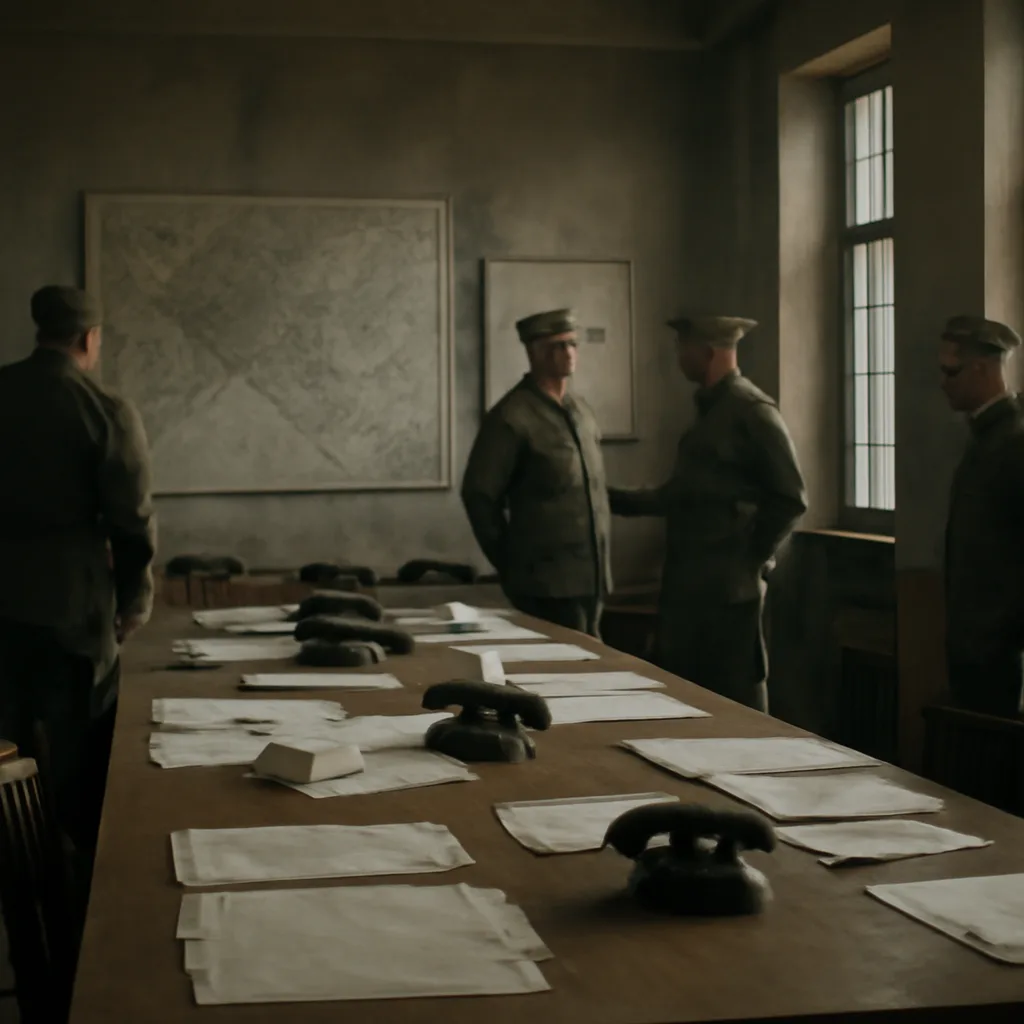
On 7 May 1945 Germany signed an unconditional surrender that took effect on 8 May, bringing active combat in Europe to an end and marking Victory in Europe (VE) Day amid Allied occupation and the continent’s vast postwar devastation.
By early May 1945, Nazi Germany was militarily defeated. Berlin had fallen to Soviet forces in late April following Adolf Hitler’s suicide on 30 April. German forces in Italy, Western Europe and elsewhere were in disarray, with many commanders seeking to surrender to Western Allies rather than to the Red Army. The signed surrender ended organized German resistance on the continent, though isolated pockets of fighting and localized violence continued briefly in the days that followed.
The surrender did not create a single political successor to the Nazi state; instead, the Allies—principally the United States, the United Kingdom, the Soviet Union and France—assumed supreme authority in occupied Germany. The country was divided into occupation zones, a framework that shaped German administration, demilitarization, denazification and eventual reconstruction. Allied control extended to disarmament of German forces, the prosecution of major war criminals (notably at the Nuremberg Trials), and the large-scale movement and repatriation of displaced persons and prisoners of war.
The human cost revealed at the time was immense. Cities lay in ruins from sustained bombing and ground combat; millions were dead across Europe; and millions more were homeless, displaced or surviving in dire conditions. The revelations of the Holocaust and other atrocities perpetrated by the Nazi regime galvanized Allied determination to prosecute perpetrators and to prevent a recurrence of such crimes.
Politically and geopolitically, Germany’s surrender set in motion the Cold War’s early alignment. Disagreements among the Allied powers about occupation policies, reparations and political reconstruction soon hardened into rivalry between the Soviet Union and Western powers. Germany’s division into East and West—and the broader division of Europe—was a central outcome of the postwar settlement.
VE Day—celebrated on 8 May in Western Europe and on 9 May in the Soviet Union due to the timing of the Berlin signing and time-zone differences—became an annual date of remembrance and reflection. The surrender marked the end of active combat in Europe but not the end of World War II globally; fighting in the Pacific continued until Japan’s surrender in August 1945. The aftermath in Europe involved years of occupation, rebuilding, legal reckonings and population transfers that reshaped the continent’s political and social order.
Historians emphasize that the surrender was both a legal and practical conclusion to Nazi Germany’s capacity to wage war and a beginning of a complex postwar transition. While the documents signed in early May 1945 formalized military capitulation, the process of denazification, reconstruction and reconciliation unfolded over subsequent decades and left enduring legacies in European and global history.