
← Back
03/23/1840 • 5 views

Earliest Surviving Moon Photograph Made in 1840
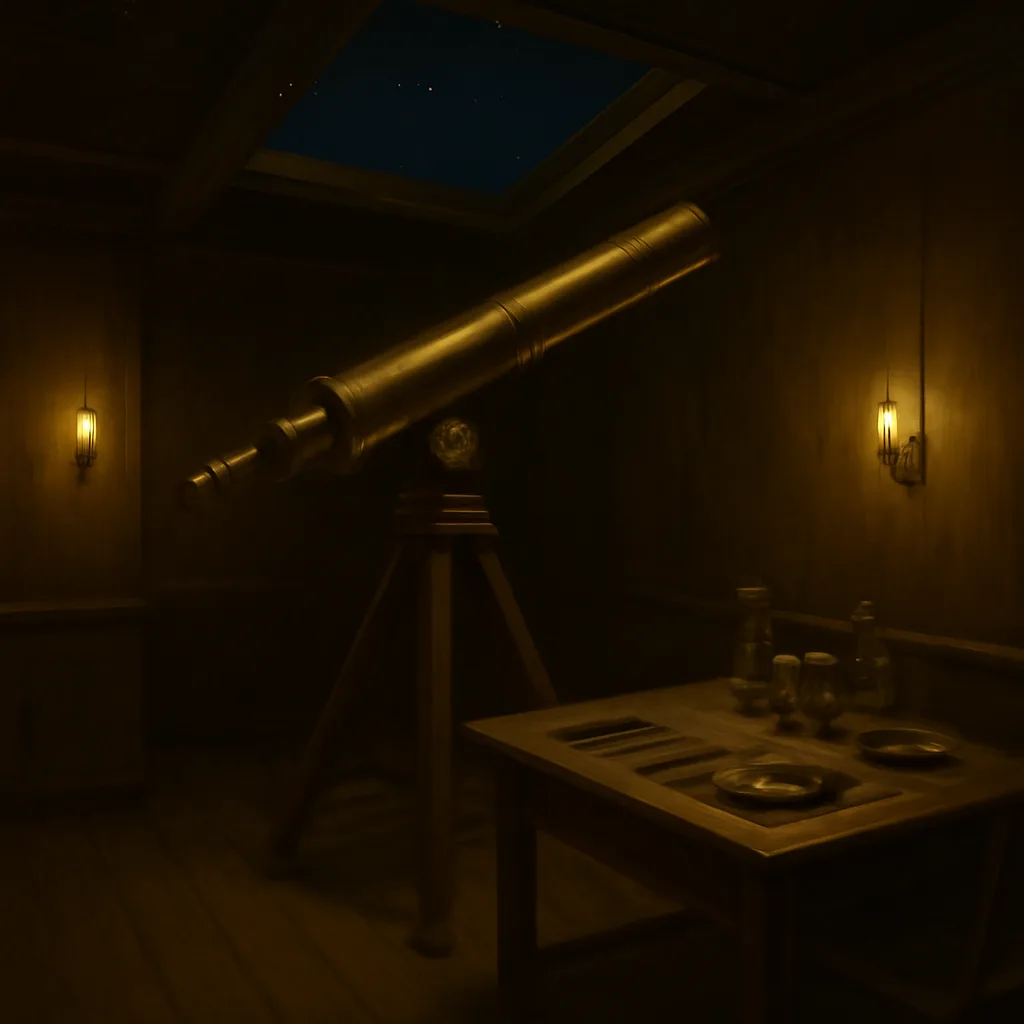
19th-century observatory interior showing a brass refracting telescope aimed through a roof aperture, a wooden table with daguerreotype plates and a small chemical tray, gas lamps, and an observer in period dress partially turned away.

In March 1840, French daguerreotypist and astronomer Louis Daguerre’s process was applied to lunar imaging, producing what is often cited as the earliest surviving photograph of the Moon—an important step in applying photography to scientific observation.


In the late 1830s and early 1840s, inventors and astronomers began experimenting with photography as a tool for recording celestial objects. The daguerreotype process, publicly announced by Louis Daguerre in 1839, produced a highly detailed image on a silvered copper plate. Observers quickly realized that photography might allow more faithful and permanent records of the Moon than hand-drawn sketches.

The claim that the first photograph of the Moon was taken on 23 March 1840 relates to early experiments with daguerreotypes. Several European practitioners attempted lunar daguerreotypes around this time. Exact attribution and survival of specific plates are matters of historical debate: some early lunar daguerreotypes have been lost, misattributed, or survive only as later prints or documentation. The date 23 March 1840 is associated in some contemporary accounts and later summaries with one of these first successful attempts to image the Moon using the daguerreotype technique.

Scholarly treatment of early astrophotography emphasizes a cautious approach to claims about “firsts.” While 1840 marks the period when daguerreotype lunar images were produced, better-documented and more widely acknowledged early lunar photographs date from the early 1840s and later, including work by John William Draper (United States) in 1840–1841 and by others who refined exposure and telescopic coupling to produce clearer results. Draper’s 1840 experiments with portraiture and subsequent astronomical work are often cited as among the earliest reliably documented photographic records of celestial objects.

Sources from the period—letters, scientific society minutes, and early photography manuals—show rapid experimentation and exchange of techniques among practitioners in France, Britain, and the United States. Researchers today rely on surviving daguerreotype plates, contemporary publications, and archival correspondence to reconstruct the chronology. Because some original plates are missing or their provenance is uncertain, historians typically describe early lunar daguerreotypes as products of an experimental phase beginning around 1839–1841 rather than assigning an uncontested single “first” image.

The significance of these early lunar photographs lies less in a single definitive image than in the demonstration that photography could record astronomical detail objectively and permanently. That realization influenced observational astronomy, enabling more precise comparisons over time and supplementing hand-drawn observations. The technical challenges—long exposures, tracking the sky, and sensitizing plates—spurred innovations in telescope mounting, clock drives, and photographic chemistry throughout the 19th century.

In summary, March 1840 falls within the pioneering era when daguerreotype techniques were first applied to the Moon. While an image dated 23 March 1840 is cited in some accounts as among the earliest, attribution and survival of specific plates are disputed; historians treat early 1840s lunar daguerreotypes as collectively significant rather than pointing to a single uncontested first surviving photograph.

Share this

Email Share on X Facebook Reddit

Did this surprise you?