
← Back
07/10/2007 • 5 views

U.S. Announces 2007 Troop Surge Strategy for Iraq
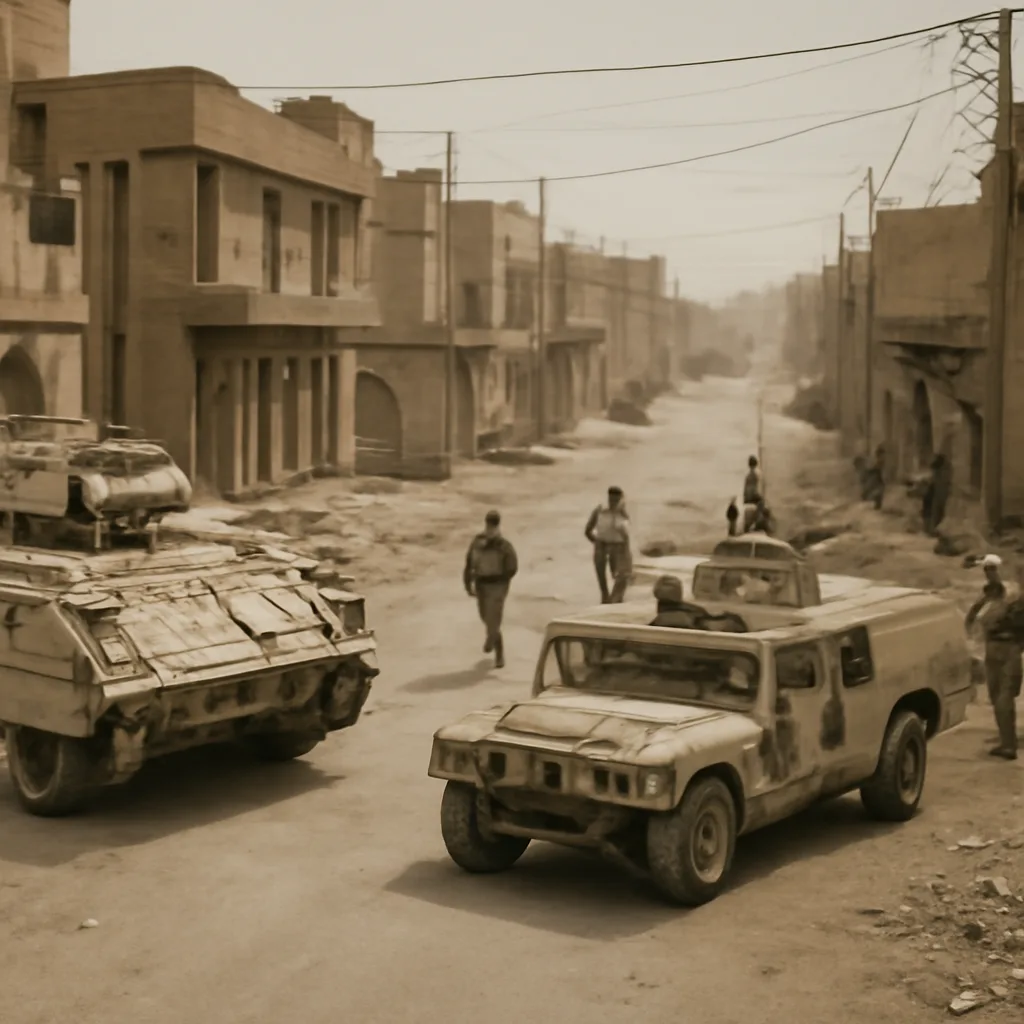
U.S. Army vehicles and troops conducting operations in an urban Iraqi neighborhood in 2007, with sand-colored buildings and fortified checkpoints visible.

On July 10, 2007, U.S. political and military leaders announced a strategy to send additional combat brigades to Iraq and adjust operational priorities to reduce sectarian violence and protect population centers.


On July 10, 2007, senior U.S. officials unveiled a revised military approach for Iraq that came to be known publicly as a troop surge. The announcement described the deployment of additional combat brigades and changes in operational emphasis intended to curb sectarian violence, secure population centers, and create space for political reconciliation within the Iraqi government.

Context
By mid-2007 Iraq was experiencing intense sectarian fighting following the 2006 bombing of the al-Askari mosque in Samarra and successive cycles of reprisal killings. Iraqi security forces were uneven in capability and often aligned along sectarian lines. The outgoing strategy—focused largely on counterterrorism strikes against extremist cells—had not stopped the rise in communal violence or stabilized major population centers, particularly in Baghdad.

Scope of the Announcement
The July 10 statement laid out a plan to increase U.S. troop presence in Iraq temporarily by deploying additional combat brigades, redistribute forces to concentrate on securing Baghdad and other volatile urban areas, and prioritize the protection of civilians and key infrastructure. The strategy emphasized combined operations with Iraqi security forces, steps to reduce sectarian militias’ influence, and the intention to create a more secure environment for political negotiation among Iraqi leaders.

Operational Shifts
Compared with prior approaches that often focused on raid-and-remove operations against insurgent networks, the announced strategy directed commanders to hold ground in population centers, expand presence in neighborhoods affected by sectarian strife, and conduct sustained counterinsurgency operations aimed at population protection. This required adjustments in force posture, logistics, and rules of engagement to support longer-term stability operations rather than short-term kinetic missions alone.

Political and Military Rationale
U.S. civilian and military leaders framed the surge as a time-limited effort to reduce violence sufficiently to allow Iraqi political institutions to make progress on reconciliation, security sector reform, and governance. The announcement acknowledged risks—including the possibility of increased U.S. casualties, the strain on military units, and uncertain Iraqi political cooperation—but presented the measures as necessary to prevent state failure and regional destabilization.

Domestic and International Reactions
The plan generated a range of responses. Some U.S. political leaders and military analysts supported the adjusted strategy as a pragmatic recalibration intended to protect civilians and buy time for political solutions. Others criticized continued troop increases, arguing they risked deeper U.S. involvement without guarantees of political progress. International reactions varied, with some allies expressing guarded support for efforts to reduce violence and others urging a clearer exit strategy.

Outcome and Subsequent Developments
The surge era involved intensified U.S. operations in Baghdad and surrounding provinces and a temporary increase in troop levels through 2007 and into 2008. Evaluations of the strategy’s effects have been contested: proponents point to measurable reductions in violence in key areas and some improvements in security metrics during the period, while critics note that long-term political reconciliation and sustainable Iraqi security capacity remained incomplete. Historians and analysts continue to debate the degree to which the 2007 adjustments produced durable political progress versus providing a temporary reduction in violence.

Caveats
This summary presents the broad contours of the July 10, 2007 announcement and its immediate aims. Details such as specific unit movements, classified planning documents, and internal deliberations among civilian and military leaders are beyond the scope of publicly available unclassified sources and remain subjects of ongoing historical analysis and debate.

Share this

Email Share on X Facebook Reddit

Did this surprise you?