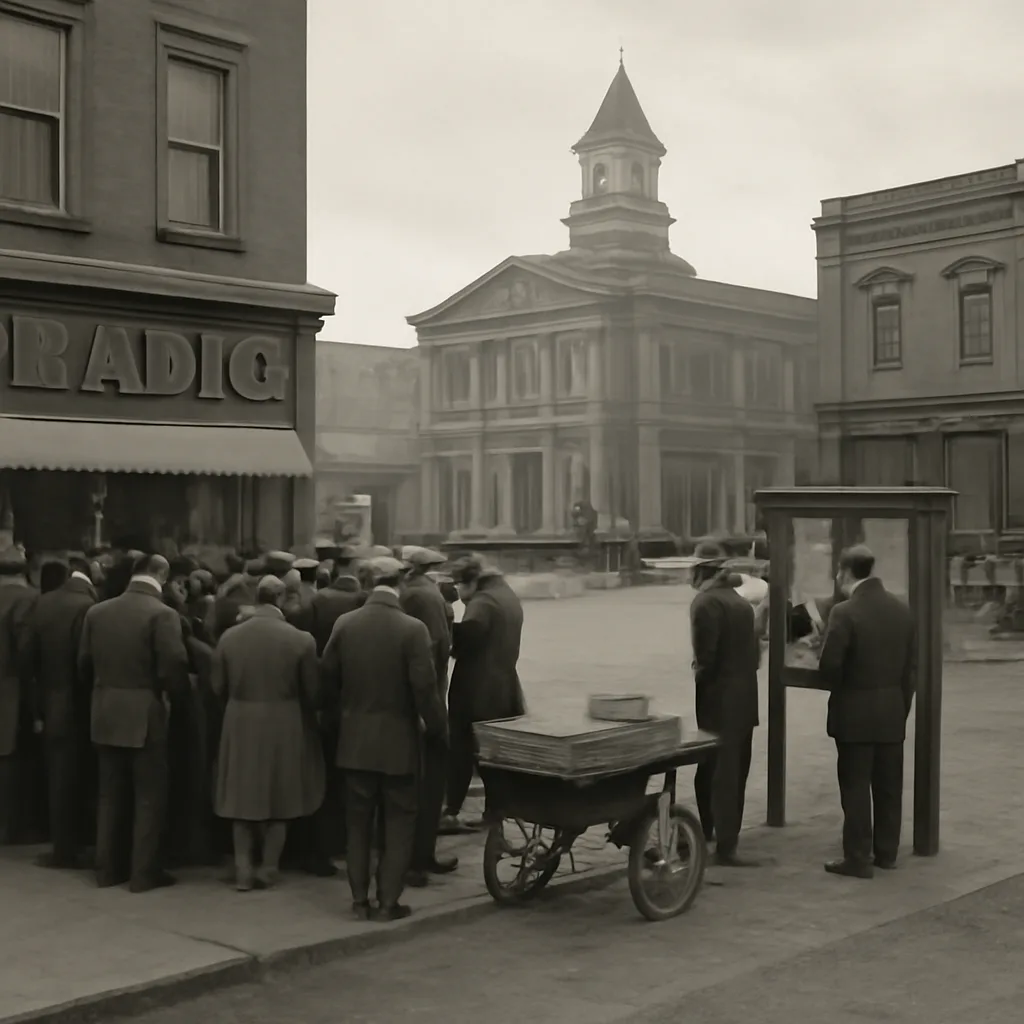
May 18, 1938: A documented mass hoax sparks nationwide panic
On May 18, 1938, false reports and staged incidents about an imminent catastrophe spread rapidly across communities, provoking widespread fear and prompting authorities to confront the social and communicative conditions that allowed a mass hoax to escalate into mass panic.
On May 18, 1938, a coordinated set of false reports and contrived incidents triggered an episode often cited as one of the earliest well-documented cases of mass hoax-induced panic. The events unfolded amid a climate of social anxiety—economic strain after the Great Depression, geopolitical tensions in Europe, and evolving mass communication channels—that made communities particularly receptive to alarming claims.
Sequence and spread
The hoax began when fabricated messages and deliberate rumor-mongering circulated through local newspapers, radio bulletins, and word of mouth. Some reports were later traced to pranksters and opportunists who amplified alarmist claims; others appear to have been honest misunderstandings that were sensationalized as they were relayed. The combined effect was a rapid diffusion of alarming but unverified information across towns and cities, producing confusion about what, if anything, was actually happening.
Public reaction
Residents reacted with a mix of fear and urgent self-protection: many sought out shelters, stockpiled provisions, or attempted to contact relatives. In some areas, public spaces emptied as people retreated to homes; in others, crowds gathered at civic centers seeking official guidance. Local authorities faced pressure to respond quickly but often had only fragmentary or contradictory information, which complicated efforts to calm the public.
Official response and investigation
Municipal and regional officials moved to investigate and suppress false reports. Police and postal authorities tracked sources of mailed and printed false notices; radio stations collaborated with local governments to broadcast corrective information; and newspapers published clarifications and retractions when unable to corroborate initial claims. Subsequent inquiries identified several origin points for the hoax elements—including prank-driven forged notices and sensationalized eyewitness accounts—but also highlighted how fast, unverified reports could cohere into a convincing narrative of imminent danger.
Causes and context
Historians and contemporaneous analysts have pointed to multiple contributory factors: high public anxiety in the late 1930s; the expansion of mass media (notably radio) that enabled faster transmission of both accurate and false information; sparse immediate verification mechanisms for rapidly spreading reports; and social dynamics in which dramatic claims were more likely to be retold. The episode illustrated how technological and social conditions can transform localized deceptions into broad panic.
Consequences and lessons
In the aftermath, several jurisdictions reviewed communication protocols. Press outlets and broadcasters faced public scrutiny and editorial pressure to verify sensational claims before dissemination. Some municipalities instituted clearer channels for official emergency communication to reduce reliance on rumor. The May 18, 1938 episode became a reference point for scholars studying mass psychology, rumor transmission, and early misinformation—an example of the interplay between media evolution and social vulnerability.
Limits of the record
Contemporary documentation varies in detail and emphasis; reports from the period sometimes conflict on precise causal chains or on the identities and motives of those who initiated specific false reports. Where attribution is uncertain, historians have identified plausible contributing behaviors—deliberate pranks, misreported observations, and sensational reporting—without unanimous agreement on a single, definitive originator.
Legacy
The event remains historically significant as an early, well-documented case showing how quickly unverified claims can cascade into public panic. It informed later approaches to emergency communication and contributed to scholarly understanding of rumor dynamics—lessons that retain relevance as technologies for information dissemination continue to evolve.