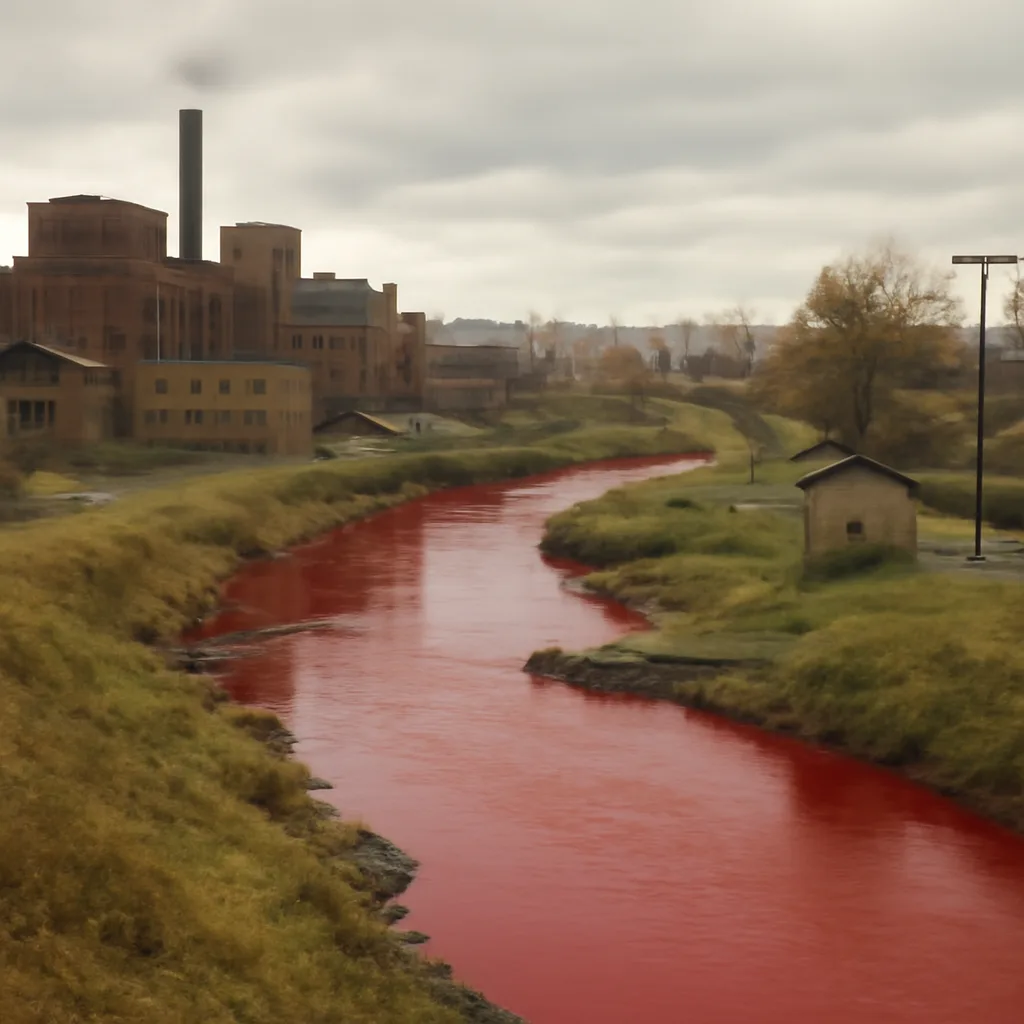
River Runs Red: 2011 Dye Incident Sparks Panic in Local Town
On September 6, 2011, a river turned bright red downstream of an industrial area, prompting alarm among residents and emergency responses; officials later traced the color to a dye release used in industrial testing and plumbing diagnostics, though initial reactions reflected public fear and confusion.
On September 6, 2011, residents downstream of an industrial zone observed a river’s water take on a vivid red hue, prompting calls to emergency services, temporary closures of riverfront parks and beaches, and widespread public concern. The striking color change was visible over multiple miles of watercourse and spread rapidly through social networks and local news outlets, generating images and reports that amplified alarm among people concerned about chemical spills or public-health threats.
Initial response and public reaction
Local authorities received numerous reports from residents who suspected contamination. Town and county emergency-management agencies mobilized field teams to investigate taste, odor and visual cues and to determine whether a toxic release endangered drinking-water intakes, public safety or wildlife. As a precaution, some municipalities advised people to avoid contact with the water and closed affected recreation areas. The dramatic visuals — a bright, uniform red rather than the muddier discoloration of sediment — intensified public anxiety and drew media attention.
Investigation and findings
Environmental regulators, water-quality officials and the responsible municipal utilities inspected the river and traced the reddening to a non-toxic dye used in industrial and plumbing diagnostics. Such dyes (often fluorescein or other colored tracers) are commonly used to trace leaks, test flow paths, or for maintenance work. In this case, investigators identified a permitted or inadvertent release from nearby industrial or infrastructure activity rather than a hazardous chemical spill.
Officials conducted tests for common contaminants, pH, dissolved oxygen and toxicity to aquatic life. Those results indicated no evidence of acute toxic contamination associated with the color change, and agencies communicated that the dye posed low direct risk to human health. Nevertheless, authorities cautioned against ingesting or prolonged skin contact with the river water until sampling and analysis were complete.
Context and causes
Colored tracer dyes are widely employed because they are visible at low concentrations and can reveal flow patterns, leak locations and connections between surface and subsurface waters. Releases can be accidental (spills, improper disposal, equipment failure) or part of planned testing that lacked adequate notification of downstream communities. The incident highlighted how a non-toxic tracer, when released without sufficient warning, can generate public fear and strain emergency-response resources.
Aftermath and lessons
Following confirmation that the discoloration resulted from a diagnostic dye with low toxicity, officials reopened affected recreational areas once sampling confirmed acceptable water-quality parameters. The episode prompted local agencies to review permitting and notification procedures for tracer tests and industrial maintenance, emphasizing faster public advisories and coordination with downstream jurisdictions.
The 2011 event also underscored broader communication challenges: vivid environmental changes can outpace official information, and communities often lack immediate, reliable guidance during visually dramatic but low-hazard incidents. Subsequent recommendations from environmental and public-health authorities typically encourage clearer permitting requirements for tracer use, mandatory advance public notice for planned releases, and rapid, transparent public communication in the event of unexpected discoloration.
Reporting notes
This account summarizes the sequence of public reaction, official investigation and follow-up measures tied to the September 6, 2011, river discoloration, based on contemporaneous agency statements and local reporting. Where specific institutional actions or permit details varied by locality, summaries reflect common elements of tracer-dye incidents rather than claims about a single uniform regulatory outcome.