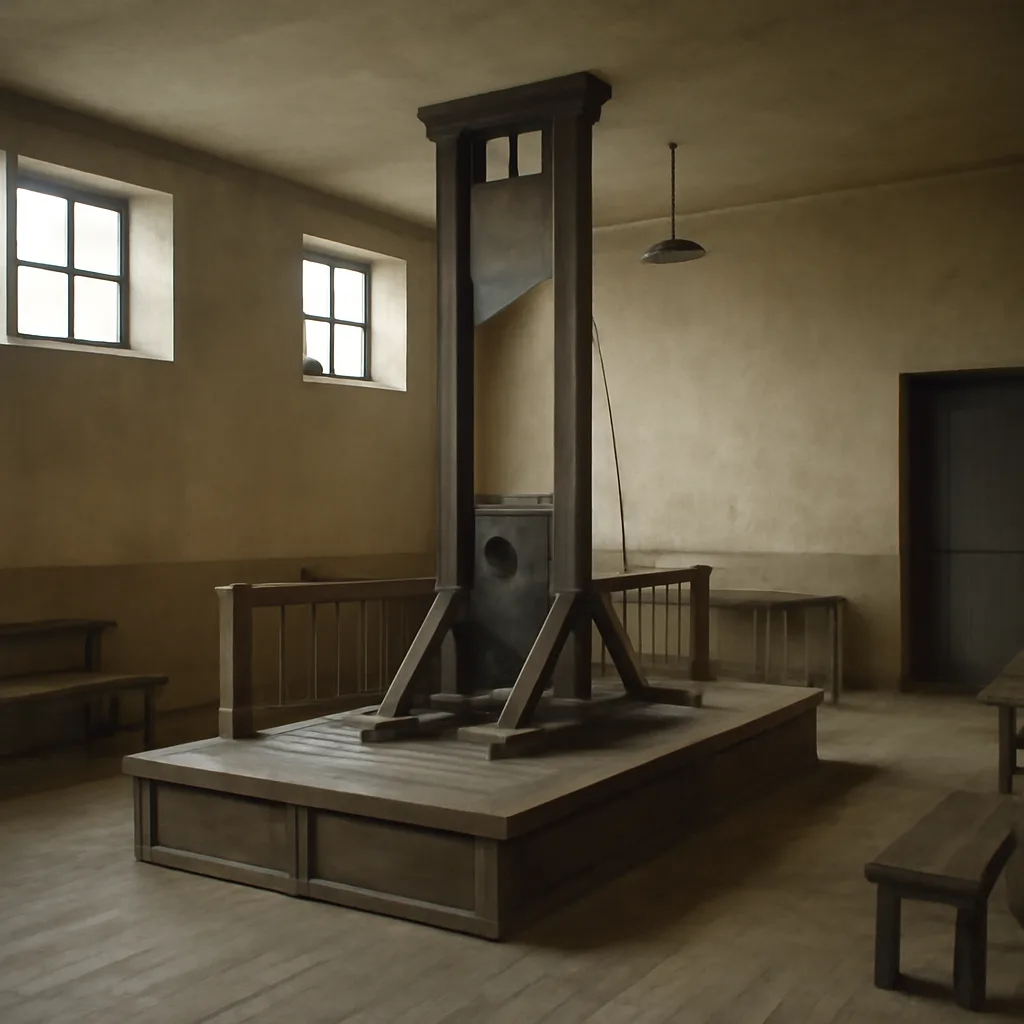
France ends use of the guillotine amid 1981 death penalty abolition
On July 10, 1981, following a national reform of capital punishment, France formally terminated the guillotine's use after decades as the state's principal execution method, part of a broader abolition of the death penalty.
On July 10, 1981, France took a definitive step in its legal and penal history: the guillotine ceased to be used as part of the country's abolition of the death penalty. The change followed political debate and legislative action earlier that year, culminating in a move away from capital punishment that had been practiced in France in various forms for centuries.
Background
The guillotine had been introduced during the French Revolution as a means of execution intended to be swift and egalitarian. It remained the official method of carrying out death sentences in France through the 19th and 20th centuries and was used sporadically into the 1970s. By the late 20th century, shifting public opinion, legal debates about human rights, and influential political figures contributed to renewed scrutiny of capital punishment and its instruments.
Political change and legislative reform
In 1981, François Mitterrand, leader of the Socialist Party, won the French presidency campaigning, in part, on a platform that included abolition of the death penalty. His government appointed Robert Badinter as Minister of Justice; Badinter was a prominent advocate for abolition who led the legislative effort in the National Assembly and Senate. Parliamentary debates considered legal, moral and practical arguments against capital punishment. On September 18, 1981, the National Assembly passed a law abolishing the death penalty; this law rendered the guillotine obsolete as an instrument of state execution. The formal cessation of the guillotine’s use is associated with the broader abolition process, with July 10, 1981 noted as a key date in the administrative winding down of the instrument’s official role.
Legal and social implications
Abolition changed sentencing practices for crimes that had previously carried the death penalty, converting capital sentences to long-term imprisonment. The move aligned France with a growing number of European democracies that had ended capital punishment during the postwar period and reinforced commitments to human rights reflected in European institutions. The abolition also sparked wider discussions in France about criminal justice reform, victim support, and rehabilitation.
Legacy
The last execution by guillotine in France occurred in 1977; no further executions took place after abolition. The guillotine remains a powerful historical symbol—evoking revolutionary ideals, state authority and contentious debates about justice. Museums and historical collections preserve guillotine examples and related documents, and historians continue to assess the device’s cultural and legal significance. The 1981 abolition marked a clear institutional end to the guillotine’s official role in French criminal justice and a milestone in France’s alignment with European human-rights norms.
Notes on sources and certainty
The sequence of events—Mitterrand’s election, Badinter’s ministry, parliamentary debates, the September 1981 abolition law—and the historical fact that the last execution occurred in 1977 are well documented in contemporary records and scholarship. Specific administrative actions dated July 10, 1981 are associated in some accounts with steps to decommission instruments and finalize procedural changes; different sources may emphasize either the September parliamentary vote or ancillary administrative dates when discussing the formal end of the guillotine’s use. Where precise administrative acts are described, their dating can vary between archival records and contemporary reporting.