
07/10/1998 • 5 views
NASA Confirms Loss of Mars Probe Mission
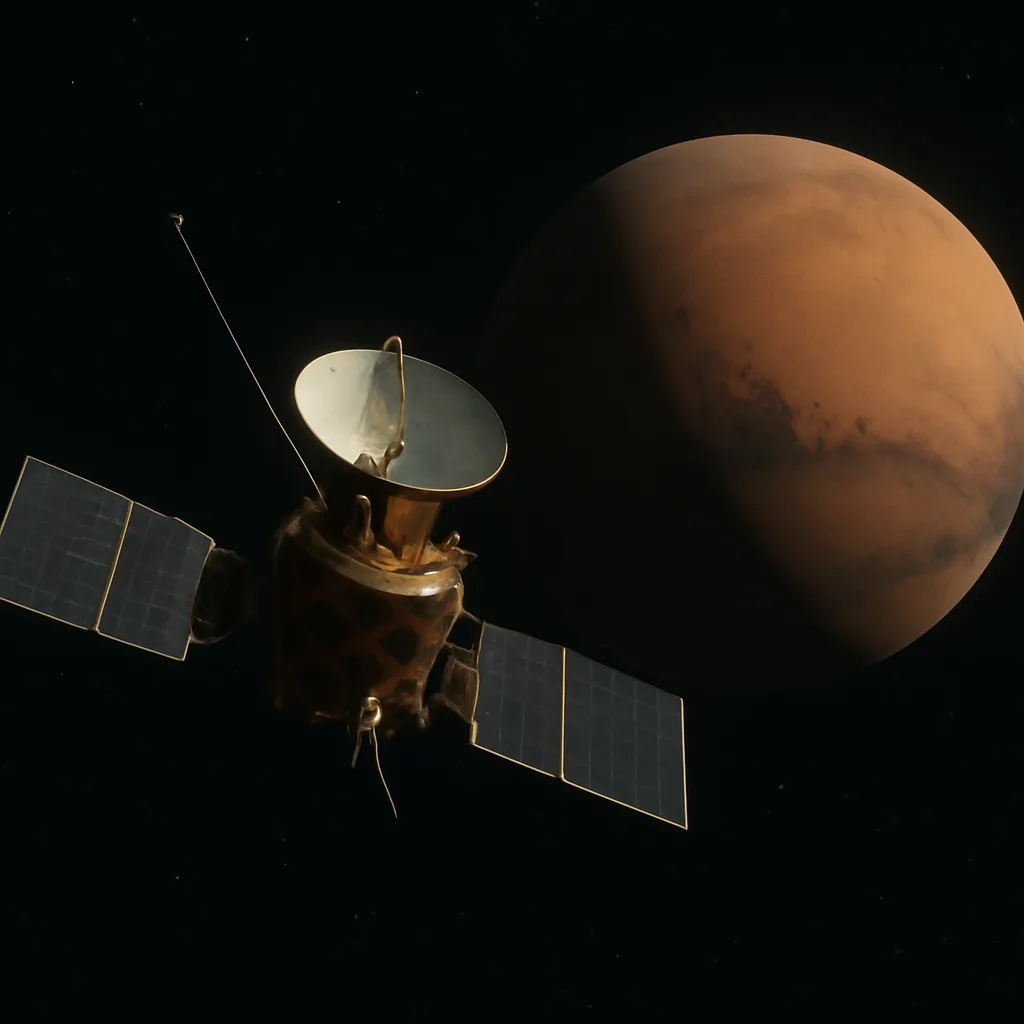
NASA announced on July 10, 1998, that it had lost contact with a Mars probe mission after repeated attempts to re-establish communication, marking the end of operations for the spacecraft and its scientific objectives.
The mission in question was part of NASA's ongoing efforts in the 1990s to explore Mars and better understand its atmosphere, geology, and potential for past water. Like other robotic missions of the era, the probe relied on long-range radio communications, solar power, and onboard systems that had to function reliably across the interplanetary voyage and operations at Mars.
During the months leading up to the July announcement, engineers monitored telemetry and performed diagnostic procedures to isolate the cause of the communication loss. Investigations typically consider factors such as power system degradation (including battery or solar-array issues), damage from micrometeoroid impacts, thermal stresses, software anomalies, or failures in the spacecraft’s communications hardware. In this case, publicly available communications from NASA indicated that attempts to reboot systems and re-establish the spacecraft link were unsuccessful, prompting the determination that the mission could not be recovered.
The termination of the mission meant that planned scientific observations and data returns were curtailed. Instruments designed to study Martian atmosphere, surface composition, or other environmental parameters ceased to provide new measurements. For the scientific community, each lost mission reduces the pace of data collection but also yields engineering and operational lessons that inform future missions’ design, redundancy, and procedures.
NASA’s history includes both high-profile successes and notable failures; the agency has routinely applied lessons from mission losses to improve reliability. Following any loss, NASA typically conducts a post-failure review to identify root causes and recommend changes to hardware, software, testing, or operational protocols. Those findings often influence subsequent missions’ designs and risk-mitigation strategies.
Public response to the announcement reflected the broader interest in Mars exploration during the 1990s, a period that included multiple missions by NASA and other space agencies. While the loss was a setback for the agency and the mission team, it did not end NASA’s Mars program, which continued with planning and execution of future missions informed by past experience.
Official NASA releases and mission documentation from the period provide the authoritative record on the mission’s objectives, timeline, and the circumstances of the loss. For readers seeking detailed technical findings or the formal post-failure assessment, NASA’s archived press releases and mission reports from mid-1998 are the primary sources for that retrospective information.
In summary, the July 10, 1998 announcement marked the end of a specific Mars probe mission after unsuccessful recovery efforts. While the loss curtailed its scientific contributions, it became part of the iterative process through which space agencies refine technology and operations for future exploration of Mars.