12/26/1973 • 5 views
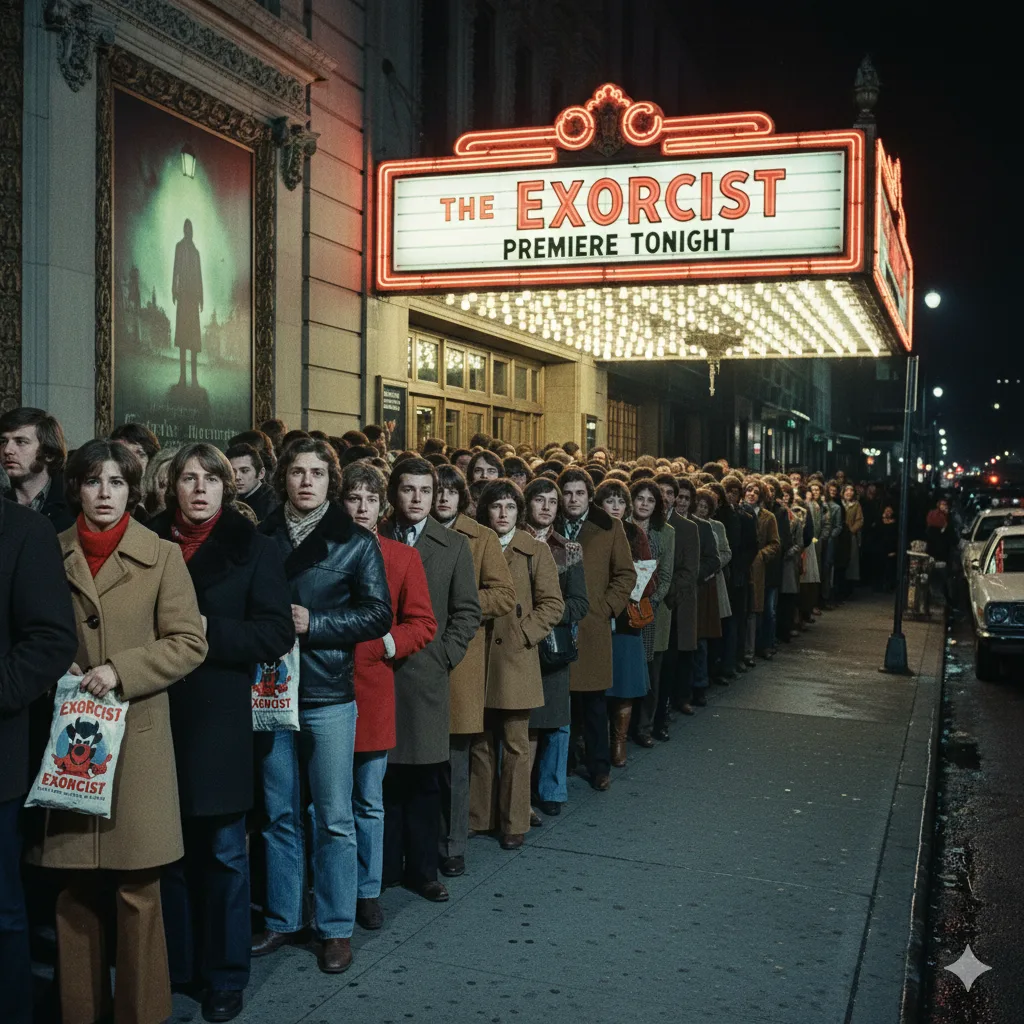
The Exorcist premieres
Released on December 26, 1973, The Exorcist didn't just scare audiences—it traumatized them. Directed by William Friedkin and based on William Peter Blatty’s novel, it became the first horror film to be nominated for the Academy Award for Best Picture.
Here is why its premiere was unlike any other event in cinema history:
1. The "Exorcist Fever"
The film's release created a level of mass hysteria rarely seen before.
The Lines: People waited for hours in the cold to see it. At some theaters, the lines wrapped around several city blocks.
The Physical Reactions: Reports of audience members fainting, vomiting, and fleeing the theater in terror became part of the movie’s marketing. Some theaters even handed out "Exorcist barf bags."
The Religious Backlash: Many religious groups protested the film, calling it "satanic," which only served to pique the public's curiosity further.
2. Groundbreaking Practical Effects
Long before CGI, the film used ingenious (and often grueling) practical effects to create its most iconic scenes.
The Cold Room: To make the actors' breath visible, the bedroom set was built inside a giant freezer. Temperatures were kept well below zero, often resulting in real frost forming on the actors.
The Pea Soup: The infamous "projectile vomit" was actually a mixture of Andersen’s Pea Soup and oatmeal, funneled through a hidden tube attached to actress Linda Blair’s face.
Mechanical Rigging: For the levitation and 360-degree head-spin scenes, complex pulleys and life-sized animatronic dolls were used, setting a new bar for makeup and special effects.
3. The "Cursed" Set
Rumors that the production was cursed added to the film's dark mystique.
A fire destroyed the MacNeil house set (except for Regan’s bedroom).
Several people associated with the cast and crew passed away during or shortly after production.
The actress Linda Blair and her mother received so many death threats from religious extremists that the studio had to hire bodyguards for them for six months.
4. Box Office and Legacy
The movie was a massive financial success, eventually grossing over $441 million worldwide. It changed the horror genre by proving that "prestige horror"—films with high production value, A-list actors, and deep philosophical themes—could be both critically acclaimed and a commercial juggernaut.