
12/26/1991 • 6 views
The Soviet Union Dissolves, Ending Its Superpower Era
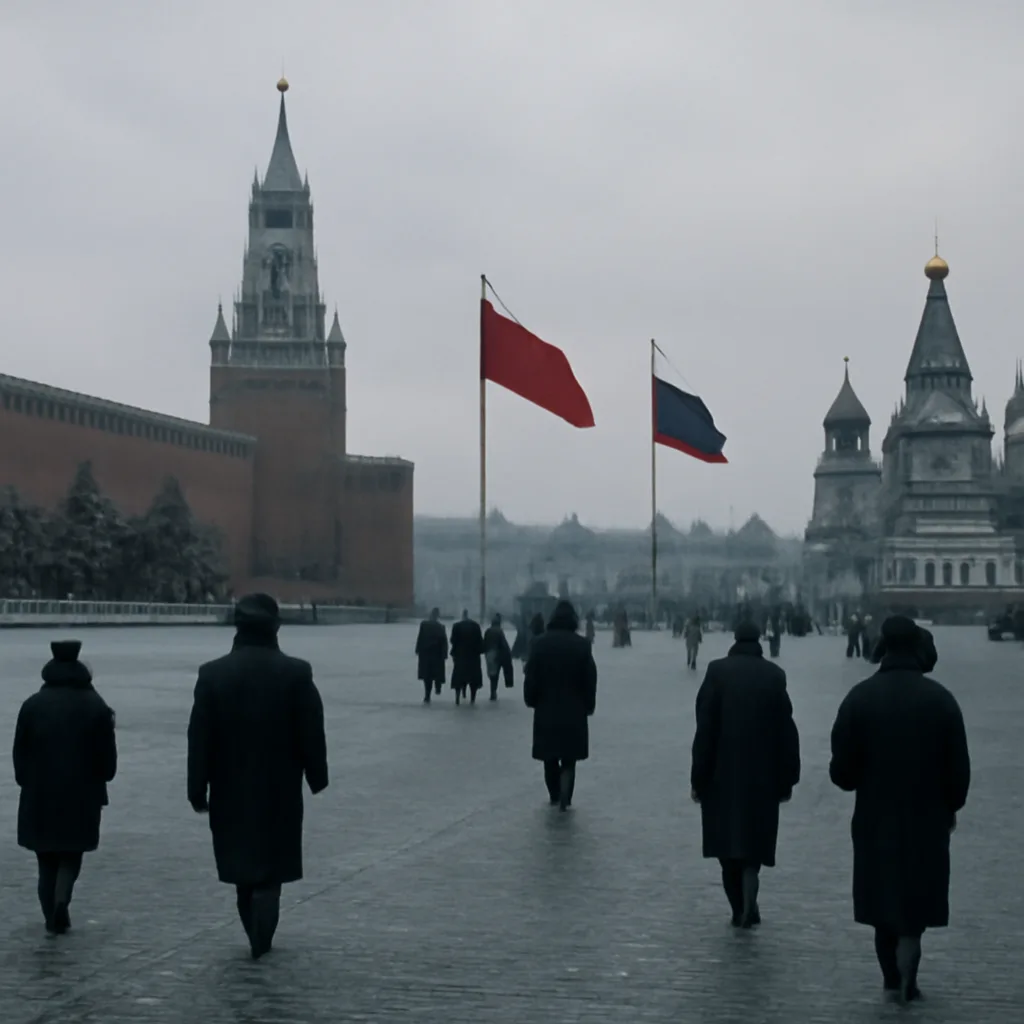
On December 26, 1991, the Supreme Soviet voted to dissolve the Union of Soviet Socialist Republics, marking the end of the USSR as a geopolitical superpower and formalizing the independence of its constituent republics.
Background
The USSR had been a global superpower since the end of World War II, exercising vast military, political and ideological influence. In the 1980s, economic stagnation, political rigidity and the burdens of the Cold War prompted reforms under Mikhail Gorbachev, including glasnost (openness) and perestroika (restructuring). Those reforms, combined with rising nationalist movements in many republics, fiscal crises, and a failed August 1991 coup attempt by hard-line Communists, accelerated the break-up.
Collapse and political sequence
The immediate political sequence in December 1991 was rapid. On December 8, leaders of the Russian SFSR, the Ukrainian SSR and the Byelorussian SSR met and issued the Belovezh Accords, declaring the Soviet Union effectively ended and announcing the CIS. Over the following weeks, additional republics moved to formalize independence or to join the CIS. On December 25, 1991, Mikhail Gorbachev resigned as president of the USSR and transferred Soviet nuclear briefcase codes to Russian President Boris Yeltsin. The next day, December 26, the Soviet of the Republics—the upper chamber of the Supreme Soviet—voted to recognize the dissolution and formally declared that the USSR had ceased to exist as a subject of international law and geopolitical reality.
Consequences
The dissolution ended the centralized Soviet state and its institutions. Fifteen independent republics emerged from the USSR, each assuming sovereignty, international recognition in turn, and responsibility for formerly Soviet assets on their territory. The Russian Federation succeeded to the USSR’s UN Security Council seat and its nuclear arsenal was largely transferred to Russian control under agreements with other successor states. Economically, the transition produced deep dislocation: planned economies shifted toward market reforms at different speeds, with widespread shortages, inflation and decline in living standards for many people during the 1990s.
Internationally, the end of the Soviet Union marked a tectonic shift: the bipolar Cold War order gave way to a unipolar period dominated by the United States, while new regional arrangements and conflicts emerged across the former Soviet space. Ethnic and territorial disputes erupted or intensified in several republics (e.g., in the Caucasus and parts of Central Asia). NATO and European institutions expanded eastward in subsequent decades, a development that continues to shape relations between Russia and the West.
Historiography and interpretation
Historians and analysts debate the relative weight of structural economic failure, political choices by Soviet leaders, nationalist mobilization in the republics, and international factors in producing the USSR’s end. There is broad consensus on the sequence of events in late 1991, but interpretations vary on whether alternative reforms could have preserved a reconfigured union or whether collapse was inevitable by that point.
Legacy
The dissolution of the Soviet Union remains a defining moment of the late 20th century. It permanently reshaped borders, politics and security in Eurasia, affected global economic and ideological alignments, and left enduring legacies—political, social and emotional—across the former Soviet republics and beyond.