
09/27/1938 • 4 views
Spanish Civil War Enters Brutal Final Phase
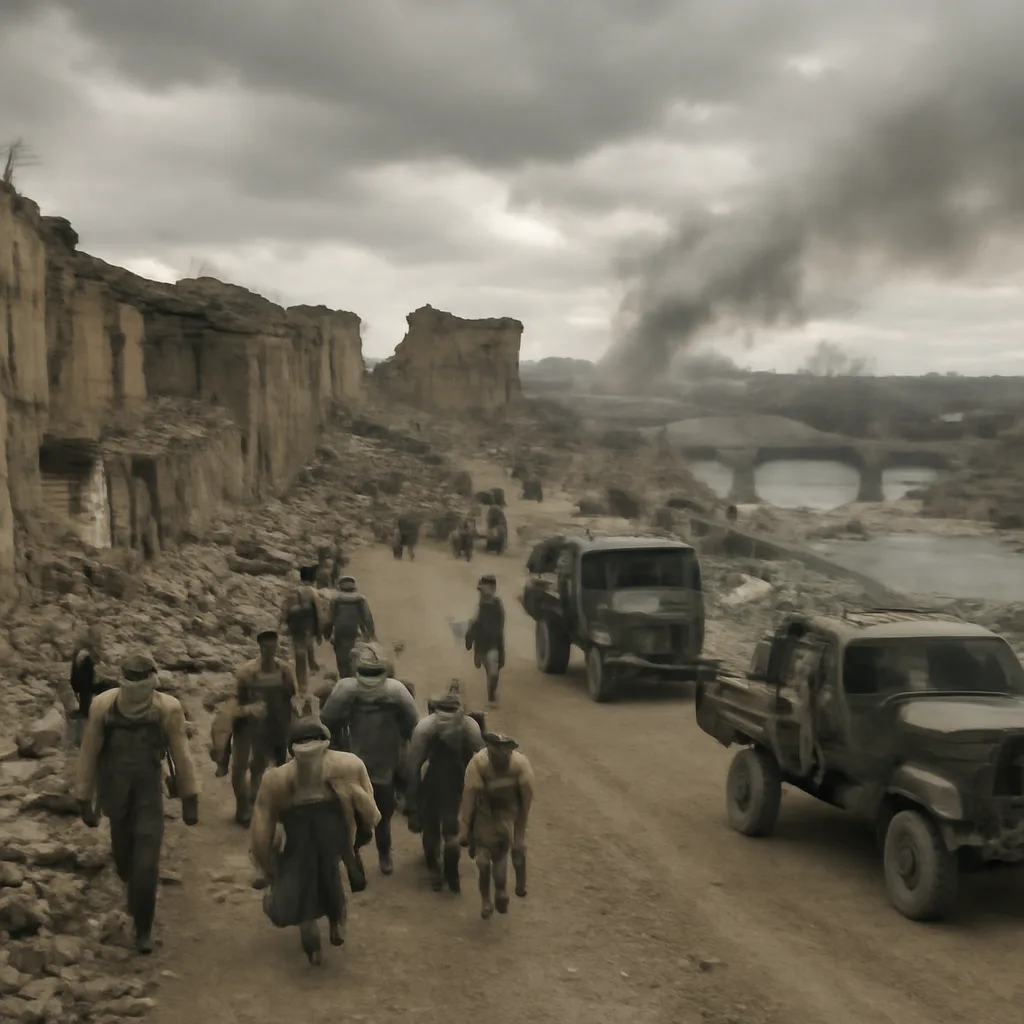
By late September 1938, Republican and Nationalist forces clash across shrinking fronts as international support wanes and civilian suffering intensifies, signaling a decisive turn toward the conflict's end.
The military context in late 1938 reflected a culmination of Nationalist offensives earlier that year. The fall of the northern Republican provinces—Asturias, Santander, and the Basque Country—during the summer deprived the Republic of significant industrial resources and territory. The Nationalists, reinforced by equipment and personnel from Fascist Italy and Nazi Germany, consolidated gains and prepared further operations aimed at breaking remaining Republican resistance. Republican forces had also suffered from internal divisions and a stretched defensive line running roughly from the Ebro River southward.
The Ebro offensive, launched by Republican commanders on July 24, 1938, had been a calculated attempt to relieve pressure on Catalonia and to reverse Nationalist advances. Initially achieving surprise and some tactical gains, Republican troops were eventually halted and pushed back after months of fierce fighting. By late September the battle for the Ebro had devolved into attritional warfare, with heavy casualties on both sides and little strategic change. The failure of the Ebro offensive left Republican forces weakened and exhausted at a moment when resources were already scarce.
International dynamics also shaped this phase. The Non-Intervention Committee, nominally aimed at preventing foreign interference, proved ineffective in stopping clandestine support to the Nationalists from Germany and Italy. Meanwhile, the Republic's primary external backer, the Soviet Union, provided some matériel and advisors but was constrained politically and materially. Western democracies—particularly Britain and France—maintained official non-intervention policies amid appeasement concerns, limiting the Republic's access to arms and diplomatic support. Volunteer brigades of foreign fighters had been largely depleted after years of combat and international pressure to withdraw.
Civilians bore the escalating toll. Cities and towns in contested areas suffered from aerial bombardment and artillery fire that increasingly targeted infrastructure and supply lines as well as frontline positions. Food, medical supplies, and fuel grew scarcer inside Republican zones, contributing to hardship and displacement. Refugee flows increased as communities sought safety away from intensifying combat, with Catalonia and Madrid among the areas under acute strain.
Political and social tensions within Republican-held territories complicated defensive efforts. The Republic encompassed a coalition of parties and militias—socialists, communists, anarchists, and regional nationalists—whose disagreements over strategy and governance sometimes undermined unified military responses. Repression and purges occurred at times within Republican areas, further damaging morale and cohesion.
On the Nationalist side, Franco moved to exploit his advantages cautiously, balancing military offensives with efforts to secure diplomatic recognition and consolidate administrative control in captured territories. Nationalist forces continued to benefit from superior air power and mechanized units supplied by Germany and Italy, which had a multiplying effect on battlefield outcomes.
Observers at the time and subsequent historians have regarded late 1938 as a turning point: the Republic's strategic options were narrowing while Nationalist capacity to press home advantages was increasing. The situation set the stage for the Nationalist Catalonia campaign in late 1938 and early 1939 and the eventual collapse of major Republican resistance in the spring of 1939.
While the exact timing of decisive maneuvers would unfold over the following months, the events of late September 1938 marked a brutal final phase characterized by attritional battles, civilian suffering, dwindling external support for the Republic, and growing Nationalist ascendancy. These developments foreshadowed the final year of the conflict and the profound political and humanitarian consequences that accompanied the Nationalist victory.