
05/22/1984 • 5 views
Human Skeleton Discovered Sealed Inside Church Wall
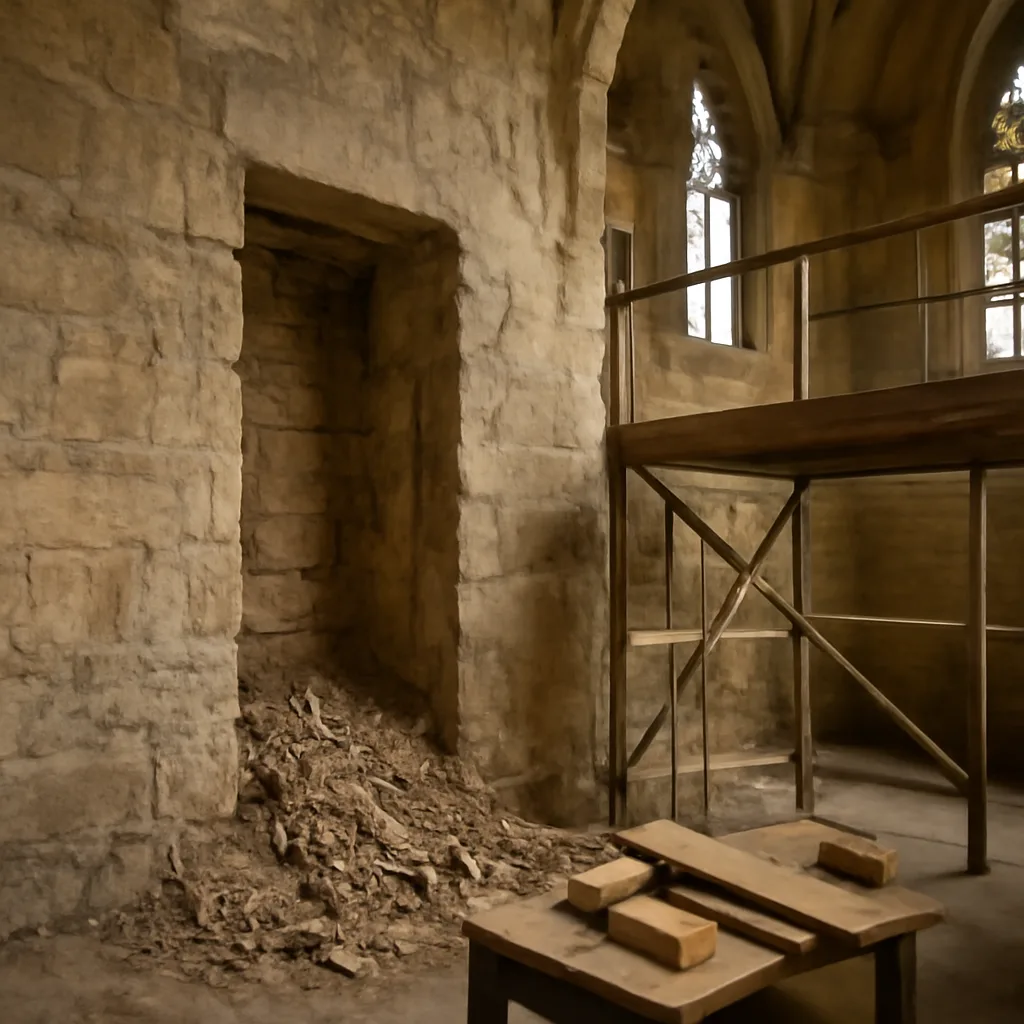
Workers renovating a church uncovered a human skeleton hidden within an internal wall on May 22, 1984. Authorities opened an investigation to determine identity, cause of death and whether the concealment was intentional or related to historical building practices.
Initial response and investigation
Workers performing routine repairs or restoration broke into a void inside the church building and found skeletal remains. Standard procedure in such cases is to notify law enforcement, who then cordon off the area to preserve potential evidence. A coroner or medical examiner would typically be asked to examine the bones to establish whether they are human, estimate age at death, sex, ancestry and time since death, and to search for indications of trauma or foul play.
Forensic and historical assessment
Determining how long the remains had been in the wall is a central question. Forensic anthropologists can estimate postmortem interval (roughly how long ago death occurred) through bone condition, taphonomic changes and any associated materials (clothing fragments, nails, mortar, or other artifacts). If the remains are historic — for example decades or centuries old — investigators may consult local historians or archival records, such as church registers, burial records or newspaper archives, to identify possible missing persons or burial practices.
Reasons remains might be found within walls
There are several historically documented explanations for human remains found in buildings:
- Concealed burials: In some periods and places, informal or clandestine burials were made inside structures, sometimes to hide a death considered scandalous or to avoid official burial fees or restrictions.
- Structural reuse: Older skeletal material recovered when parts of previous structures—such as crypts, ossuaries or floor graves—were incorporated into later walls during renovations.
- Accidental entombment: Individuals working on or near construction could have been accidentally entombed during collapses or trapped and later covered over.
- Ritual or apotropaic deposits: In rare cases, human bones were intentionally placed within buildings for ritual, superstitious or protective purposes; such practices vary by culture and era and require careful historical corroboration.
What investigators look for
- Contextual evidence: placement within the wall, associated artifacts (buttons, fabric, coins), construction materials and stratigraphy help date the concealment.
- Forensic indicators: signs of perimortem trauma (injuries around the time of death), pathology, or purposeful binding can point toward homicide. Absence of trauma and evidence consistent with long-term decomposition may indicate an older, non-criminal context.
- Records search: parish registers, burial ledgers, municipal records and local newspapers can sometimes connect remains to documented deaths, missing-person reports or burial customs.
Legal and ethical considerations
If the remains are recent, the discovery becomes a criminal investigation and may lead to homicide inquiries. If they are historical, procedures shift toward respectful handling, consultation with descendants if known, and potential transfer to museum, church, or repository custody under legal and ethical guidelines. Churches and local authorities often coordinate with heritage agencies when human remains of probable historical origin are involved.
Public communication and outcomes
Officials typically release limited information early in an investigation to avoid compromising inquiries. Over time, a coroner’s report, forensic study or archival research may clarify age and likely circumstances of death. In many past cases, remains found within buildings have proven centuries old and connected to earlier burials or construction phases; in others, they have revealed unresolved crimes.
Without specific forensic and archival results made public for this particular May 22, 1984 discovery, firm conclusions about identity, date of death or cause cannot be stated. The case would have depended on local investigative findings and any subsequent historical research or legal actions.