
← Back
03/15/1954 • 6 views

First successful kidney transplant performed between identical twins
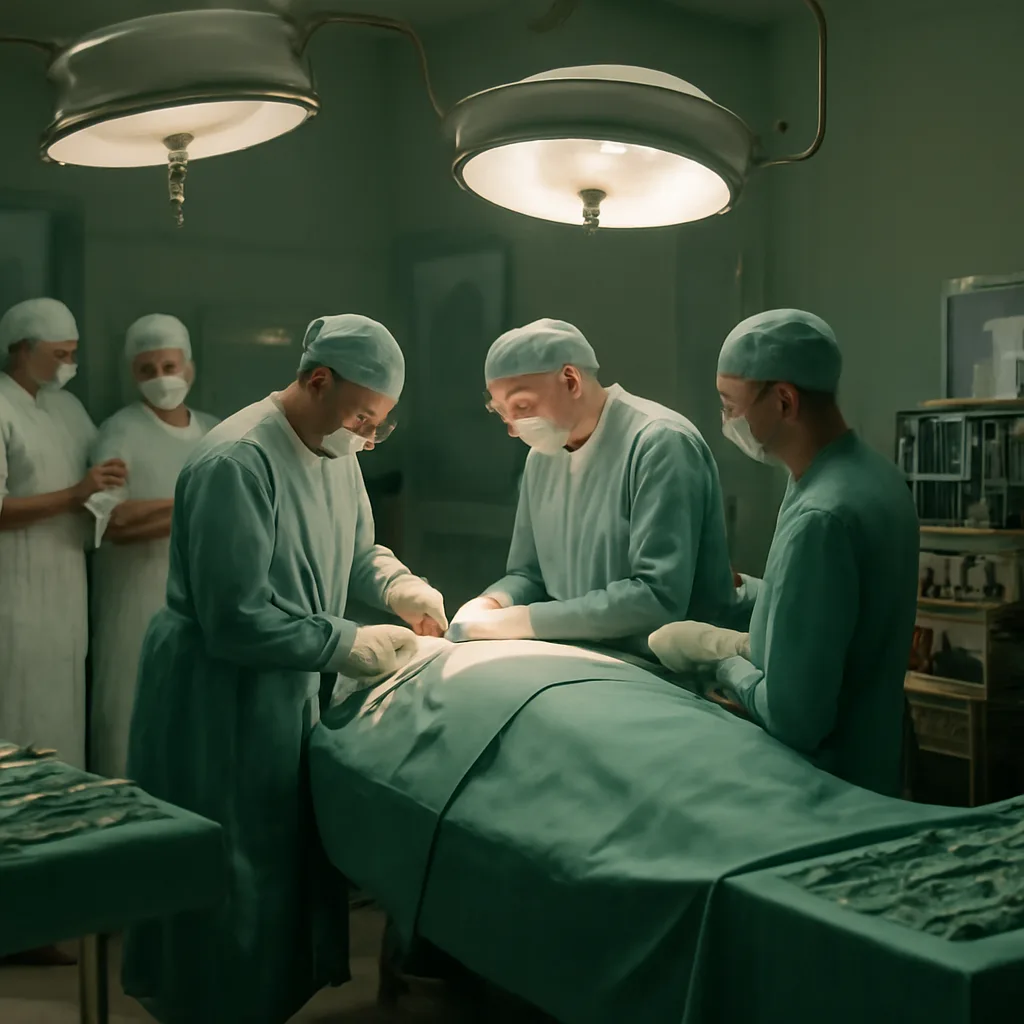
Operating room in the 1950s showing surgical team around an operating table with medical equipment of the era; sterile drapes and surgical instruments visible, no identifiable faces.

On March 15, 1954, surgeons at Peter Bent Brigham Hospital in Boston performed the first successful human kidney transplant, transferring a healthy kidney from one identical twin to another, marking a milestone in organ transplantation.


On March 15, 1954, a surgical team at Peter Bent Brigham Hospital in Boston achieved the first successful human kidney transplant. The operation, led by Dr. Joseph E. Murray with key contributions from Dr. John P. Merrill and other colleagues, transplanted a kidney from Richard Herrick into his twin brother, Ronald Herrick. Because they were identical twins, the genetic match greatly reduced the risk of immune rejection and obviated the need for long-term immunosuppression, a major factor in the operation’s success.

Background
By the early 1950s, surgeons and researchers had attempted kidney grafts in humans and animals, but immune rejection routinely caused early failure. Advances in surgical technique, anesthesia, postoperative care, and an improved understanding of blood typing and tissue compatibility set the stage for attempting transplantation under optimal conditions. The identical twin pairing provided a unique opportunity to test whether a human kidney could function long-term in another person without being rejected by the recipient’s immune system.

The operation
The transplant took place at Peter Bent Brigham Hospital (now part of Brigham and Women’s Hospital). The donor, Ronald Herrick, was a healthy 23-year-old who volunteered to donate one of his kidneys to his twin brother, Richard, who suffered from chronic kidney failure. The surgical team removed Ronald’s right kidney and implanted it into Richard’s lower abdomen, connecting blood vessels and the ureter so the transplanted organ could filter blood and drain urine. The procedure lasted several hours and was notable for its careful vascular and urologic technique.

Outcome and significance
The transplanted kidney began functioning almost immediately, and Richard Herrick enjoyed restored renal function and improved quality of life. He lived for eight additional years before dying in 1963 of a myocardial infarction; the transplanted kidney had continued to function for most of that period. The operation demonstrated that a human organ could sustain life in another person, provided immune rejection was avoided. The success catalyzed research into immunology and graft rejection, ultimately leading to development of immunosuppressive drugs that would make transplantation possible between genetically unrelated individuals.

Legacy
The 1954 Boston transplant is widely recognized as a pivotal event in medical history. Joseph Murray later received the Nobel Prize in Physiology or Medicine in 1990 for his work on organ transplantation. The case highlighted ethical, surgical, and immunological challenges that shaped transplant medicine: donor selection and consent, surgical techniques for vascular and urinary anastomoses, postoperative care, and the need for strategies to manage immune responses. Over subsequent decades, improved immunosuppressive agents, tissue typing methods, and surgical advances turned kidney transplantation into a routine, life-saving therapy for end-stage renal disease.

Historical caveats
While the Herrick twin transplant is commonly cited as the first successful kidney transplant, contemporaneous experimental grafts and earlier attempts inform the scientific context. The success hinged on the unique immunological circumstance of identical twins; it did not immediately solve rejection problems in non-twin transplants. Contemporary accounts and later histories document the operation and its consequences; where interpretations differ, historians note the incremental nature of progress rather than a single, solitary leap.

The March 15, 1954 procedure remains a milestone: a carefully planned, technically skilled operation that proved human organ transplantation could work and launched a field that has since saved countless lives.

Share this

Email Share on X Facebook Reddit

Did this surprise you?