
03/15/1914 • 6 views
First Successful Transfusion Using Stored Blood, March 15, 1914
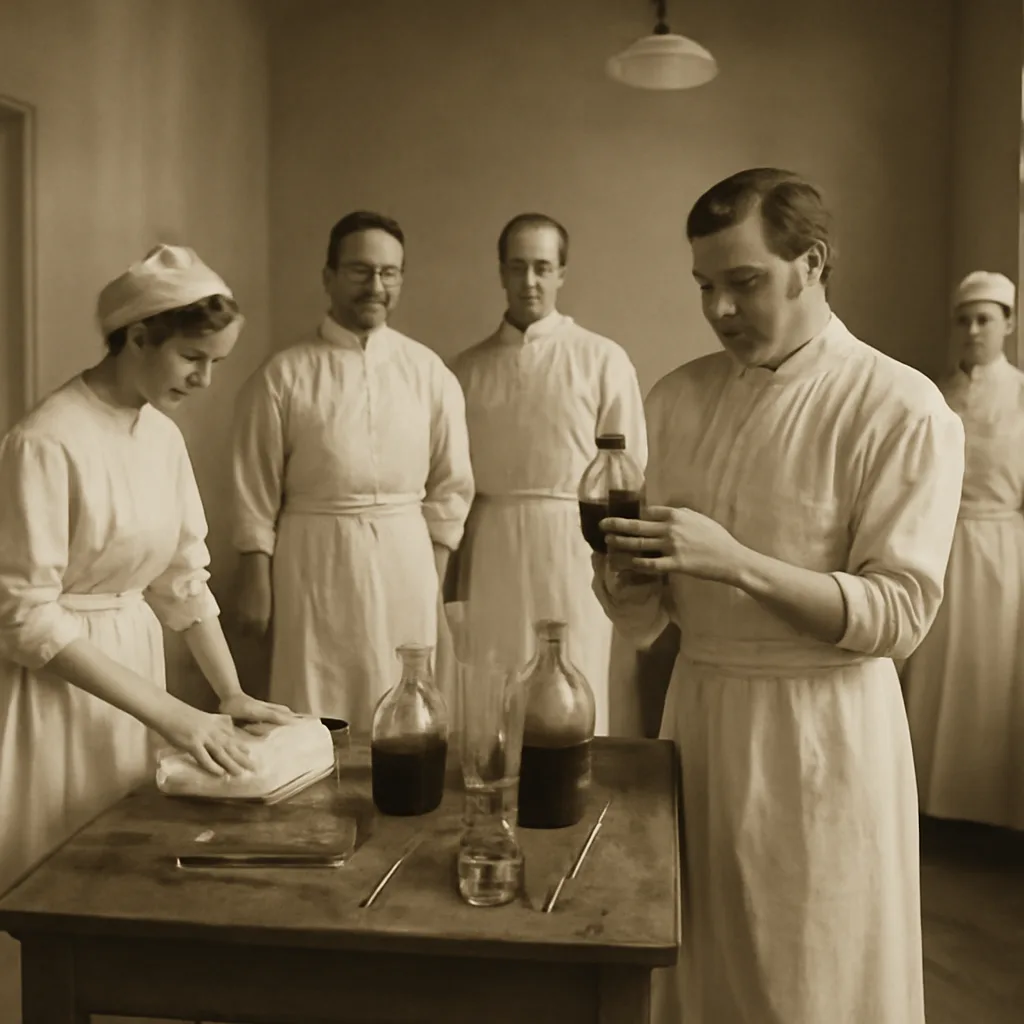
On 15 March 1914 a team in Britain reported a successful transfusion using blood stored for days in citrate solution, marking a crucial step toward modern blood banking and safer transfusion practice.
On 15 March 1914, clinicians in Britain reported a successful clinical transfusion using blood that had been stored in citrate solution. The procedure built on earlier experimental and clinical work by several investigators across Europe, including Albert Hustin (Belgium, 1914) and Luis Agote (Argentina, 1914), who independently described the use of citrate to anticoagulate blood for transfusion. The British report of 15 March fits within that same pivotal year when citrate-anticoagulated blood proved clinically practicable.
The stored blood transfusion of March 1914 demonstrated that blood could be collected, mixed with an anticoagulant, kept for at least some hours or days, and then transfused to a patient with beneficial effect. This development addressed two major obstacles: clotting during storage and the need to have donor and recipient present simultaneously. Clinicians could now consider maintaining small stocks of blood for emergencies, laying conceptual groundwork for organized blood storage and, later, blood banks.
Immediate impact of the 1914 events was incremental rather than revolutionary: methods and protocols still required refinement, and risks such as contamination, incompatible blood types (knowledge of the ABO system had been established only a decade earlier), and storage limitations persisted. Nonetheless, the demonstration that stored citrated blood could be used in patients was widely recognized among physicians and researchers as a turning point. During World War I (1914–1918), practical methods for collection, preservation, and transfusion evolved rapidly, driven by battlefield needs.
Historians of medicine attribute this advance to cumulative international research rather than a single lone inventor. Multiple clinicians and scientists contributed to the practical adoption of stored blood transfusion: Hustin and Agote are commonly cited for early citrate work; others refined procedures for sterility, storage containers, and transfusion techniques. Later developments—improved anticoagulants, cold storage, blood-typing and cross-matching, and systems for donor recruitment—built on the 1914 demonstrations to create the modern blood bank in the 1930s and 1940s.
Sources and documentation from 1914 include medical journal reports and conference communications; however, precise claims about individual firsts can be disputed because parallel work occurred in different countries and publication dates sometimes overlapped. The 15 March 1914 date refers to a documented clinical instance of transfusion using stored citrated blood within the broader, internationally concurrent progress of that year.
In sum, the successful use of stored, citrate-anticoagulated blood on 15 March 1914 represents a milestone in transfusion medicine. It affirmed that blood could be collected and preserved for later use, a practical advance that helped usher in organized blood collection and storage practices integral to modern surgery, trauma care, and transfusion services.