
← Back
03/15/1906 • 6 views

U.S. enacts first federal food safety inspection law
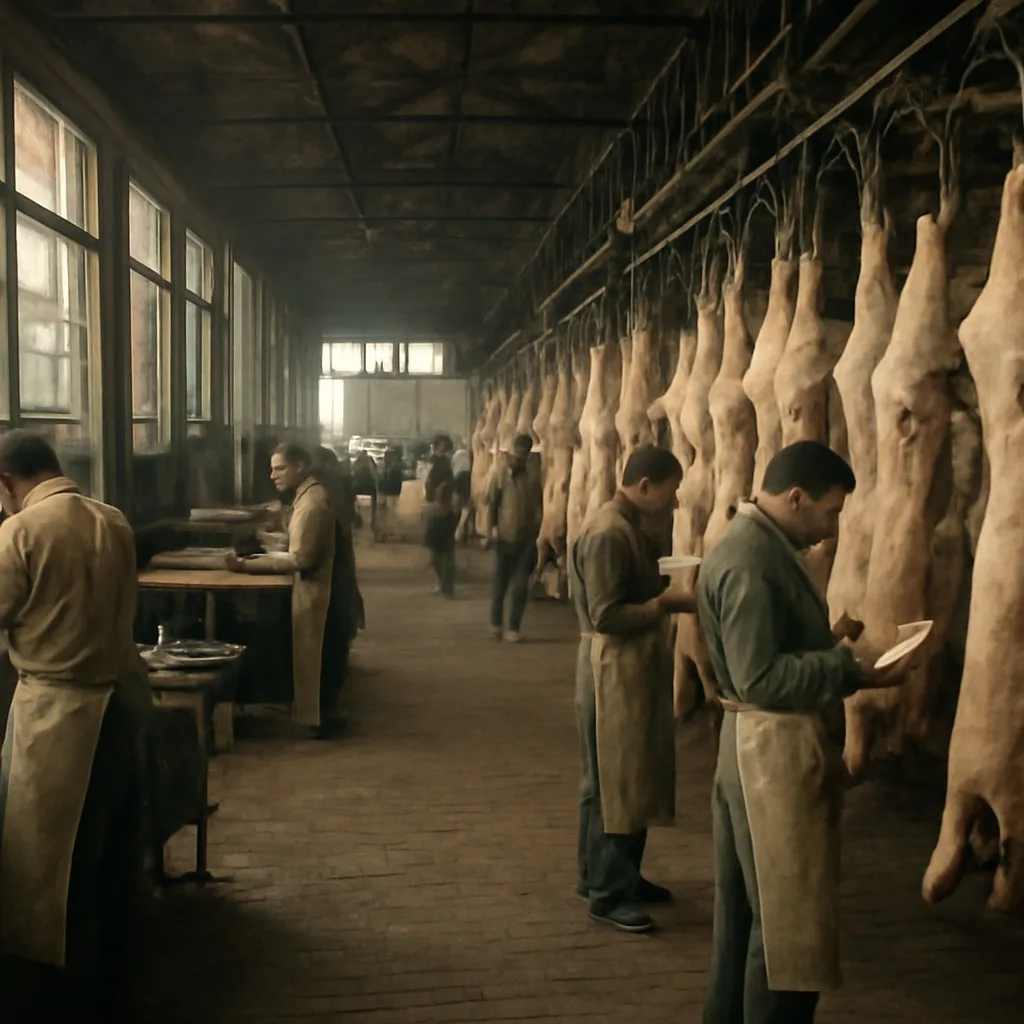
Early 20th-century slaughterhouse or packing plant interior with rows of industrial equipment and workers in period clothing, illustrating meat inspection and industrial food processing.

On March 15, 1906, Congress approved legislation establishing federal inspection of meat and food products, marking the first major U.S. law to regulate food safety at a national level and respond to growing public concern about industrial food processing.


On March 15, 1906, the United States took a decisive step toward national food regulation when Congress approved landmark legislation creating federal inspection of meat and certain food products. The law responded to mounting public anxiety about unsanitary conditions in industrial slaughterhouses and food processing facilities and created a statutory basis for government oversight of food moving in interstate commerce.

Context and causes

In the late 19th and early 20th centuries, rapid urbanization and industrialization transformed food production and distribution. Large slaughterhouses, packing plants, and processed-food factories concentrated production in ways that made local regulation inconsistent and often ineffective. Investigative journalists, public-health officials, and reformers exposed unsanitary practices and adulteration of foods that threatened consumer safety. These exposures, together with increasing interstate trade, created political pressure for federal intervention.

Main provisions and scope

The 1906 law required inspection of animals before slaughter and of carcasses after slaughter, and it prohibited the sale of adulterated or misbranded meat and food products in interstate commerce. It authorized federal inspectors to examine facilities and products to enforce these standards. The statute applied to meat and meat products transported across state lines and laid the groundwork for later expansion of federal food-safety authority.

Immediate effects

The law established an operational federal inspection system and gave the national government a regulatory role in ensuring sanitary conditions in slaughtering and packing establishments. Its passage reassured many consumers and reformers that there would be consistent standards for meat and certain processed foods sold across state lines. It also compelled many firms to improve sanitation and labeling practices or face enforcement actions.

Limitations and developments

Although groundbreaking, the 1906 law had limits. Its jurisdiction focused on products in interstate commerce and initially emphasized meat inspection; broader regulation of processed foods and comprehensive oversight of all foodstuffs developed later. Enforcement capacity and scientific standards evolved over subsequent decades, and the federal role expanded through additional legislation and administrative practice.

Historical significance

The 1906 law is widely regarded as the first major federal statute establishing systematic food-inspection requirements in the United States. It marked a transition from primarily local regulation to national oversight, reflecting changing industrial and commercial realities. The statute also set precedents in administrative inspection, public-health regulation, and the role of federal government in consumer protection—foundations that informed later food- and drug-safety laws and modern regulatory agencies.

Scholarly and public memory

Historians view the 1906 legislation as a pivotal reform of the Progressive Era, often discussed alongside contemporary efforts to regulate industry and protect consumers. While later statutes and agency creations broadened and institutionalized federal food-safety authority, the 1906 law remains a key turning point in the legal history of food regulation.

Notes on sources and certainty

Descriptions above summarize well-established historical interpretations of the 1906 federal meat and food inspection statute and its place in U.S. legal history. Specific administrative details and the law’s precise language are documented in congressional records and contemporary government reports; later statutes and agency developments built on this initial framework.

Share this

Email Share on X Facebook Reddit

Did this surprise you?