
← Back
03/15/1979 • 4 views

Referee Run Off Field by Entire Team in 1979 Match
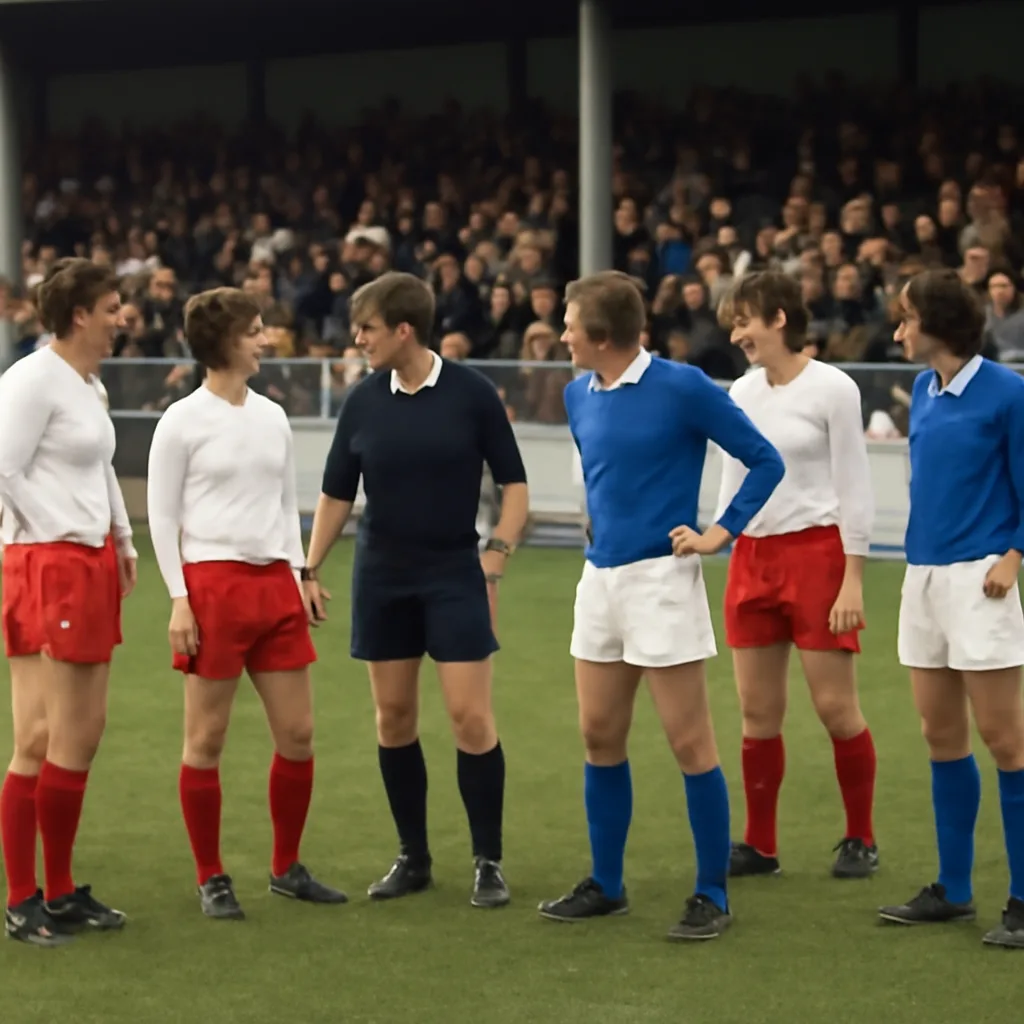
A crowded 1970s-era soccer pitch showing players surrounding an official near the sideline while a small group of teammates and officials watch; spectators in older clothing are visible in the stands.

On March 15, 1979, a soccer referee was reportedly forced off the pitch after players from one team surrounded and escorted him away following a contentious decision. Contemporary reports describe an unusually unified player response rather than isolated confrontation.


On March 15, 1979, during a league match widely reported at the time, a referee was chased off the field by the entire team after a disputed decision. Contemporary newspaper accounts and match reports describe a single incident in which players from the aggrieved side surrounded the official and effectively forced him to leave the playing surface. The episode stood out in period coverage for the scale of player involvement and for the disruption it caused to the fixture.

Available sources from the era—local press reports and brief wire-service summaries—indicate the incident followed what players and supporters viewed as a clearly incorrect foul or sending-off decision late in the game. Rather than a lone player confronting the official, journalists noted that multiple teammates encircled the referee and, amid heated protest, guided him toward the sideline and off the pitch. Match officials and league statements quoted then emphasized the seriousness of player encroachment on match officials and said disciplinary measures would be considered. Exact details (for example, precise wording of the disputed call, sequence of individual actions, or the referee’s own account) are variably reported or absent from surviving brief reports.

Context matters: the late 1970s saw robust local media coverage of lower-division and regional matches where refereeing standards, travel, and conditions could produce heightened tensions. Many such matches lacked the extensive photographic and video records common today, so reconstructions rely on contemporaneous press dispatches and later summaries in club histories. Where sources conflict or omit specifics, historians and chroniclers note uncertainty rather than attempting precise reconstruction of every moment.

The immediate aftermath reportedly included a league inquiry. Disciplinary outcomes in comparable incidents of the period ranged from fines and suspensions for involved players to censure of clubs; however, accessible public records for this particular match do not uniformly record the penalties, so any definitive statement about sanctions should be treated cautiously. The event is remembered in club and local narratives as an exceptional example of collective player protest, and it has been cited in retrospective discussions about the evolution of referee protection and the professionalization of match officiating.

Because available contemporary accounts are brief and sometimes inconsistent, key unresolved points include the referee’s own detailed account, comprehensive lists of disciplinary sanctions if any were imposed, and clear photographic or film evidence documenting the sequence. Researchers relying on press archives and club records can often corroborate the broad outline—a team escorting a referee off the field after a contentious decision on March 15, 1979—but should note gaps in the documentary record when asserting specifics.

This incident is a reminder of how match-day controversies were managed before modern stadium controls, extensive video review, and formalized referee-protection protocols. It also illustrates the limits of reconstructing single events from terse contemporary reports: the main facts (date, general sequence of players forcing the referee off the field, and ensuing league attention) are well attested in period sources, while many granular details remain uncertain or disputed among those sources.

Share this

Email Share on X Facebook Reddit

Did this surprise you?