AD 79: Mount Vesuvius Buries Pompeii and Herculaneum
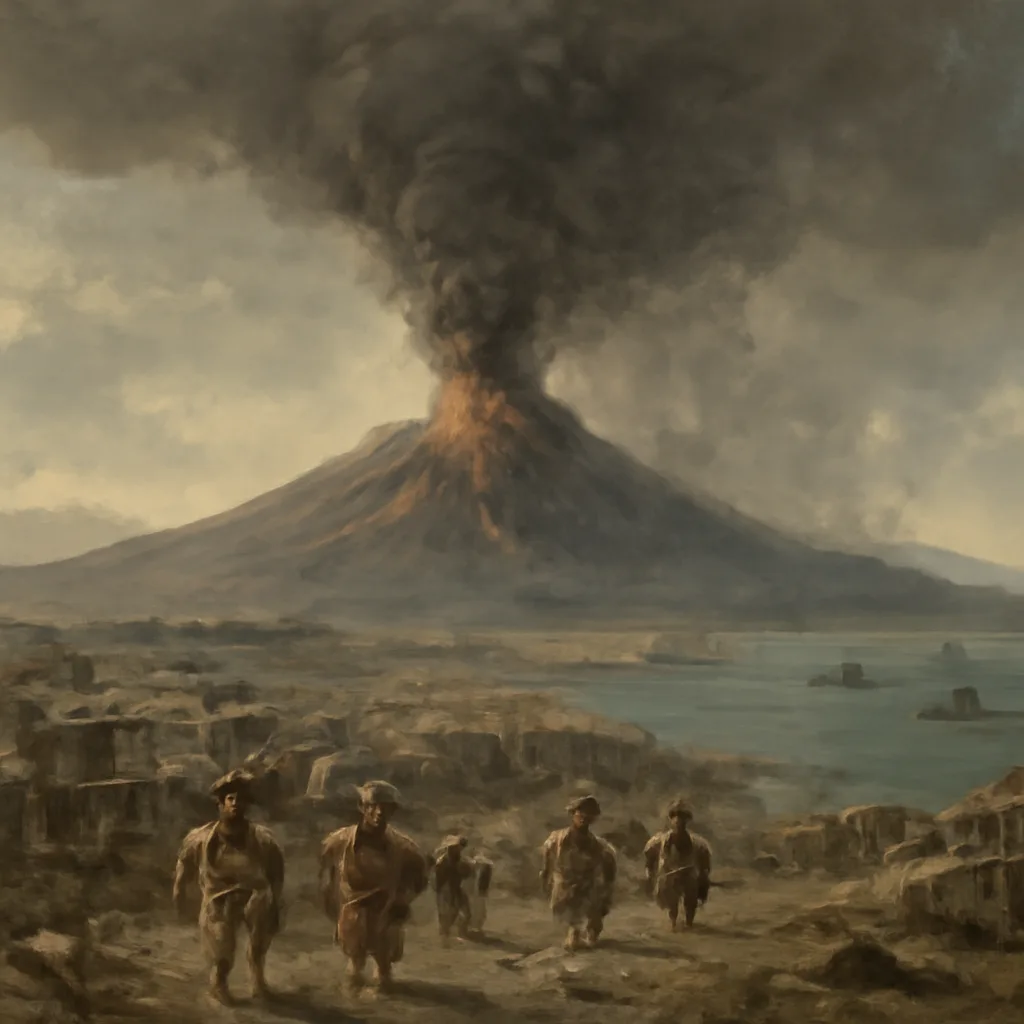
On 24 August AD 79, Mount Vesuvius erupted, sending ash, pumice and pyroclastic flows over nearby Roman towns; Pompeii and Herculaneum were rapidly buried, preserving buildings, objects and human remains beneath volcanic deposits.
On 24 August AD 79 (the traditional date recorded in later manuscripts), Mount Vesuvius produced a catastrophic eruption that devastated towns on the Bay of Naples, most notably Pompeii and Herculaneum. The eruption unfolded over a period of hours to days and combined explosive ejection of ash and pumice with later, high-density pyroclastic flows. These rapidly moving, hot currents of gas and volcanic material overwhelmed settlements close to the volcano, burying streets, houses and their inhabitants under meters of volcanic debris.
Contemporary written evidence is limited. Two letters preserved by the historian Pliny the Younger to the historian Tacitus provide the principal surviving eyewitness account. Pliny the Younger describes events observed from across the Bay of Naples and reports the death of his uncle, Pliny the Elder, who sailed across the bay to investigate and aid victims. These letters, written some years after the eruption, emphasize darkness, falling ash, and panic but do not provide a minute-by-minute chronology.
Archaeology has been central to reconstructing what happened. Excavations beginning in the 18th century and continuing to the present have revealed streets, houses, shops, frescoes, mosaics, and everyday objects frozen in place beneath volcanic deposits. In Pompeii, a heavy fall of pumice and ash accumulated on roofs, causing many buildings to collapse; people who remained in the city were often killed by roof collapse, asphyxiation, or subsequent pyroclastic surges. In Herculaneum, which lay closer to Vesuvius and was buried primarily by hot mudflows and pyroclastic density currents, many victims were preserved in positions indicating rapid death from extreme heat. Archaeologists have used plaster casts made in the 19th century and modern techniques such as CT scanning to study the forms of victims and the details of their belongings.
The deposits from the eruption created a unique time capsule for Roman urban life in the first century. Buildings preserve murals and architectural details; organic materials such as wooden furniture, food, and fabrics have survived in limited contexts—especially at Herculaneum where waterlogged, carbonized material was sealed beneath volcanic mud. The material record shows evidence of a typical Roman coastal economy: homes of varying sizes, shops, bakeries, workshops, and public buildings like baths and temples.
Dating the eruption has been a subject of scholarly debate. The traditional date, 24 August AD 79, comes from manuscript copies of Pliny’s letters. Some archaeological and environmental evidence—such as seasonal foods, clothing, and a charcoal inscription suggesting a later month—has led some scholars to propose a later date in October or November. Radiocarbon and other scientific analyses have provided support for a later date in at least some studies, but consensus has not fully shifted away from the conventional August date. Scholars therefore often note both the traditional date and the existence of alternative evidence.
The human toll is difficult to determine precisely. Estimates of the death toll vary widely; many inhabitants escaped by sea or through the countryside, while others perished. The sites themselves were largely abandoned for centuries and rediscovered in the 16th–18th centuries, leading to the long-running program of excavation that continues to yield new discoveries and insights into Roman life, economy and disaster response.
Mount Vesuvius remains an active volcano and a subject of ongoing geological study and monitoring. The AD 79 eruption is a key event in volcanology and archaeology because it illustrates the destructive power of explosive eruptions and how such events can produce exceptional preservation of cultural remains. Ongoing research continues to refine the chronology, environmental impacts and human stories of that summer—or autumn—near two millennia ago.