
← Back
02/14/1948 • 5 views

Supreme Court Rules Racially Segregated Housing Unconstitutional
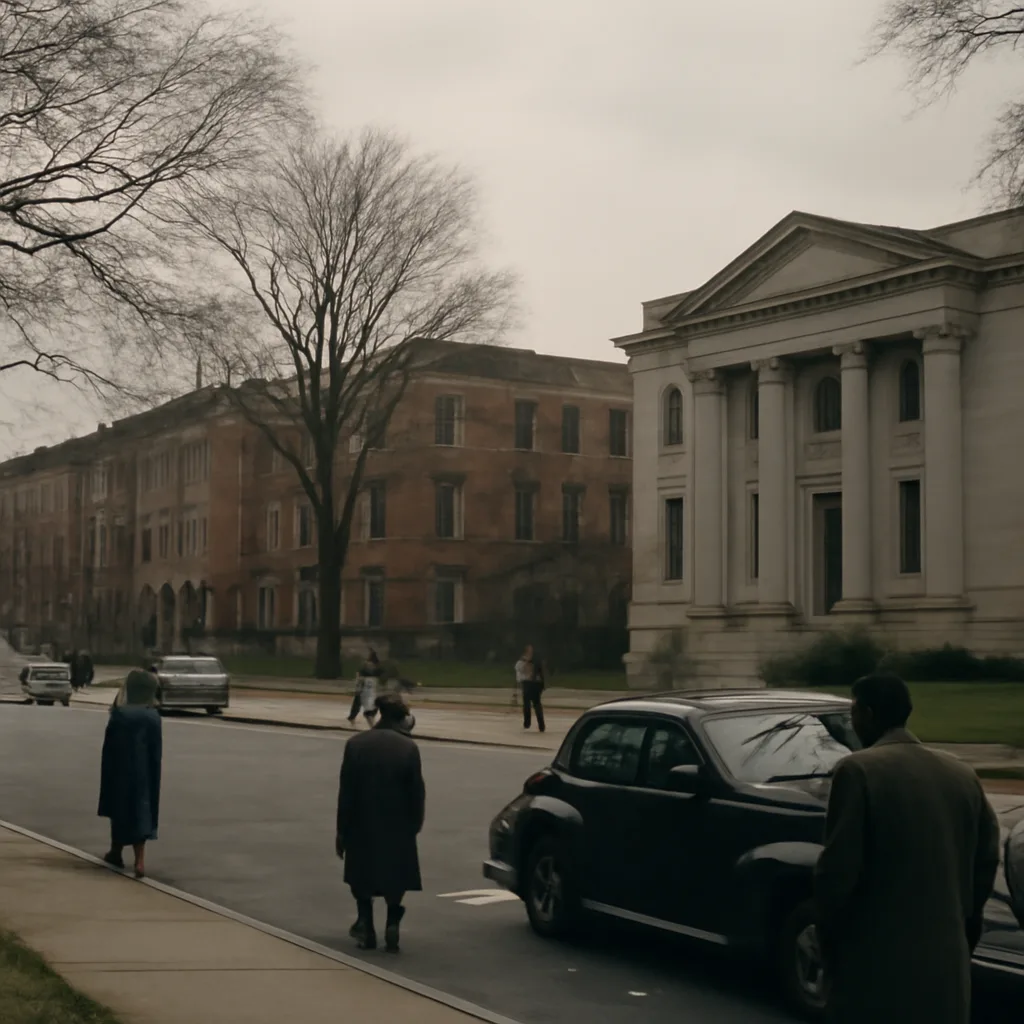
Urban neighborhood street in the 1940s with row houses and period automobiles, showing signage of a municipal building; no identifiable faces.

On February 14, 1948, the U.S. Supreme Court held that laws and ordinances enforcing racial segregation in housing violate constitutional protections, a decision that overturned longstanding local and state practices and signaled a legal shift in civil rights governance.


On February 14, 1948, the United States Supreme Court issued a landmark ruling finding that government-sanctioned racial segregation in housing could not withstand constitutional scrutiny. The decision addressed ordinances and statutory schemes that segregated neighborhoods by race, concluding that such measures were incompatible with constitutional guarantees of equal protection and due process as applied to municipal and state action.

Historical context
After the Civil War and Reconstruction, many state and local governments adopted laws, ordinances, and administrative practices that enforced racial separation in residence. Alongside private instruments such as racially restrictive covenants, these public measures helped shape sharply segregated urban and suburban landscapes through the first half of the 20th century. Legal challenges to such public segregation built on growing postwar civil rights litigation aimed at dismantling state-supported racial discrimination.

The Court’s reasoning
In its opinion, the Court focused on the constitutional limits of state and municipal authority to impose classifications that segregate citizens by race. The majority analyzed whether governmental segregation served a legitimate public purpose and whether it was consistent with constitutional guarantees. Finding that racially based residential classifications inflicted concrete harms and stigmatized protected groups without adequate governmental justification, the Court held that such measures violated principles of equal protection and procedural fairness when enforced by public authorities.

Scope and implications
The ruling directly invalidated statutory and municipal schemes that required or authorized racial segregation in housing. While the decision did not, by itself, erase private practices such as racially restrictive covenants and discriminatory real-estate steering by private actors, it removed a key pillar of publicly sanctioned segregation and provided an enforceable precedent for subsequent challenges to both public and private barriers to integrated housing. Courts and civil-rights advocates used the decision as part of a broader legal campaign to contest patterns of residential discrimination across the country.

Limitations and legacy
The Court’s ruling marked a significant constitutional rebuke of government-enforced housing segregation, but it did not immediately produce integrated neighborhoods. Many localities responded with alternative tools to preserve segregation, and private discrimination by lenders, real-estate agents, and homeowners’ associations continued to shape residential patterns for decades. Nonetheless, the decision is historically important as one of the judiciary’s early, binding repudiations of racially based public housing policies, and it contributed to the legal groundwork for later civil-rights advances that targeted both public and private mechanisms of segregation.

Scholarly and legal significance
Legal historians view the 1948 decision as part of a postwar series of constitutional rulings that expanded judicial engagement with civil-rights claims. The opinion demonstrated the Court’s willingness to scrutinize municipal and state classifications rooted in race and reinforced the principle that government action could not constitutionally create or maintain racially segregated living conditions. Subsequent litigation and legislation built on this foundation to address a broader array of discriminatory housing practices in the mid-20th century.

Share this

Email Share on X Facebook Reddit

Did this surprise you?