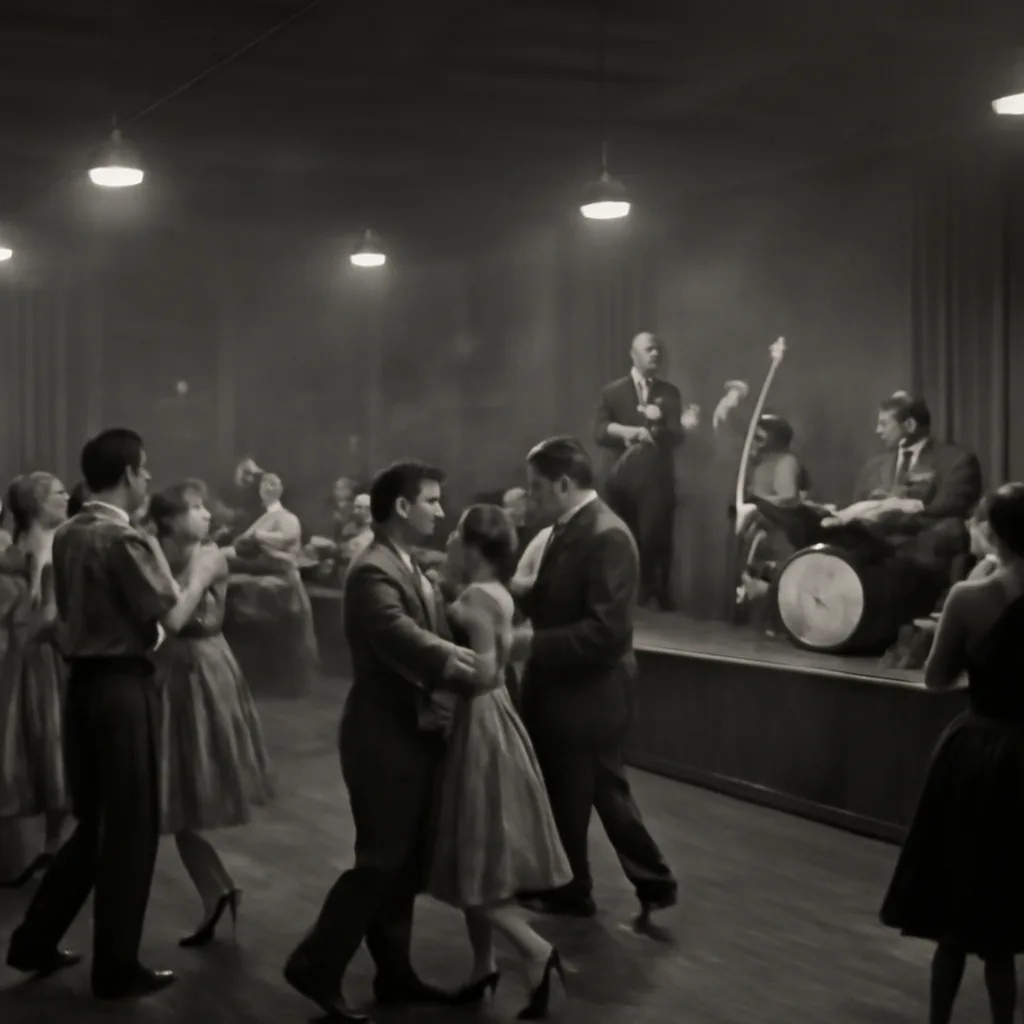
A landmark night: early credited public debut of rock and roll, April 12, 1954
On April 12, 1954, music historians mark an early, often-cited public performance linked to the emergence of rock and roll—a moment reflecting shifts in rhythm, instrumentation, and audience response that helped shape a new popular style.
On April 12, 1954, an event often cited in histories of popular music is remembered as one of the early public performances associated with what would soon be called rock and roll. The mid-1950s were a transitional period in American music: rhythm and blues, country, gospel and pop were cross-pollinating in recording studios, juke joints, dance halls and on radio, producing new sounds that emphasized backbeat, electric guitar, and a driving rhythmic feel.
What historians mean by “first public performance of rock and roll” is not a single unequivocal moment but a cluster of performances and recordings in the early 1950s that signaled a stylistic shift. Several performances and releases from 1953–1955 have been proposed as candidates: live appearances by artists such as Wynonie Harris, Big Joe Turner and Bill Haley, and record releases like Jimmy Preston’s “Rock the Joint” (1949), Jackie Brenston and his Delta Cats’ “Rocket 88” (recorded March 1951), and Bill Haley & His Comets’ later 1954 recordings. April 12, 1954 sits within this contested field as a date cited in some narratives for an influential public performance that showcased the rhythmic energy and electric instrumentation associated with the new style.
Contemporary press coverage, eyewitness accounts and later historical analyses vary in how they assign the title “first.” Music scholarship stresses that rock and roll emerged from African American musical traditions, including rhythm and blues, as well as from country and western influences; the genre’s public emergence involved many performers, venues and regional scenes rather than a single originating event. Thus, calling any single April 1954 performance the definitive first public performance oversimplifies a complex cultural development.
That said, performances in early 1954—both in clubs and on radio broadcasts—demonstrated a growing audience appetite for a louder, dance-oriented sound driven by electric guitar, amplified rhythm sections and an insistently accented backbeat. These performances contributed to the rapid popularization of the style through the mid-decade, culminating in broader national exposure by artists who brought elements of rhythm and blues and country into mainstream pop charts.
When writing about the April 12, 1954 date, careful historians distinguish between ‘‘firsts’’ in recording, in nationwide chart success, and in local or regional public performances. Archive-based scholarship and contemporaneous advertisements or reviews can sometimes confirm specific concerts or broadcasts; in other cases, memories and retrospective attributions have shifted over time. Responsible accounts therefore present April 12, 1954 as part of a series of formative public performances that collectively mark rock and roll’s emergence rather than as an uncontested single origin.
In summary, April 12, 1954 is a useful reference point within a broader, contested timeline: it represents an early public moment tied to the sonic and cultural changes that produced rock and roll, while also exemplifying how the genre’s origins are distributed across many artists, venues and communities rather than traceable to one solitary event.