
← Back
04/12/1981 • 7 views

NASA Launches Space Shuttle Columbia on First Orbital Flight
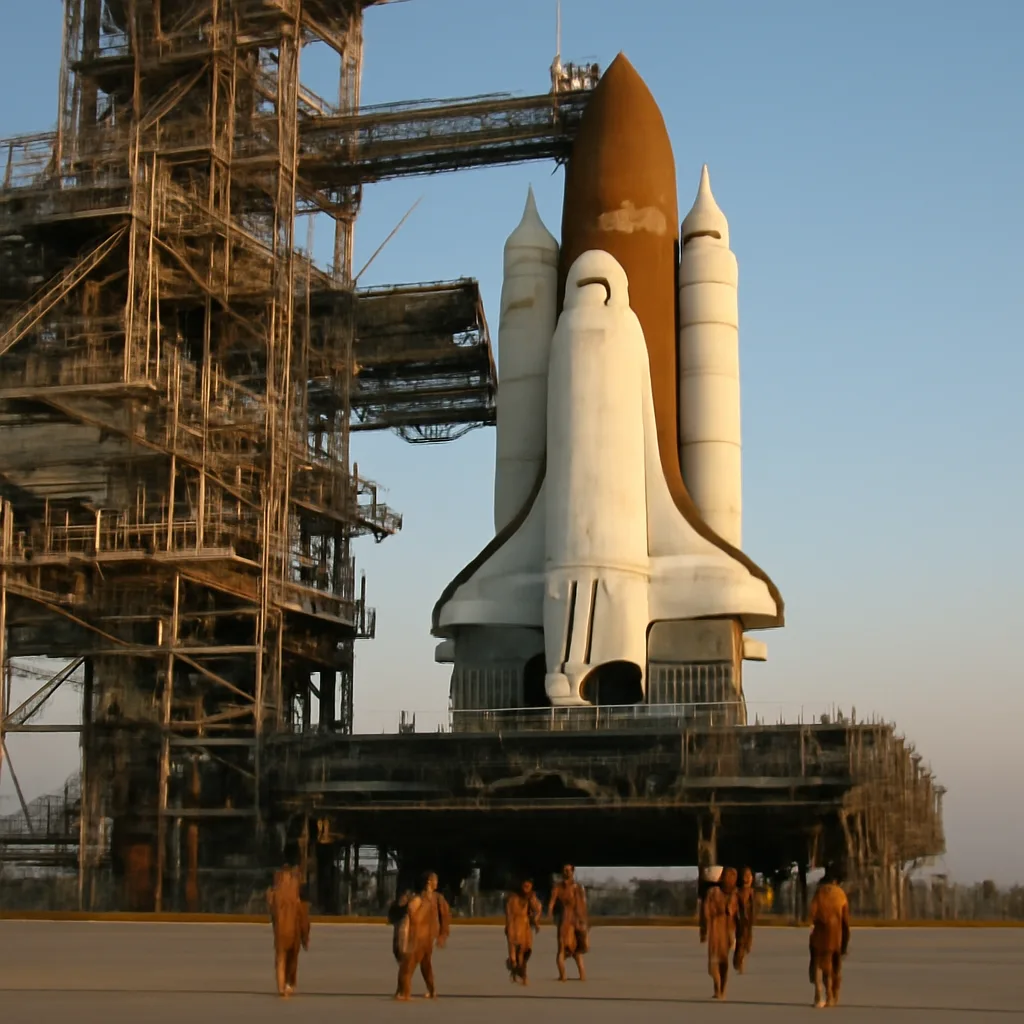
Space Shuttle Columbia on the launch pad with external tank and solid rocket boosters at Kennedy Space Center, Launch Complex 39A, early morning pre-launch preparations.

On April 12, 1981, NASA launched the Space Shuttle Columbia on STS-1, the program’s inaugural orbital flight, marking the first time a reusable crewed spacecraft reached orbit and returned safely to Earth.


On April 12, 1981, NASA launched the Space Shuttle Columbia on mission STS-1, the first orbital flight of the Space Shuttle program and the first time a reusable crewed spacecraft was sent into orbit and recovered. The orbiter, designated OV-102 Columbia, stood atop a stack consisting of an external fuel tank and two solid rocket boosters at Launch Complex 39A at the Kennedy Space Center in Florida. The crew for STS-1 consisted of two astronauts: commander John W. Young and pilot Robert L. Crippen.

The shuttle concept had developed over two decades, drawing on lessons from earlier programs including Mercury, Gemini and Apollo, and incorporating the novel idea of a winged, reusable orbiter capable of launching like a rocket and landing like an airplane. Columbia itself was a test vehicle: while built to operational standards, its first flight was intended to demonstrate the integrated performance of the orbiter, the external tank, the solid rocket boosters, and ground systems under real flight conditions.

Launch day tested both machine and procedures. A ground-to-flight test program had already exercised many systems, but STS-1 was the only mission in which a new orbital vehicle would make its maiden voyage with a crew aboard. Young and Crippen carried out an intensive series of onboard and ground-based checks once in orbit, assessing vehicle systems including the Canadarm-compatible payload bay doors, flight controls, life support, and thermal protection elements. The mission profile included a series of planned maneuvers and checkout activities over two days in orbit.

Columbia completed 36 orbits of Earth during the 54.5-hour mission. Reentry and landing at Edwards Air Force Base in California were closely monitored as critical tests of the orbiter’s thermal protection system and aerodynamic handling during hypersonic and subsonic flight regimes. Columbia touched down on April 14, 1981, marking a successful end to STS-1 and validating many aspects of the shuttle design.

The flight had immediate and long-term significance. It demonstrated that a winged, reusable crewed spacecraft could be launched and recovered, and it paved the way for subsequent shuttle missions that would expand human presence in low Earth orbit, deploy satellites, conduct scientific research, and later service the Hubble Space Telescope and support construction of the International Space Station. Operational lessons from STS-1 influenced procedures, inspection practices and safety assessments applied across the shuttle fleet in the years that followed.

STS-1 also prompted discussion about risk management. Sending a crew on a first orbital flight was controversial at the time; NASA leaders and the astronaut corps weighed the risks against program schedules and objectives. The mission succeeded without major incident, but later shuttle accidents—most notably the Challenger loss in 1986 and the Columbia loss in 2003—would lead to deeper scrutiny of shuttle design and operational risk.

Historically, April 12 carries additional resonance: it is the anniversary of Yuri Gagarin’s first human orbital flight in 1961. NASA’s STS-1 on April 12, 1981, entered that same calendar tradition by marking another milestone in crewed spaceflight history. Columbia’s flight remains a key early achievement of the Space Shuttle program and a pivotal moment in the broader history of human spaceflight.

Share this

Email Share on X Facebook Reddit

Did this surprise you?