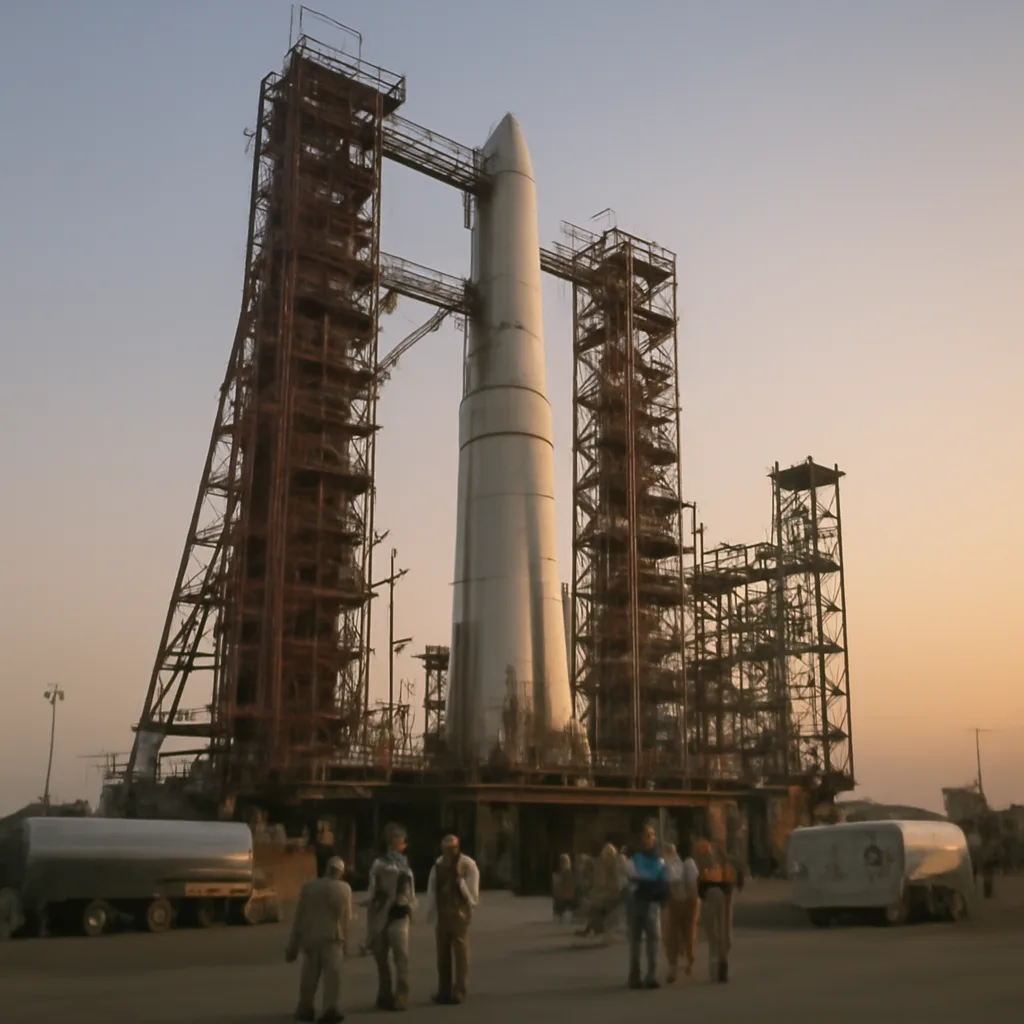
On August 20, 1977, NASA launched Voyager 2, a robotic spacecraft destined for a grand tour of the outer planets to study Jupiter, Saturn, Uranus and Neptune and to send back unprecedented data about their atmospheres, moons and magnetic environments.
On August 20, 1977, NASA launched Voyager 2 from Cape Canaveral, Florida, beginning one of the most ambitious planetary exploration missions of the 20th century. Built by the Jet Propulsion Laboratory (JPL), Voyager 2 was part of a two-spacecraft program—Voyager 1 and Voyager 2—designed to take advantage of a rare planetary alignment that occurs every 176 years, allowing a single spacecraft to visit multiple outer planets using gravity-assist maneuvers.
Voyager 2's primary mission was a Grand Tour of the outer planets. After liftoff atop a Titan IIIE-Centaur rocket, Voyager 2 headed for Jupiter and Saturn, where it conducted flybys that vastly improved knowledge of planetary atmospheres, ring systems and satellites. The spacecraft carried a suite of scientific instruments including imaging systems, spectrometers, magnetometers and plasma detectors to measure the composition, structure and dynamics of the environments it encountered.
Though launched 16 days before its twin Voyager 1, Voyager 2 followed a trajectory that would later permit unique encounters. Voyager 1 was sent on a faster, more direct path to Jupiter and Saturn; Voyager 2's trajectory was tailored to continue outward after Saturn toward Uranus and Neptune. Following successful flybys of Jupiter (1979) and Saturn (1981), Voyager 2 used gravity assists to reach Uranus (1986) and Neptune (1989), becoming the only spacecraft to date to visit those two ice giants.
At each planet, Voyager 2 returned transformative discoveries. At Jupiter the mission revealed complex atmospheric dynamics, active volcanism on the moon Io, and intricate ring and magnetospheric phenomena. At Saturn the spacecraft provided detailed views of ring structure and discovered additional moons. Voyager 2's flyby of Uranus revealed a tilted magnetic field and a system of previously unknown moons and rings. Its Neptune encounter produced the first close-up observations of Neptune’s Great Dark Spot, high-speed winds, and detailed imagery of Triton, revealing geyser-like plumes and a geologically young surface.
Beyond the planetary encounters, Voyager 2 contributed vital data about the heliosphere—the bubble of charged particles and magnetic fields created by the Sun. Its instruments measured solar wind properties and the interplanetary medium as the spacecraft traveled outward. In 2018 Voyager 2 crossed the heliopause, entering interstellar space and joining Voyager 1 in providing direct measurements from beyond the influence of the Sun.
Both Voyagers also carry identical golden phonograph records intended as symbolic messages for any intelligent extraterrestrial life that might encounter them; the records contain sounds and images selected to portray the diversity of life and culture on Earth.
Voyager 2's long-lived engineering, including its power system and instruments, enabled decades of science well beyond its original mission plan. The mission set new benchmarks for planetary exploration, expanded understanding of the outer solar system, and left a lasting legacy in planetary science and spacecraft design.
Note: Dates and sequence of planetary encounters cited here are based on NASA and JPL historical records. Some technical details about instrument operations and data return evolved over the mission's lengthy lifetime and are documented in primary NASA archival sources.