
← Back
08/20/1989 • 6 views

Chinese troops move into Beijing as student-led protests escalate
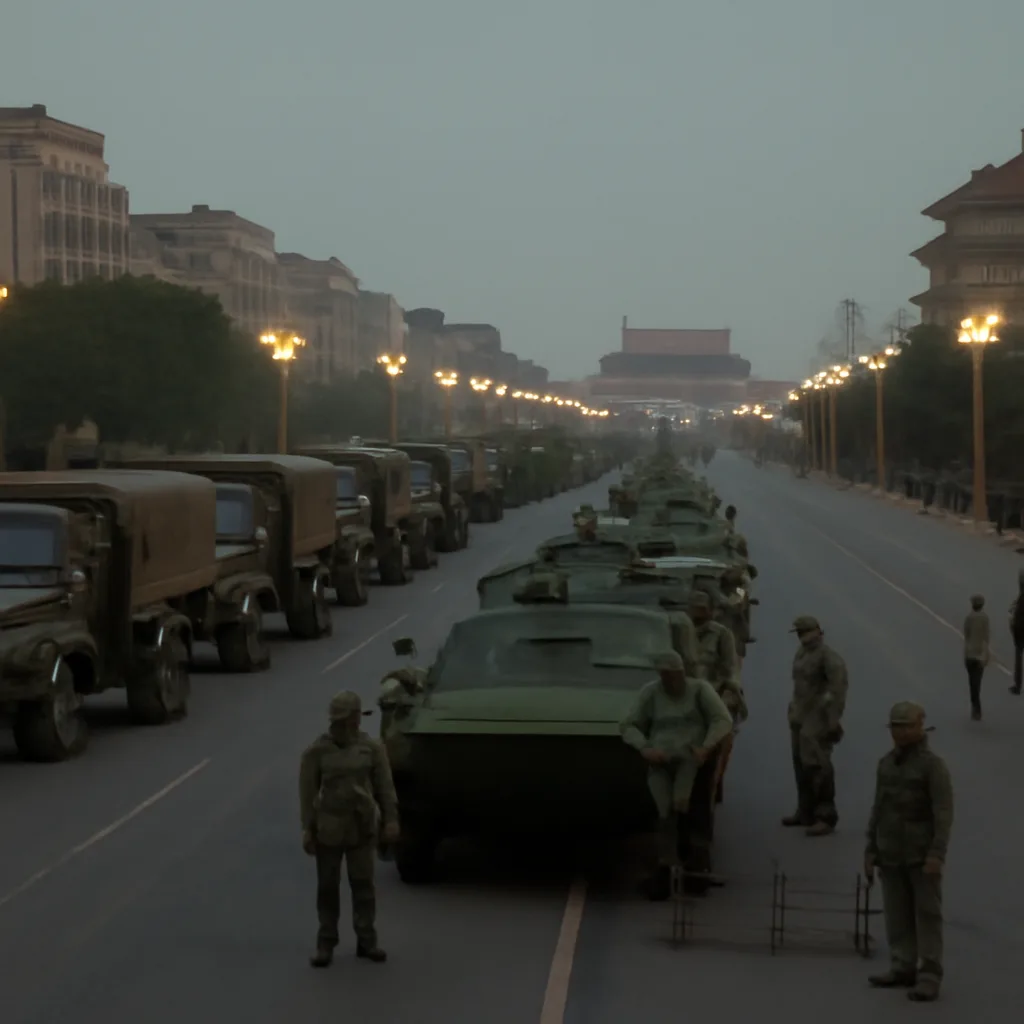
Armored military vehicles and uniformed troops moving along a wide Beijing avenue near Tiananmen area, with civilians and barricades visible; scene reflects late-1980s urban setting and a tense atmosphere.

On August 20, 1989, Chinese authorities ordered People’s Liberation Army units into Beijing after weeks of student-led demonstrations pressing for political reform; the deployment marked a decisive turn in the government's response to the protests.


In mid-August 1989, after nearly two months of sustained demonstrations centered on Tiananmen Square and other urban sites, the Chinese government ordered People’s Liberation Army (PLA) units into Beijing. The move followed a period of intensified confrontation between protesters — many of them university students joined by workers and others — and authorities who had sought to clear encampments and reassert control.

Background: The demonstrations began in April 1989 after the death of former Communist Party leader Hu Yaobang, whose perceived liberalism had made him a symbol for calls for political openness and anti-corruption measures. Over ensuing weeks the gatherings grew, with protesters staging sit-ins, hunger strikes and public vigils that called for greater transparency, freedom of speech, and governmental reforms. The situation became a focal point of domestic and international attention as negotiations within the Chinese leadership about how to respond faltered.

Decision to deploy troops: In late spring and summer 1989, hardline elements within the Chinese leadership emphasized restoring order and restoring Party authority. After meetings at the highest levels, leaders declared martial law in parts of Beijing in mid-May. The decision in August to move regular PLA units into the capital reflected a determination to clear major protest sites and end mass demonstrations. Troop movements into and around Beijing took place over days and nights, accompanied by checkpoints and restrictions on movement.

The dynamics on the ground: By August 20th, city streets saw increased military presence and armored vehicles. Authorities sought to secure major avenues and government buildings, and curfews and transportation restrictions were enforced in many districts. Protesters and bystanders encountered roadblocks and patrols as PLA units advanced from surrounding provinces. Communication between organizers and participants was fragmented amid the chaotic environment, and many residents were uncertain about the full scale and intent of the military operation.

Consequences and uncertainty: The August deployment represented a turning point in the confrontation between the state and demonstrators. Exact details about interactions between troops and civilians vary across accounts; some reports describe forcible clearances and clashes in several locations around the city in the days that followed. The government framed the operation as necessary to restore order, while protesters and many international observers characterized it as a heavy-handed suppression of peaceful demands. Estimates of casualties and the scale of repression differ among sources and remain a subject of historical investigation and debate.

International reaction and domestic aftermath: News of the troop movements drew immediate international concern and condemnation from some governments and organizations, which called for restraint and protection of civilians. Within China, the deployment and subsequent actions profoundly affected political life: tightened controls, a campaign to reassert Party authority, and a suppression of dissent in the months and years that followed.

Historical significance: The August 20 deployment is widely seen as a decisive escalation that shifted the crisis from prolonged civil protest to a confrontation resolved by force. It remains a pivotal event in late-20th-century Chinese history, shaping domestic politics, state-society relations and international perceptions of the People’s Republic of China. Researchers and historians continue to examine archival material, eyewitness testimony and official records to clarify the sequence of events and their human and political costs.

Notes on sources and uncertainties: Contemporary reporting, later memoirs, diplomatic cables and scholarship provide overlapping but sometimes conflicting accounts of troop movements, orders and casualty figures. Where specifics are disputed, historians note gaps in the public record and the sensitivity of archival access in China, which affects definitive reconstruction of every detail.

Share this

Email Share on X Facebook Reddit

Did this surprise you?