
06/03/1941 • 6 views
First Successful Human Test of Penicillin Announced
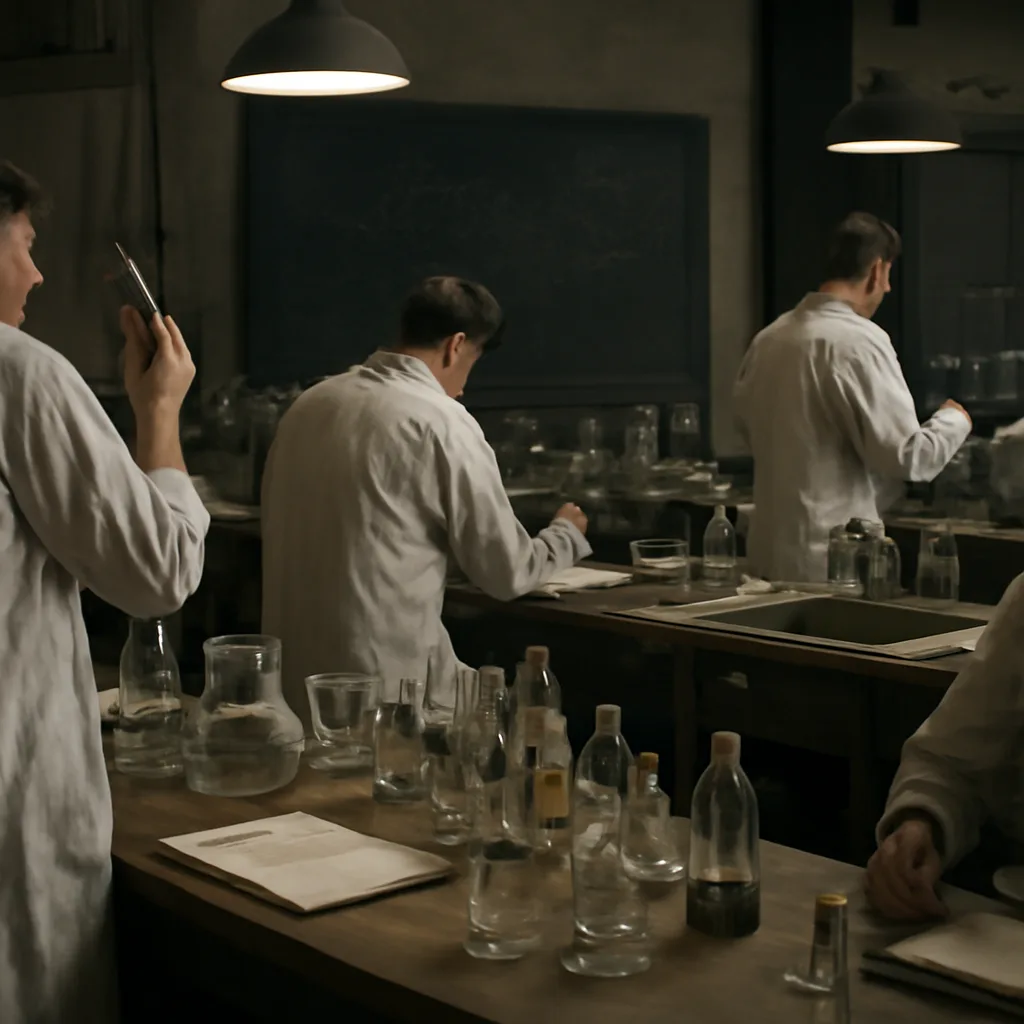
On June 3, 1941, researchers publicly announced the first successful therapeutic use of penicillin in a human patient, marking a pivotal step toward antibiotic medicine despite limited supply and ongoing development.
The case leading to the 1941 announcement involved a patient with a severe bacterial infection who responded positively to penicillin treatment. Because initial supplies of purified penicillin were extremely limited, clinicians administered only small, closely monitored doses. Those early administrations demonstrated that penicillin could markedly reduce bacterial infection in a human subject with fewer toxic effects than many contemporary treatments, providing clear proof of concept for its clinical utility.
These initial successes were achieved under significant constraints. Production methods were primitive by later standards: researchers had to extract and concentrate penicillin from cultures in small batches, and yields were low. The scarcity of the drug shaped early clinical practice—physicians prioritized cases where the potential benefits justified use of the scarce material. Simultaneously, researchers worked on improving fermentation and purification techniques to increase yield.
The 1941 announcement did not mark the immediate, widespread availability of penicillin. Over the next several years, especially with U.S. involvement and scale-up during World War II, industrial production techniques were developed that transformed penicillin from a scarce laboratory product into a mass-produced antibiotic. That scaling up owed much to collaborative efforts among British and American scientists and industry, the identification of higher-producing strains of Penicillium, and advances in deep-tank fermentation and downstream processing.
Historically, the 3 June 1941 announcement is best understood as a crucial proof of concept rather than the endpoint of a discovery. It validated decades of laboratory work and prompted intensified efforts to overcome production bottlenecks. The subsequent widespread use of penicillin in the mid-to-late 1940s dramatically reduced deaths from wound and systemic bacterial infections and inaugurated the antibiotic era, reshaping clinical practice and public health.
Scholars note that while Fleming discovered penicillin’s antibacterial action, the practical clinical development required a team effort involving clinical trials, chemical purification, and industrial manufacturing. The 1941 announcement has therefore been framed in historical accounts as a turning point that linked laboratory discovery to therapeutic application, setting the stage for the rapid expansion of antibiotic therapies.
Sources for this summary include contemporaneous medical literature from the early 1940s and later historical studies of penicillin’s development. Where exact details of individual early cases vary among accounts, historians agree on the broad sequence: Fleming’s discovery (1928), Oxford-based purification and early human treatments culminating in 1941’s announced success, and large-scale production and widespread clinical use during and after World War II.