
10/01/2005 • 3 views
Spain legalizes same-sex marriage amid large protests
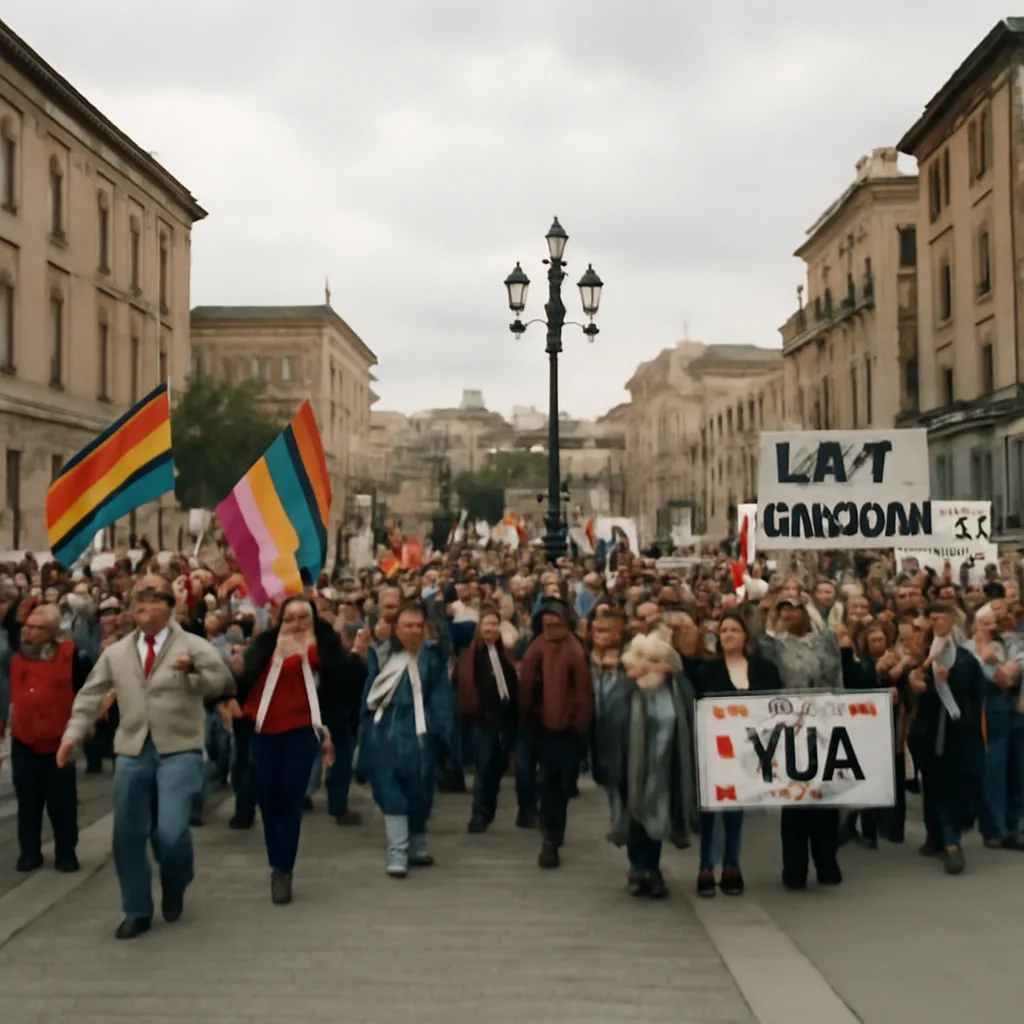
On October 1, 2005, Spain’s parliament approved a law allowing same-sex couples to marry and adopt, making Spain the third country to legalize same-sex marriage; the reform prompted large demonstrations both supporting and opposing the change.
The reform followed several years of political debate and activism. The governing Spanish Socialist Workers’ Party (PSOE), led by Prime Minister José Luis Rodríguez Zapatero, had made same-sex marriage a key part of its platform. Supporters framed the change as an expansion of civil rights and equality under the law, arguing that marriage should be accessible to consenting adults regardless of sex or sexual orientation. Opposition came from a range of conservative political groups, sectors of the Catholic Church, and social conservatives who argued the law would undermine traditional family structures.
Public reaction was intense and highly visible. Large demonstrations took place across Spain: advocates for lesbian, gay, bisexual and transgender (LGBT) rights held rallies celebrating the reform, while conservative and religious groups organised mass protests opposing the law. Media coverage at the time documented scenes of both jubilation and anger in city streets, and the issue dominated national political discussion.
Legally, the reform had immediate effects on civil status registers and family law. Same-sex couples gained access to civil marriage ceremonies and the legal protections that accompany marriage under Spanish law, including inheritance rights, spousal benefits, and joint adoption. The extension of adoption rights was one of the most contested aspects of the legislation and was central to public debate.
Internationally, Spain’s law placed it among the first countries to legalise same-sex marriage: the Netherlands (2001) and Belgium (2003) had done so earlier, and Spain became the third country to enact national marriage equality. The Spanish reform influenced debates elsewhere in Europe and beyond, contributing to broader conversations about legal recognition of same-sex relationships.
The law’s passage also produced legal and political challenges. Some regional and national conservative actors sought review by Spain’s Constitutional Court, contesting the law’s compatibility with the constitution. The court ultimately upheld the law’s constitutionality in subsequent rulings, though debates continued in political and social arenas.
In the years after 2005, marriage equality contributed to greater visibility and legal protections for LGBT people in Spain. Polling and public opinion shifted over time toward broader acceptance, and Spain came to be regarded as one of the more progressive countries in Europe on LGBT rights. Nonetheless, the immediate period around the law’s passage was marked by pronounced social conflict, reflecting deep divisions over questions of family, religion, and civil rights.
This account summarises the legislative change and the contemporaneous public response. Specific details about votes, amendments, and subsequent court rulings are matters of public record and can be verified in Spanish parliamentary archives and Constitutional Court decisions from 2005–2012.