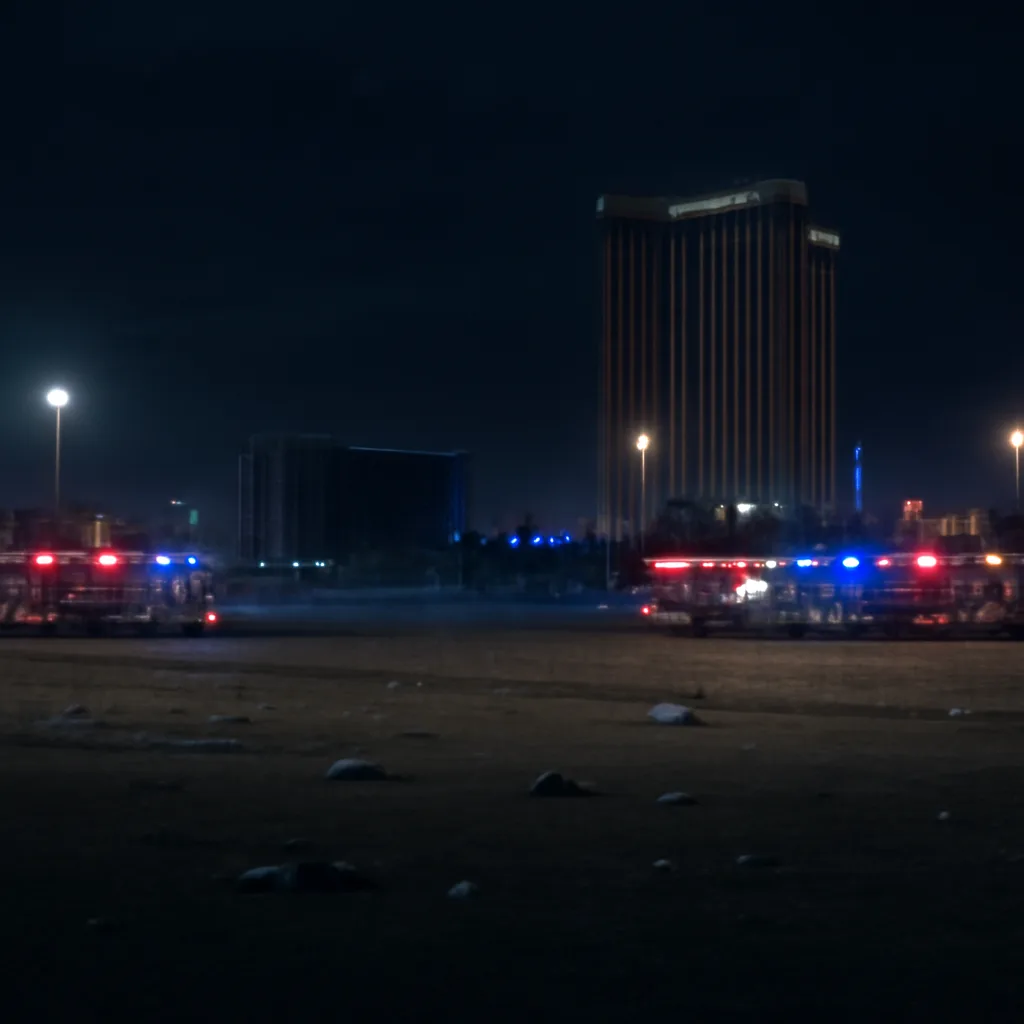
Gunman opens fire from Las Vegas hotel, killing dozens at outdoor music festival
On October 1, 2017, a shooter firing from a high-rise hotel suite at the Mandalay Bay Resort and Casino in Las Vegas opened fire on a crowd attending the Route 91 Harvest music festival, killing 58 people and injuring hundreds in the deadliest mass shooting in modern U.S. history.
On the night of October 1, 2017, during the final night of the three-day Route 91 Harvest country music festival on the Las Vegas Strip, a gunman opened sustained fire from a high floor of the Mandalay Bay Resort and Casino into the crowd gathered on an open field. The attack began shortly before 10:08 p.m. local time and continued in bursts for approximately 10 minutes, according to official timelines and law enforcement statements.
First responders and festival attendees described chaotic scenes as people fled the concert grounds, sought cover behind stage structures and vendor booths, and attempted to help the wounded. Emergency medical services, Las Vegas Metropolitan Police Department (LVMPD), and other agencies converged on the area; hospitals in the region received large numbers of patients with gunshot wounds and injuries from trampling and broken glass.
Law enforcement located the shooter inside a suite on the 32nd floor of the Mandalay Bay hotel. Officers breached the room and found the shooter dead from a self-inflicted gunshot wound. Investigators recovered numerous firearms and a significant quantity of ammunition in the suite and in other locations associated with the suspect.
Authorities identified the perpetrator as a 64-year-old man from the area. In the immediate aftermath, investigators worked to establish a motive. The Federal Bureau of Investigation (FBI) and LVMPD conducted a multiagency investigation that examined the suspect’s planning, weapons purchases, travel, and communications. Over months of inquiry, federal and local investigators found no clear evidence tying the shooter to an extremist organization or a clear political or ideological motive. Some aspects of the attacker’s planning and behavior remained difficult to explain definitively in public reports.
The confirmed death toll from the shooting was 58 victims killed at the scene or later at hospitals; hundreds more were injured, with nonfatal injuries ranging from gunshot wounds to injuries sustained during the chaotic evacuation. In the years following the attack, survivors and families of victims pursued civil litigation against the hotel and other entities, alleging lapses in security; some lawsuits were settled.
The incident prompted national debate in the United States about gun policy, mass shooting prevention, public safety at large events, and the responsibilities of hotels and venues to monitor and report suspicious behavior. It also led to reviews of emergency response protocols for mass-casualty incidents and changes in how large outdoor events on the Las Vegas Strip are secured and coordinated with law enforcement.
Multiple official reports, news investigations, and court filings have documented the sequence of events and the investigatory findings. While many basic facts—location, timing, casualty figures, and the identification of the shooter—are well established, questions about motive and certain planning details were not fully resolved in public records. The attack remains one of the deadliest mass shootings in modern U.S. history and had a lasting impact on survivors, first responders, and the broader Las Vegas community.