
02/27/1910 • 6 views
A 1910 Impersonation Scandal: An Early Case of Catfishing-Style Fraud
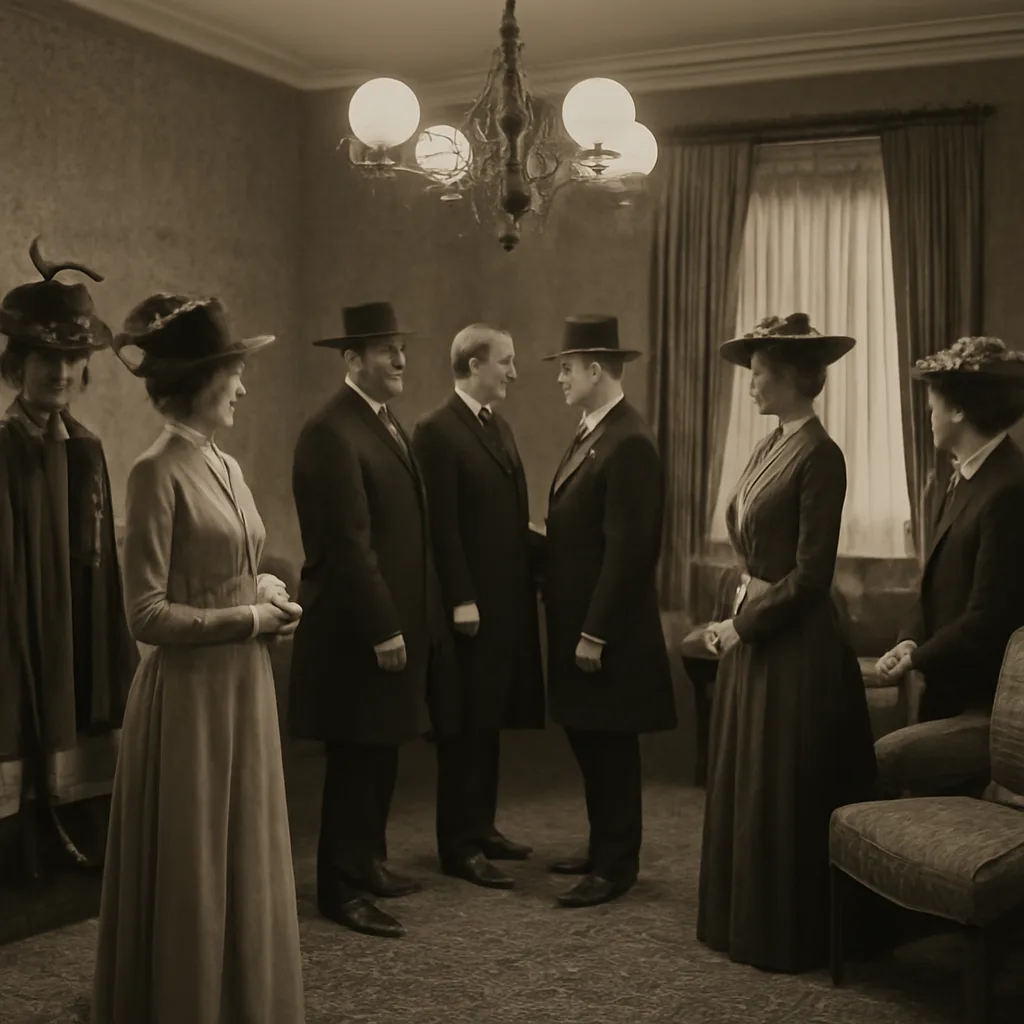
In February 1910 a New York social circle was shaken when a woman using another’s identity secured introductions and money—an early documented instance resembling modern “catfishing.” The case exposed vulnerabilities in personal networks and press reporting of the era.
The episode unfolded in a context where social reputation and personal introductions were key to access. The impersonator adopted identifying details of a socially known woman, attended social gatherings and secured lodgings and loans by persuading hosts and associates that she was who she claimed to be. When the ruse was discovered, the press covered the scandal with both moralizing commentary and practical interest in how the deception had succeeded.
Primary reports are newspaper stories and court notices typical of the period; law-enforcement and civil records from 1910 are fragmentary, and the surviving accounts vary in emphasis and detail. Some reports concentrated on the financial losses claimed by victims, others on the perceived impropriety of a woman moving independently through social circles, and still others on legal consequences for the impersonator. The incident did not inaugurate a sustained legal category equivalent to modern online identity fraud but did highlight gaps in how private trust relationships could be exploited.
Historically, similar impersonation schemes have long precedents—con artists have exploited assumed identities for centuries—but what makes the 1910 case notable for modern readers is its clear structural resemblance to later “romance” or persona-based frauds: creation of a false identity, cultivation of personal contact, extraction of money or favors, and reliance on social verification rather than formal documentation. In 1910, the verification mechanisms available to people in private social networks were largely testimonial: introductions, letters of reference, and reputation. Where those mechanisms failed, impostors could operate effectively for a time.
This episode also illustrates how media coverage shaped public understanding of personal fraud in the early 20th century. Newspaper language reflected contemporary gender norms and anxieties about urban anonymity; reportage sometimes sensationalized the story while offering practical warnings about accepting strangers on the basis of social claims alone. Legal follow-up varied: some impostors faced arrest or civil suits, while others moved on without formal penalties, exploiting the mobility and limited record-sharing of the era.
When placing the 1910 incident in a longer history, historians caution against treating it as a singular origin of modern catfishing. The practice of impersonation adapted to available communication technologies—letters, telephone, travel, and later radio and the internet—so similar patterns reappear across time. The 1910 case is a useful documented example showing how personal deception operated before digital mediation, and how social trust could be weaponized by someone assuming another’s identity.
Because surviving accounts come primarily from contemporary newspapers and uneven legal records, some details remain disputed or incomplete: precise motives, the full scope of financial harm, and later outcomes for those involved are not consistently documented. Scholars rely on cross-referencing press reports, court filings where available, and municipal archives to reconstruct events, and they treat the 1910 case as illustrative rather than definitive.
In sum, the 27 February 1910 impersonation scandal stands as an early recorded instance of persona-based deception that mirrors key elements of modern catfishing: fabricated identity, social engineering to gain trust, and extraction of material support. Its historical value lies in showing how longstanding human behaviors adapted to the social technologies of a given era, and how communities and institutions struggled to respond when personal trust was abused.