
06/21/1948 • 4 views
NBC’s June 21, 1948 TV News Broadcast Becomes First Nationwide Telecast
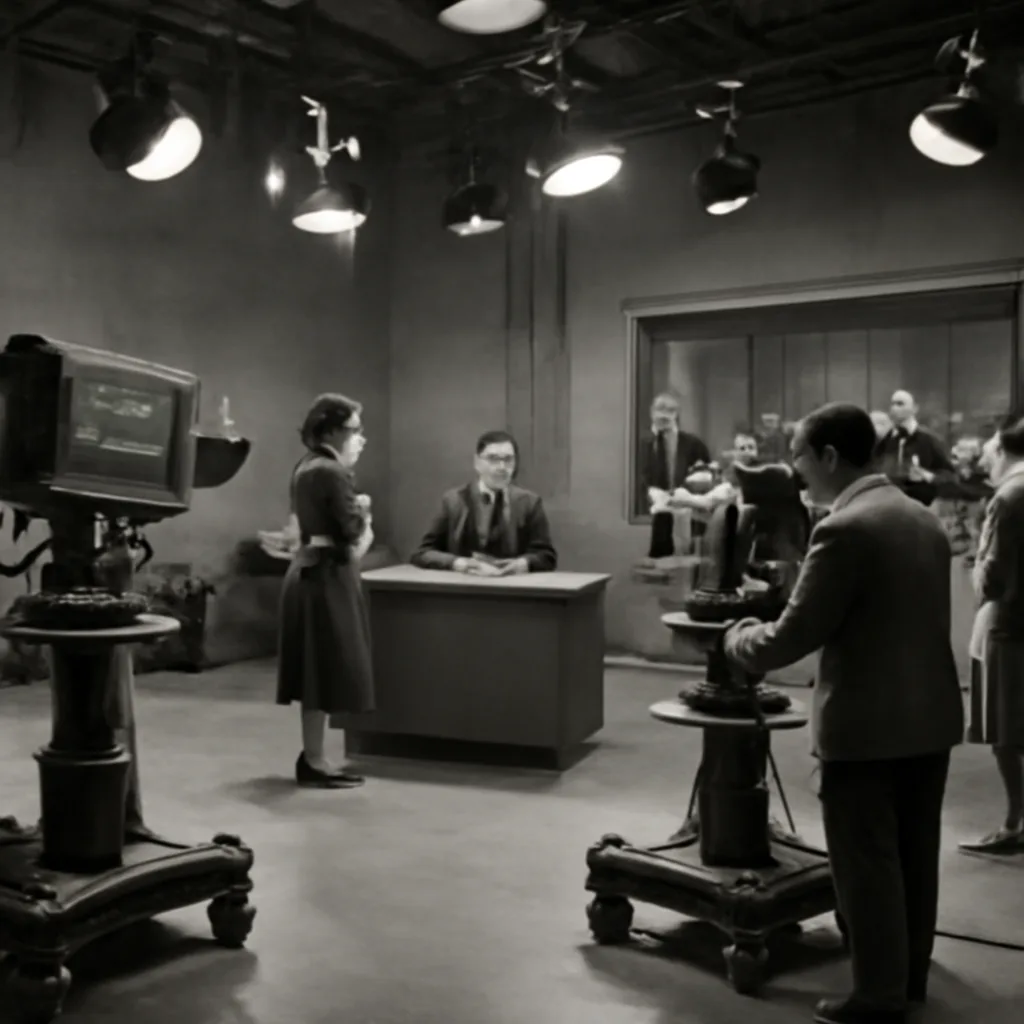
On June 21, 1948, NBC transmitted the first television news program to a nationwide audience by linking stations across the United States, marking a milestone in television journalism and network broadcasting.
Background
Television in the 1940s was transitioning from experimental demonstrations and local broadcasts to regular commercial service. After World War II, improvements in camera technology, coaxial cable and microwave relay systems, and the expansion of station licenses allowed networks to consider distributing the same program to multiple cities simultaneously. Radio networks had long practiced national distribution; applying that model to television required both technical infrastructure and coordination among stations.
The Broadcast
NBC used available network links to deliver a news program on June 21, 1948, linking its owned-and-operated and affiliated stations so viewers in multiple regions received the same news telecast. The program represented an evolution from earlier locally produced television news and short national film newsreels: it leveraged live or near-live electronic transmission rather than relying solely on pre-recorded film distributed to stations. Contemporary accounts and later histories identify NBC’s June 1948 effort as the first instance in which a television news broadcast was presented to a national television audience via network distribution.
Significance
The nationwide distribution of a television news program in 1948 signaled several important shifts. Technically, it demonstrated the viability of extending live or promptly delivered television content beyond a single market using network transmission lines and relays. Institutionally, it accelerated the integration of television into the news-gathering and scheduling practices that networks had developed in radio, encouraging investment in newsroom staff, studio facilities, and news-production formats suited to the new medium. Culturally, making the same television news available across the country contributed to shared national experiences and the rising influence of television as a primary news source in subsequent decades.
Context and limitations
Television penetration in 1948 was still modest compared with later decades; sets were concentrated in larger cities and postwar buyers. The 1948 nationwide news telecast therefore reached a growing but not yet universal audience. Additionally, the technical quality and consistency of reception varied by location and infrastructure. The claim that NBC’s June 21, 1948 broadcast was the first nationwide television news program is based on network records and contemporary reporting; historians note the distinction between prior local television news efforts, newsreel film distribution, and this first networked electronic news transmission.
Legacy
The network distribution model inaugurated in 1948 became standard for television news. Over the 1950s and 1960s, expanding coaxial and microwave links and later satellite technology enabled more frequent coast-to-coast live broadcasts, shaping the formats and pacing of television news programs and contributing to television’s central role in American public life.
Sources and verification
This summary is based on contemporary newspaper accounts and subsequent histories of television broadcasting that distinguish local early television news efforts from the first nationwide networked television news telecasts in 1948. Where interpretations vary, historians generally concur on the significance of NBC’s June 1948 network distribution as an early, formative instance of nationwide television news transmission.