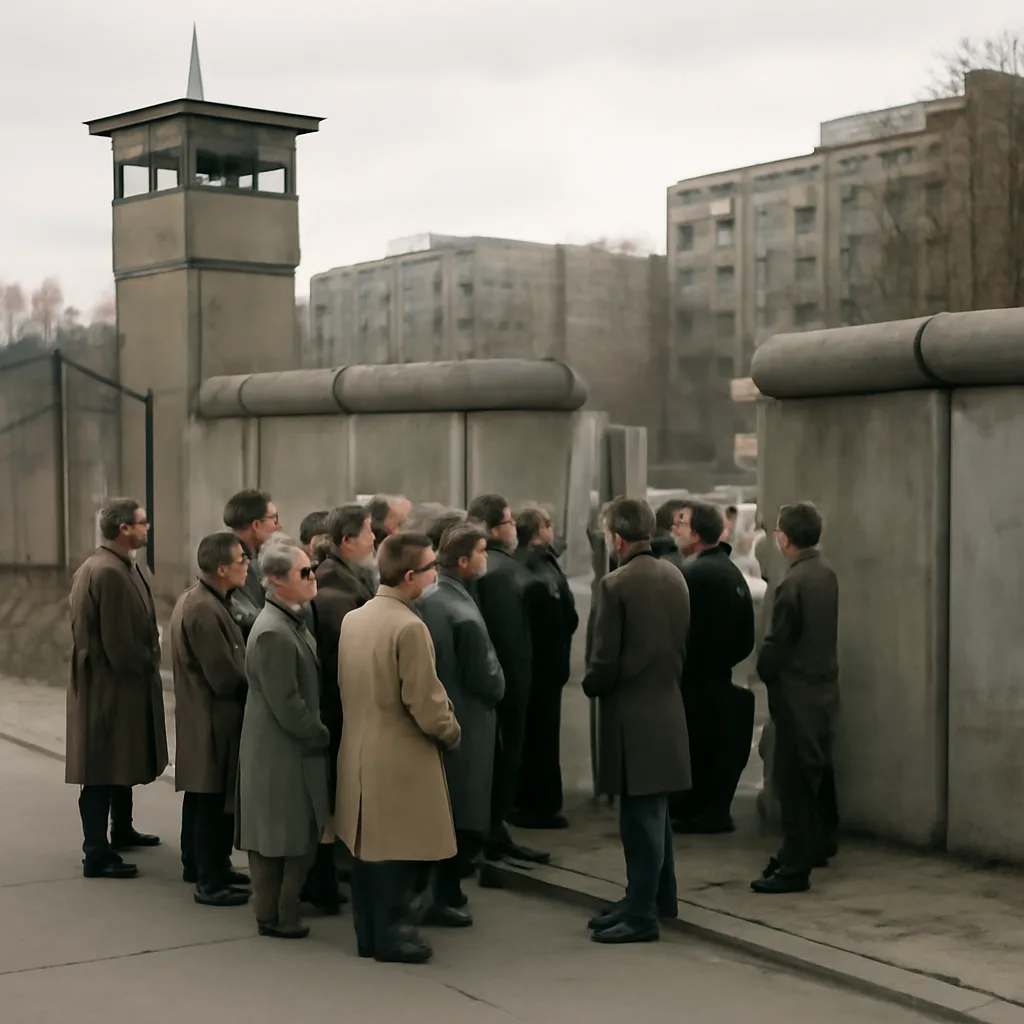
Unexpected Opening at Berlin Wall Lets Crowds Through
On 9 April 1989, a border crossing in Berlin was briefly opened to crowds, allowing East and West Berliners to pass at a moment that foreshadowed larger changes later that year. The event was sudden, limited in scope, and occurred amid growing pressure on East Germany.
On 9 April 1989 a checkpoint in Berlin was unexpectedly opened to crowds, permitting passage between East and West sectors for a short period. The opening was not the mass breach that would occur in November, but it was notable at the time because it highlighted the increasing strains on the German Democratic Republic (GDR) and the evolving relationship between citizens and border authorities.
Background
By 1989 the GDR was under sustained internal and external pressures: economic stagnation, emigration via neighboring countries earlier in the year, and mounting public discontent. Border crossings between East and West Berlin had long been tightly controlled, with strict documentation and limited hours. Checkpoints could be points of tension when policies changed or when authorities responded to public gatherings.
The incident
On 9 April a border point opened to groups of people who were able to move from one side to the other. Contemporary reporting described the opening as unexpected and temporary; it was not accompanied by an official policy announcement that loosened overall border restrictions. The circumstances that led to the opening involved local decisions by border personnel under pressure from crowd dynamics and administrative confusion rather than a formal change in national border policy.
Immediate reaction and scale
The passage allowed some citizens to cross without the usual obstacles, producing scenes of surprised gatherings at the crossing. The event did not precipitate the mass crossings that would later characterize the fall of the Wall in November 1989, nor did it represent an authorized dismantling of the border regime. Instead, it was one of several episodes in 1989 that signaled eroding control: localized openings, increased travel through third countries, and rising public demonstrations.
Significance and context
Historians view episodes like the April opening as part of a sequence of developments that weakened the GDR’s control over movement and public order. While isolated, such openings revealed the practical limits of enforcement when confronted by persistent civilian pressure and institutional uncertainty within East German administration. The event also fed public perception that the integrity of the border system was faltering, contributing to momentum for larger acts of civil disobedience and reform later that year.
Limitations of the record
Contemporary sources vary in detail about the number of people who crossed, the precise duration of the opening, and the specific checkpoint involved. Some reports emphasize the symbolic nature of the episode rather than its scale. There is no evidence that the 9 April opening was an authorized policy change by GDR leadership; scholars treat it as a local incident within a broader chain of events leading to the Wall’s fall in November 1989.
Aftermath
After April, East German authorities continued to face emigration and protest pressures. The decisive collapse of border controls came months later, on 9 November 1989, when an announcement and ensuing confusion led to widespread openings at multiple checkpoints and the beginning of the Wall’s physical dismantling. The April 9 episode is remembered as one of several warning signs that the East German state’s monopoly on mobility was eroding.
Sources and verification
This summary synthesizes contemporary press reports and later historical analyses that document border incidents in 1989. Where specifics conflict among sources—such as exact numbers or the identity of a particular checkpoint—this account emphasizes the documented consensus: the April opening was an unexpected, limited crossing that reflected growing instability in the GDR rather than an official border policy shift.