
← Back
04/09/1944 • 6 views

April 9, 1944: U.S. authorities detain members of the Watch Tower Bible and Tract Society in a landmark mass arrest
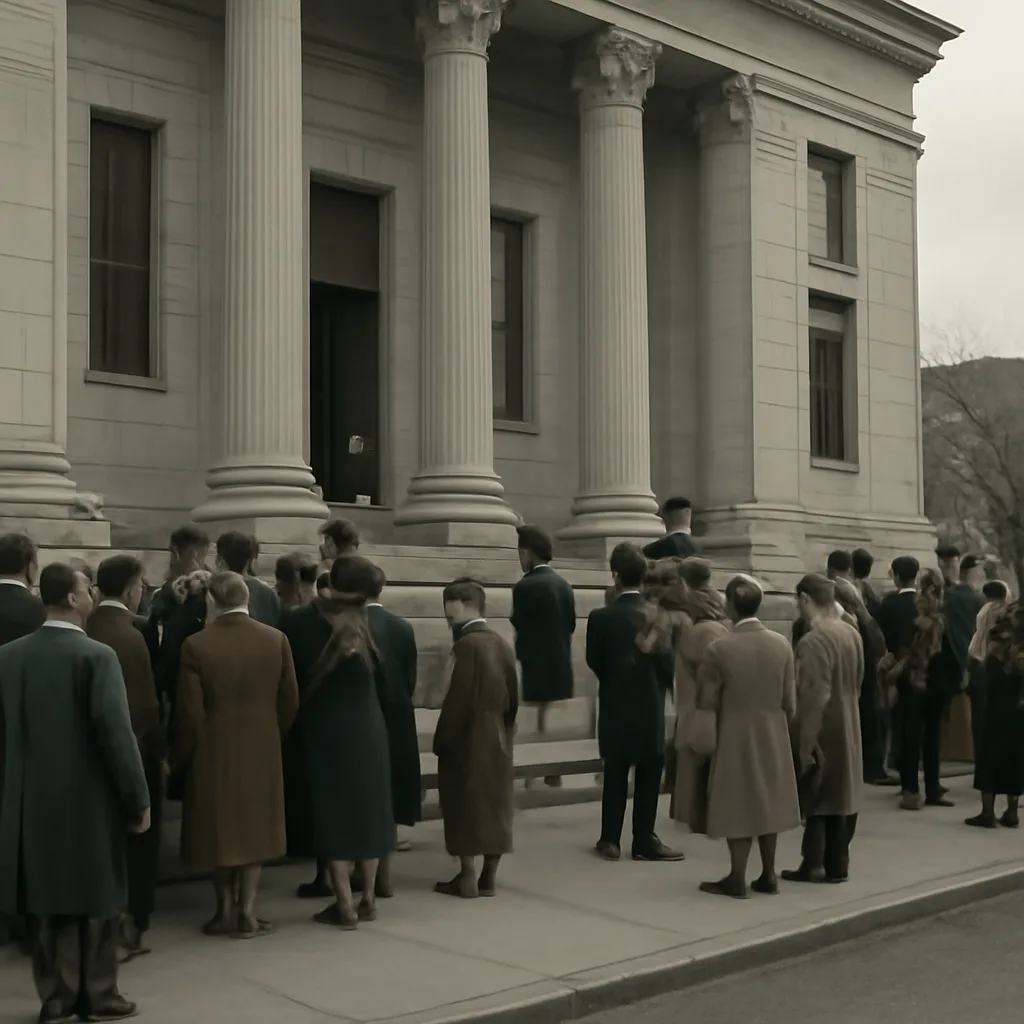
Crowd outside a 1940s municipal courthouse with men in wartime-era civilian clothing and federal officers; papers and placards visible but faces not identifiable.

On April 9, 1944, federal agents arrested dozens of Jehovah's Witnesses associated with the Watch Tower Bible and Tract Society in a notable wartime enforcement action tied to draft-law violations and claims of religious exemption.


On April 9, 1944, federal law-enforcement actions led to the arrest of numerous members of the Watch Tower Bible and Tract Society (commonly known as Jehovah’s Witnesses) in what contemporaneous press and later legal histories regard as a notable mass enforcement episode related to draft-law compliance during World War II. The arrests occurred against a larger backdrop of legal conflict between the U.S. government and Jehovah’s Witnesses over military service, conscientious objection, and the Society’s administrative practices.

Background
Jehovah’s Witnesses had long taken positions that placed them at odds with governments over issues of military service, flag salutes, and civic rituals. During World War II, federal authorities intensified scrutiny of groups whose members resisted the draft or refused military service on religious grounds. The Watch Tower Bible and Tract Society, headquartered in Brooklyn, New York, faced particular attention because some members were accused of advising young men to seek exemptions, evading induction, or otherwise discouraging cooperation with draft boards.

Events of April 9, 1944
On that date, federal agents executed arrests connected to investigations into draft-evasion activities and related administrative actions by the Society. Contemporary newspaper reports and later historical accounts document coordinated enforcement across jurisdictions; in some localities, multiple Jehovah’s Witnesses were arrested in single operations. The arrests included both rank-and-file members and, in some cases, individuals associated with the Society’s local or regional organizational structures.

Legal and social consequences
The arrests contributed to ongoing legal battles over the boundaries of religious freedom and the extent to which religious organizations could be held accountable for the actions of individual adherents. Cases involving Jehovah’s Witnesses in the 1940s affected constitutional law, particularly First Amendment jurisprudence on free exercise and the government’s authority to enforce military conscription laws. Some arrested individuals were prosecuted for obstruction of the draft or related offenses; in other instances, the arrests spurred further litigation over procedural and constitutional protections.

Context and interpretation
While April 9, 1944, is cited in some histories as a prominent instance of coordinated arrest activity targeting a religious group, historians note that confrontations between Jehovah’s Witnesses and government authorities occurred repeatedly in the 1930s and 1940s. Earlier mass arrests and prosecutions involving Witnesses—related to flag-salute refusals, distribution of literature, and draft resistance—preceded 1944. Therefore, characterizing April 9 as the singular "first" documented case of a cult mass arrest can be misleading: Jehovah’s Witnesses were already the subject of multiple large-scale actions and legal campaigns before and after that date. Moreover, whether the Watch Tower Society should be labeled a "cult" is contested and value-laden; most legal and historical treatments refer to Jehovah’s Witnesses as a religious movement or denomination and analyze government actions in those terms.

Sources and caution
This summary is based on contemporaneous reporting and secondary historical studies of Jehovah’s Witnesses and wartime enforcement of draft laws. Precise numbers arrested on April 9 vary among sources, and local records and court files provide the most reliable specifics for particular jurisdictions. Where accounts conflict, historians rely on archival documents, court dockets, and primary newspapers for verification.

Significance
The April 9, 1944 arrests illustrate the fraught intersection of religious conviction, civic obligation, and state authority during wartime. They form part of a broader pattern of legal conflict that helped shape mid-20th-century First Amendment case law and public debate over the limits of religious dissent in times of national emergency.

Share this

Email Share on X Facebook Reddit

Did this surprise you?