
← Back
09/29/1995 • 5 views

Nationwide Strikes Paralyze French Cities in September 1995
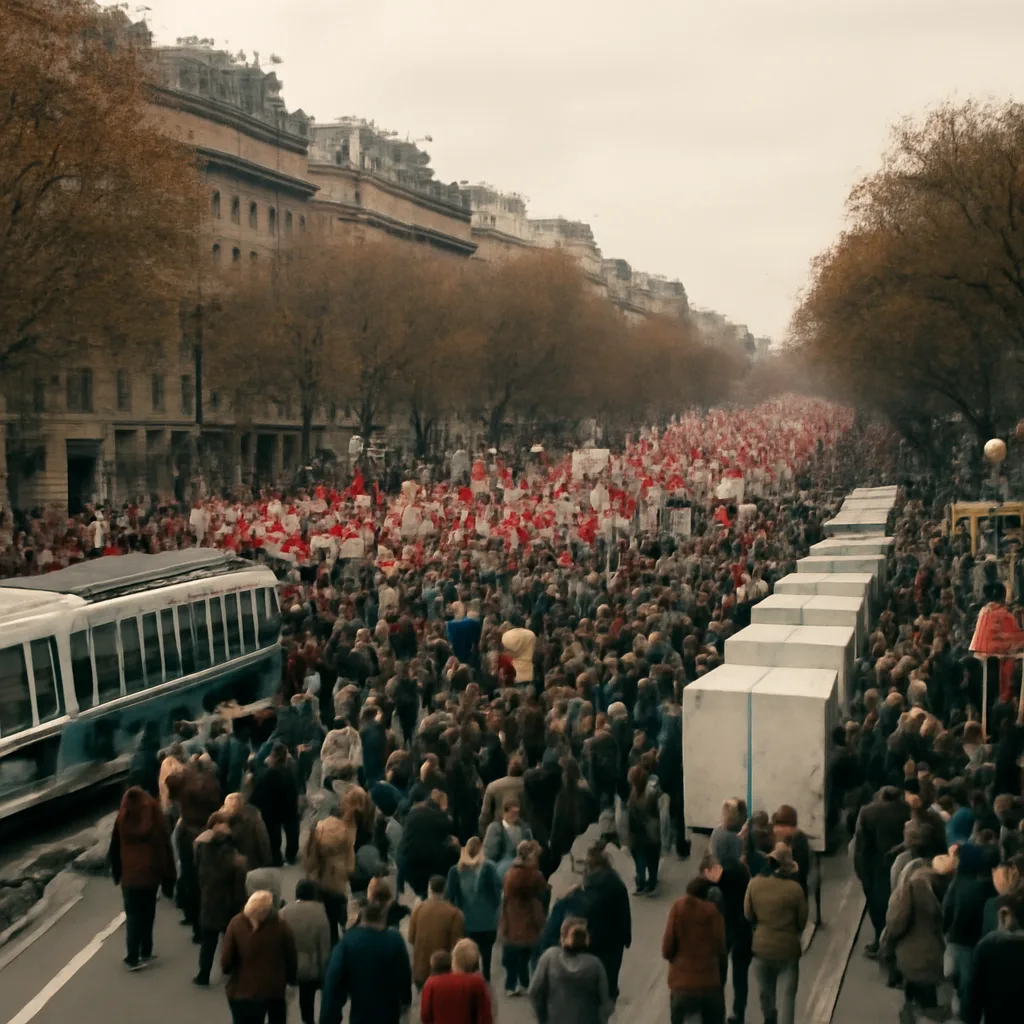
Thousands of demonstrators and striking workers gathered on a wide Parisian avenue in late September 1995, with blocked traffic and idle trams visible, banners and union flags held aloft but individual faces not emphasized.

A wave of nationwide strikes and mass protests in France on 29 September 1995 brought public transport, schools and government services to a near halt, reflecting deep opposition to proposed pension and welfare reforms.


On 29 September 1995, France experienced one of the largest coordinated strike days in its postwar history, with general strikes and mass demonstrations affecting cities and towns across the country. The industrial action, driven primarily by public-sector unions and transport workers, severely disrupted urban life: trains and metros were curtailed or stopped, schools and many local government services were closed, and major roadways and public squares filled with demonstrators.

Background: The strikes were rooted in opposition to reforms proposed by Prime Minister Alain Juppé’s government, announced that autumn as part of efforts to reduce public deficits and overhaul the pension and welfare systems. Many unions and public employees viewed the measures as threats to social protections and pensions. Tensions had been building through September as union federations organized days of action and mobilization, culminating in the nationwide strike on 29 September.

Scale and impact: The strike day drew hundreds of thousands to millions of participants nationwide, depending on union and police estimates, making it clear that opposition cut across multiple sectors. Public transport was among the hardest hit: national rail services (SNCF) and urban transit systems (including Paris’s Metro and RER suburban lines) ran severely reduced schedules or stopped entirely in many places. Air travel and road freight experienced delays as well. Hospitals and emergency services operated under contingency plans, while many schools closed because staff could not work or chose to join demonstrations.

Political and social significance: The strikes were significant both for their size and for their political implications. They exposed the depth of popular resistance to rapid fiscal consolidation measures and set the tone for a prolonged period of social conflict between the government and organized labor. The disruptions pressured political leaders to consider negotiation and contributed to the broader national debate on the pace and content of welfare reform.

Organization and participants: The action was coordinated by multiple national trade-union confederations representing public-sector workers, rail and urban transport employees, and other public services, alongside local unions and left-wing political groups. While union leaders sought to maintain unified pressure through agreed strike dates, participation levels varied by region and sector, a common pattern in large-scale industrial actions.

Aftermath: The 29 September strike was followed by further days of protest and industrial action in the coming weeks, keeping the issue at the forefront of national politics. The scale of the mobilization influenced subsequent government strategy, union bargaining positions and public opinion. Historians and contemporaneous commentators view the 1995 strikes as a landmark episode in modern French labor relations and a key moment in the country’s debates over social policy and economic reform.

Notes on sources and certainty: Descriptions above summarize widely reported events from French national and international press coverage of September 1995 and later historical analyses. Specific figures for turnout and exact service disruptions varied between union and police accounts; those discrepancies are common in reporting on mass demonstrations and are not resolved here.

Share this

Email Share on X Facebook Reddit

Did this surprise you?