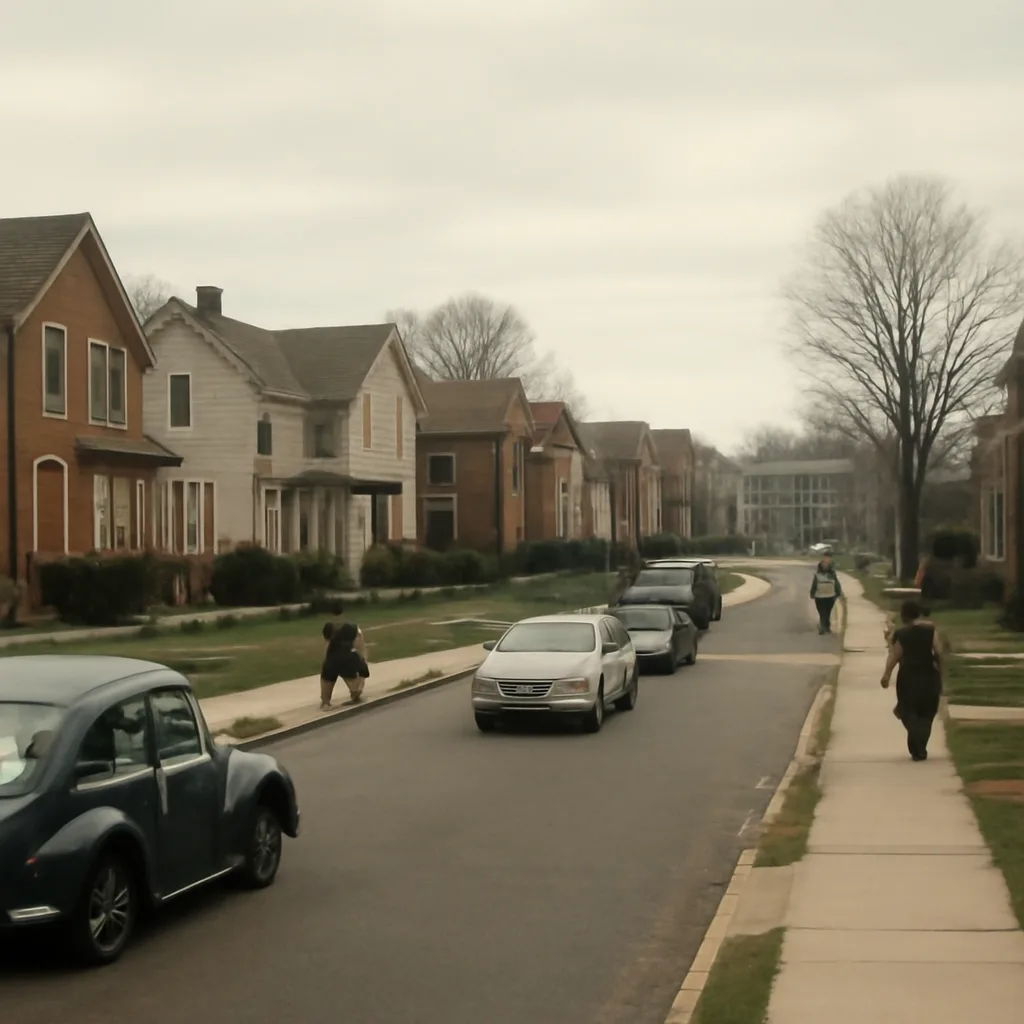
Supreme Court Strike Against Housing Segregation Upholds Constitutional Equality
On Feb. 14, 1948, the U.S. Supreme Court ruled that racially restrictive housing practices violated constitutional principles, marking a pivotal legal rebuke to segregation in housing and advancing federal protection for civil rights in property and neighborhood access.
On February 14, 1948, the United States Supreme Court issued a ruling that struck a significant blow against racially restrictive practices in housing. The decision addressed the enforceability of private and public measures that effectively segregated neighborhoods by race and considered how constitutional guarantees of equal protection and due process applied in the housing context.
Background
By the mid-20th century, segregation in housing across the United States was entrenched through a mix of private agreements (such as racially restrictive covenants), local ordinances, and practices by real estate organizations, banks, and developers. Racially restrictive covenants were contractual provisions attached to property deeds that prohibited the sale or occupancy of homes by people of certain races or ethnicities. Although these covenants were private contracts between property owners, they were widely enforced through the courts and by social pressure, and thus played a major role in shaping residential patterns.
The legal question before the Court concerned the degree to which courts and government actors could be involved in enforcing or perpetuating racially discriminatory property arrangements without violating constitutional protections. Cases of this era often tested the interplay between private agreements and state action: if courts enforce a private racial restriction, does that enforcement constitute state action subject to the Fourteenth Amendment’s Equal Protection Clause?
Ruling and Reasoning
In its ruling on Feb. 14, 1948, the Court held that practices that perpetuated racial exclusion in housing could not be insulated from constitutional scrutiny merely because they originated in private agreements. The decision recognized that judicial or governmental endorsement, enforcement, or facilitation of racially discriminatory restrictions transformed private discrimination into state action, thereby triggering constitutional constraints. Courts were admonished that enforcing racially restrictive provisions or lending official imprimatur to segregationist practices conflicted with the Constitution’s guarantees of equal protection and due process.
Impact and Immediate Consequences
The ruling undermined legal mechanisms that had sustained residential segregation by curtailing the ability of public institutions and courts to give effect to racially restrictive arrangements. While it did not in itself eliminate all forms of segregation in housing—discrimination persisted via informal practices, economic barriers, and new institutional forms—the decision removed a major tool used to legitimize and maintain segregated neighborhoods.
The 1948 decision helped set legal foundations for subsequent civil rights advances. It contributed to the evolving jurisprudence that culminated in later rulings and federal actions addressing discrimination in housing, including the recognition that government involvement in discriminatory practices could violate constitutional and statutory protections.
Limitations and Historical Context
This ruling was an important juridical step but not an immediate remedy to entrenched housing inequality. Enforcement gaps, continuing private discrimination, redlining by financial institutions, and local resistance meant that many communities remained effectively segregated for decades. Full statutory protections against housing discrimination in public and private markets would take additional legislative and judicial developments in the 1950s and 1960s.
Conclusion
The Supreme Court’s Feb. 14, 1948 decision represented a meaningful judicial repudiation of constitutionally sanctioned enforcement of racially restrictive housing practices. By treating the enforcement and public endorsement of discriminatory private arrangements as susceptible to constitutional limits, the Court advanced the legal framework for challenging residential segregation and contributed to the longer civil rights struggle to secure equal access to housing.