
← Back
06/30/1939 • 5 views

First Mass‑Produced Television Sets Go on Sale in 1939
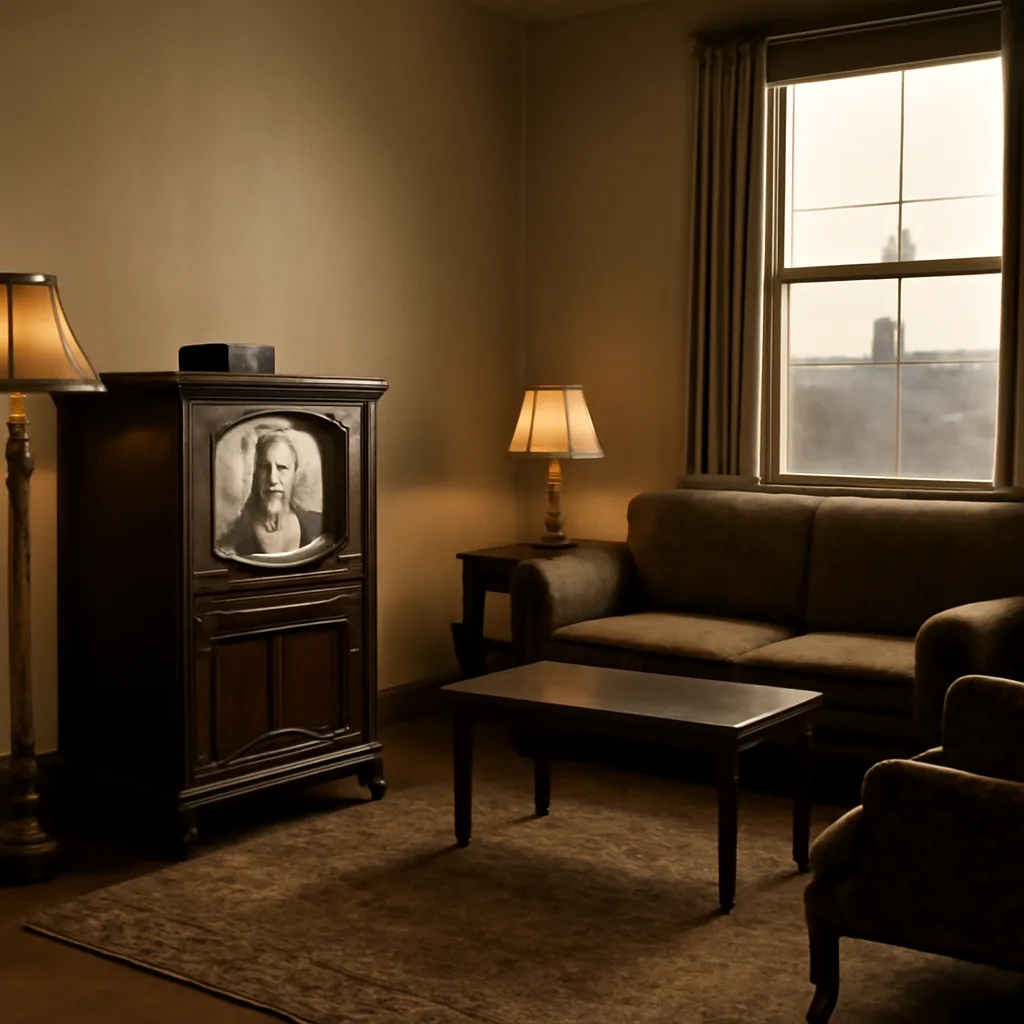
1939 living room with a large wooden cabinet television set displaying a small black‑and‑white image, an outdoor receiving antenna visible through a window, and period furnishings.

On June 30, 1939, manufacturers began selling the first widely produced television receivers to the public, marking a commercial milestone that followed years of experimental broadcasts and technological development in the 1930s.


By mid‑1939, television was moving from laboratory demonstration and limited local broadcasts into the consumer marketplace. On June 30, 1939, several manufacturers began offering television receivers produced in commercial quantities for sale to the public in the United States and parts of Europe. These early sets followed significant technical standardization and public demonstrations earlier in the decade, and their arrival reflected advances in camera tubes, transmission infrastructure and cathode‑ray tube display technology.

The sets on sale in 1939 were large, expensive furniture‑like pieces that typically reproduced low‑definition black‑and‑white images by cathode‑ray tube. They required substantial receiving antennas, often placed outdoors, and were tuned to a small number of broadcast stations where those existed. Production was still limited compared with later decades: the number of households with receivers remained a small fraction of the total. Nonetheless, these machines were the first televisions manufactured on a scale intended for ordinary consumers rather than solely for experimenters, trade shows or broadcasters’ internal use.

The commercial launch followed public broadcasts and demonstrations that had familiarized audiences with the medium. In the United States, early scheduled television programming began in the mid‑1930s in New York, and manufacturers had been showing prototype receivers at trade fairs. Technical progress in image scanning and cathode‑ray display, plus the gradual allocation of broadcast channels and the development of standards, made production for retail possible by 1939. In Britain and elsewhere, parallel developments and public demonstrations contributed to interest in purchasing home receivers.

Practical limitations shaped early owners’ experience. Broadcast schedules were short and localized; programming was often experimental, with live studio shows and occasional film rebroadcasts. Picture resolution and contrast were modest by later standards. Sets required maintenance and could be costly; many purchasers were enthusiasts, businesses, or public venues that used receivers for demonstrations. World events soon affected the market: within months, wartime priorities and government controls in several countries curtailed civilian television manufacturing and broadcasting, slowing adoption until after World War II.

Historians of technology view the 1939 consumer rollout as a pivotal but transitional moment. It demonstrated that television could be manufactured and sold at scale, established a foothold for a new mass medium, and exposed technical and regulatory challenges that would shape subsequent development. The commercial availability of television sets in 1939 thus constitutes an important step in the medium’s shift from experimental novelty to mass communication platform—one whose broader cultural impact unfolded most visibly in the postwar years.

Share this

Email Share on X Facebook Reddit

Did this surprise you?