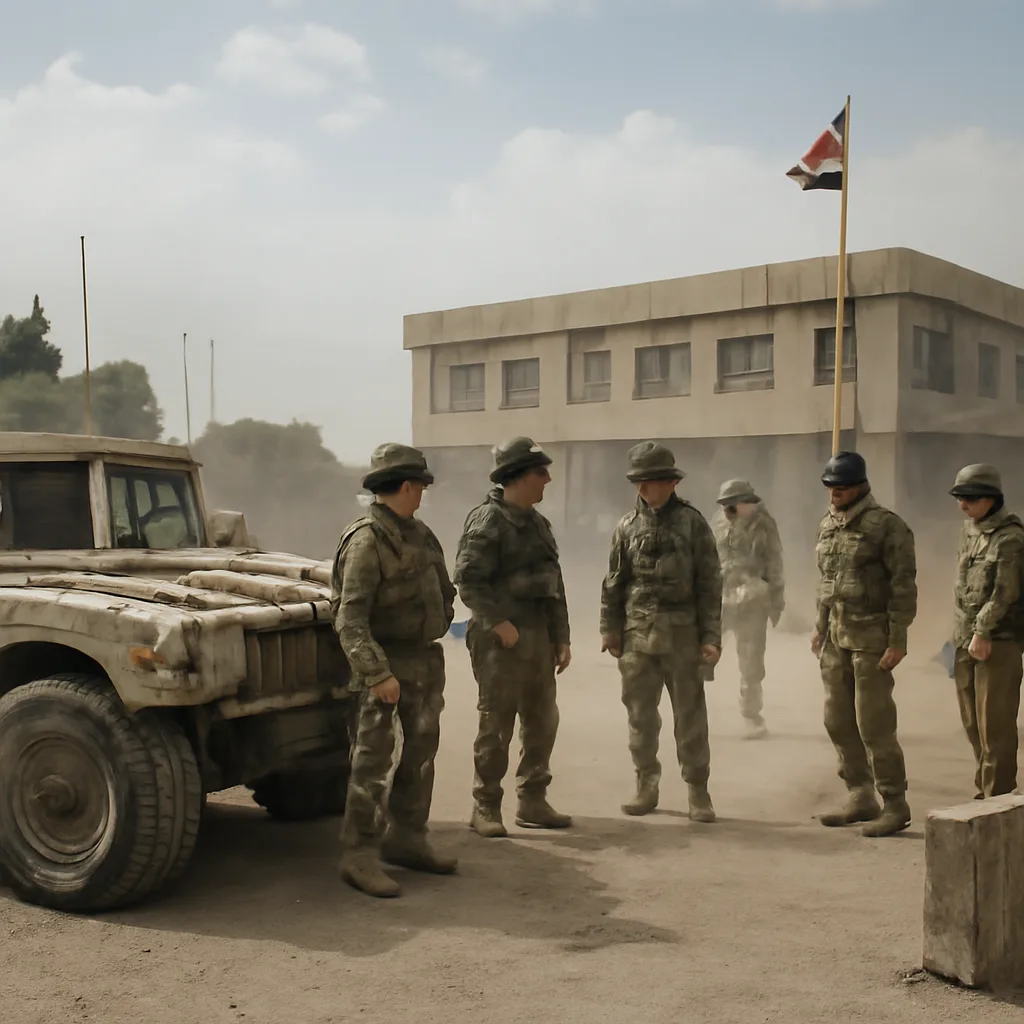
U.S. Announces End of Combat Operations in Iraq, Sept. 1, 2010
On September 1, 2010, the United States formally declared an end to combat operations in Iraq, shifting to a mission focused on advising, training and assisting Iraqi security forces while retaining forces for contingency roles.
On September 1, 2010, the United States formally announced the end of its combat operations in Iraq, a milestone in the U.S. military presence that followed the 2003 invasion and subsequent years of counterinsurgency and stabilization efforts. The declaration marked a redefinition of U.S. forces’ role from large-scale combat to advisory, assistance and support functions aimed at strengthening Iraqi security institutions.
Background and context
The U.S.-led invasion of Iraq in March 2003 toppled Saddam Hussein’s government and set off a protracted period of armed conflict involving U.S. and coalition forces, Iraqi security forces, and numerous insurgent and sectarian groups. Over the following years the U.S. conducted major combat operations, implemented a surge of forces in 2007 to curb violence, and pursued a transition to Iraqi sovereignty. By 2009 and 2010, violence levels had declined from earlier peaks, and Iraqi security forces had assumed primary responsibility for internal security in many areas.
The September 1, 2010 announcement
The formal end of combat operations on September 1, 2010, was presented by U.S. and coalition leaders as a transition rather than a complete withdrawal. The declaration meant that U.S. troops in Iraq would no longer be designated as engaged in combat missions; instead their tasks were to center on advising, training and assisting Iraqi security forces, conducting targeted counterterrorism operations where agreed, and protecting U.S. personnel and facilities. The change in status also reflected legal and political distinctions relevant to U.S. domestic law and rules of engagement.
Troop presence and subsequent arrangements
Although combat operations were declared over, several hundred thousand U.S. troops had already rotated out over preceding years under drawdown plans. Following the September 2010 shift in mission, a residual U.S. force remained in Iraq under new mandates and rules of engagement. These forces supported Iraqi institutions, provided training and logistical assistance, and retained the capability to respond to emerging threats. The precise size and posture of U.S. forces continued to evolve with subsequent agreements and security assessments.
Political and symbolic significance
The end-of-combat declaration held both practical and symbolic weight. Domestically in the United States, it was presented as the fulfillment of goals to reduce large-scale U.S. combat commitments. For Iraq, the shift underscored the gradual transfer of security responsibilities to Iraqi authorities and the complex, ongoing process of nation-building and reconciliation. However, the declaration did not resolve underlying political, sectarian or security challenges in Iraq; violence and political instability persisted in varying degrees after 2010.
Aftermath and later developments
In the years after 2010, U.S. forces remained involved in Iraq in advisory and support roles, and the security relationship between the United States and Iraq underwent further changes tied to political agreements, regional developments and new threats. Notably, the rise of the Islamic State (ISIS) in 2014 prompted renewed U.S. military involvement in Iraq, albeit under different operational parameters. The 2010 transition is therefore best understood as a significant phase in a longer, evolving U.S.-Iraq security relationship rather than a definitive end to U.S. military engagement in the country.
Assessment
The September 1, 2010 announcement represented a formal and public shift in U.S. mission framing—from active combat to support and advisory roles—but did not equate to an immediate or complete U.S. military withdrawal. Its importance lies in both the legal/operational reclassification of U.S. forces and its symbolizing a broader effort to hand primary security responsibilities to Iraqi authorities while maintaining U.S. capacity to respond to contingencies.