
← Back
09/01/1961 • 5 views

Cold War Standoff Intensifies After Berlin Wall Crisis
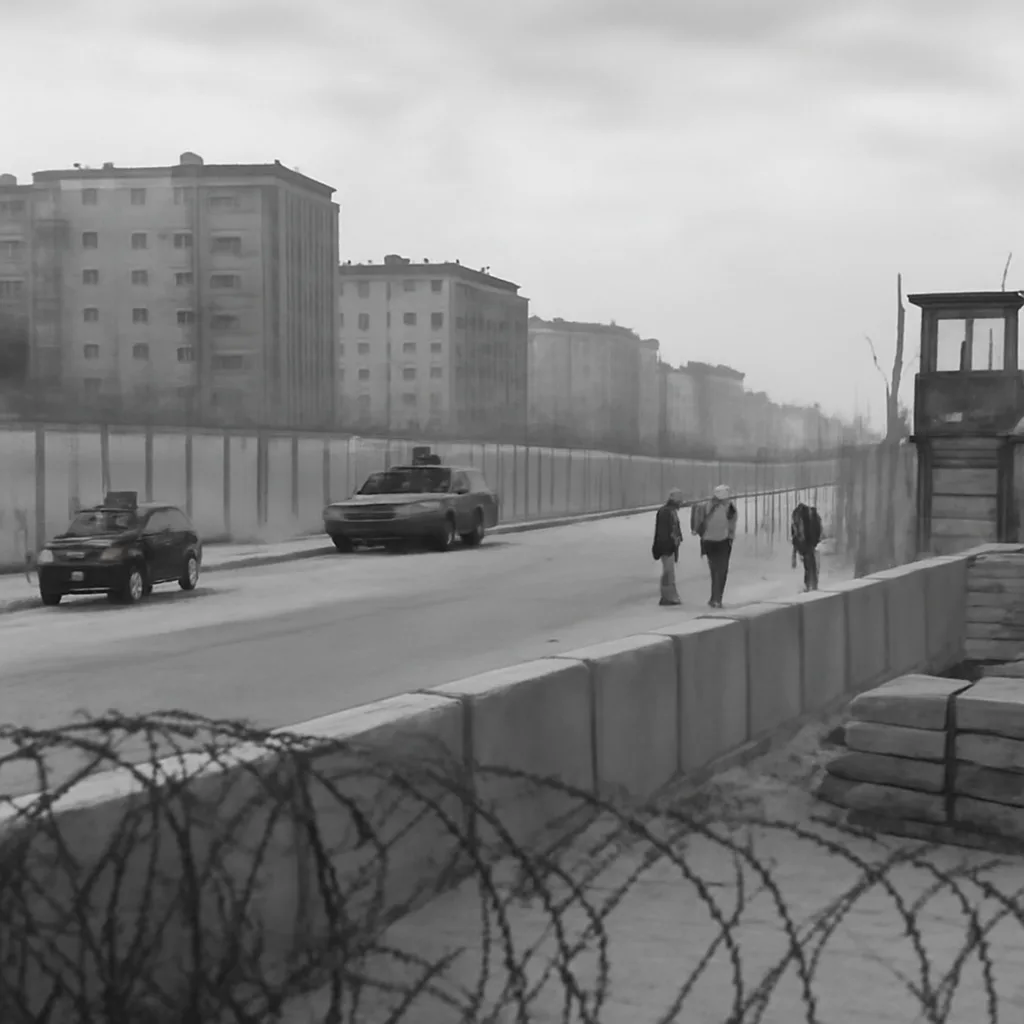
Berlin streets near the newly erected border barriers in 1961, showing barbed wire and early concrete segments separating East and West sectors, with military vehicles and checkpoints visible in the distance.

Tensions between the United States and the Soviet Union escalated in the aftermath of the Berlin Wall's construction, as Western powers confronted Soviet moves in Berlin and both sides increased military readiness, deepening the Cold War divide.


On August 13, 1961, East German authorities began erecting barbed wire and later concrete barriers along the border separating East and West Berlin. The rapid construction of what would become the Berlin Wall immediately transformed the divided city into a flashpoint of Cold War confrontation. By early September, the crisis had hardened into a broader standoff between the United States and the Soviet Union as Western leaders denounced the closure of West Berlin’s access to East German territory and sought diplomatic and military measures to deter further Soviet-led encroachments.

The Western response combined public condemnation, diplomatic protest, and visible shows of military preparedness. U.S. President John F. Kennedy and his advisers considered several courses of action, from formal protests to reinforcement of U.S. forces in Western Europe. While Washington avoided direct military confrontation over Berlin, it increased troop readiness, conducted high-level consultations with NATO allies, and sent additional armored units and aircraft to Europe as a deterrent. The U.S. aim was to reassure West Berliners and allies that lines of communication and supply to West Berlin would be maintained without triggering a war.

On the Soviet side, Premier Nikita Khrushchev and East German leaders framed the barrier as a sovereign act to prevent Western interference and to stop the flow of refugees from East to West. The Soviets reinforced their own forces in and around East Berlin, and Soviet military movements were closely monitored by Western intelligence. Both capitals engaged in intensive diplomatic exchanges: formal protests, demarches, and public statements were exchanged while back-channel communications sought to manage the danger of miscalculation.

The crisis highlighted key Cold War dynamics. Berlin’s status—four-power occupation and legal arrangements dating to the end of World War II—meant neither bloc could easily alter the city’s condition without risking broader conflict. The Wall’s construction was a strategic and political defeat for Western claims about free access and the attractiveness of liberal democracy, but it also provided Western leaders with a clear symbol around which to rally public and allied opinion. For East Germany and the Soviet Union, the barrier stemmed population loss and stabilized the GDR internally, even as it provoked international condemnation.

Throughout September 1961, incidents of tense interaction occurred at border crossings and along the fledgling barrier, including show-of-force patrols and confrontations between Allied and Soviet vehicles at specific checkpoints. Most such incidents were resolved through negotiation or mutual restraint, but they underlined how localized friction could escalate. The situation reinforced the importance of command-and-control measures, hotline diplomacy, and rules of engagement intended to limit accidental clashes.

The longer-term outcome of the September standoff was a consolidation rather than a resolution. The Berlin Wall stood as both a physical barrier and a political symbol for decades, and the immediate crisis led to phases of deterrence, negotiation, and periodic confrontation. In West Berlin, the United States and its NATO partners strengthened commitments to defend Western access and to support the city economically and politically. In the East, the GDR solidified border controls and, with Soviet backing, maintained the divide.

Historically, assessments of this period emphasize restraint on both sides: despite aggressive rhetoric and force posturing, neither Washington nor Moscow sought direct armed conflict over Berlin in 1961. Instead, the episode deepened mutual suspicion and entrenched the division of Europe, shaping Cold War politics through the 1960s and beyond.

This account focuses on documented political and military developments in late summer and early September 1961. Where interpretations differ among historians—particularly regarding the intentions of specific leaders or the relative weight of domestic versus international motives—scholarly debate continues, but the sequence of events and the intensification of the standoff in September 1961 are well supported by contemporary records and later archival research.

Share this

Email Share on X Facebook Reddit

Did this surprise you?