
05/30/1908 • 9 views
First Electric Vacuum Cleaner Hits the Market, 1908
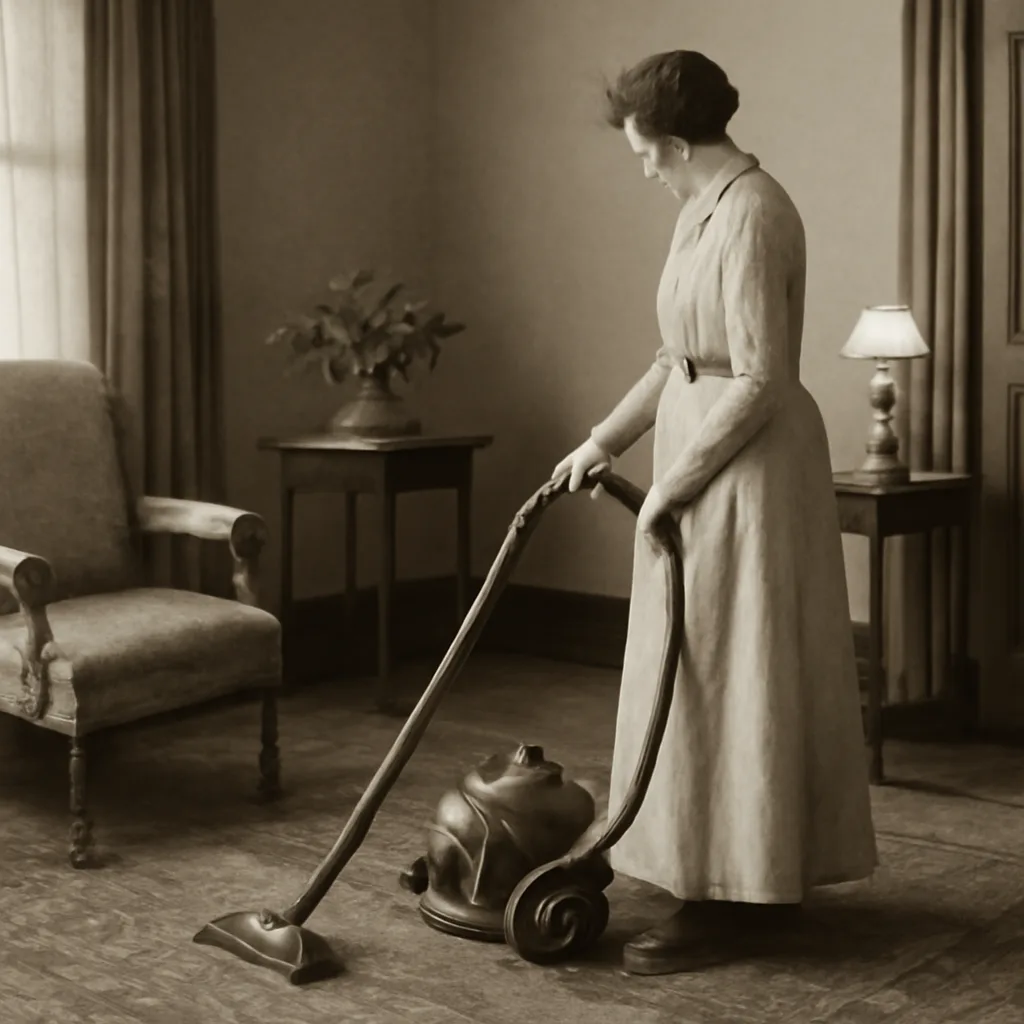
On May 30, 1908 an early electric vacuum cleaner was offered commercially, marking a shift from manual and horse‑powered carpet sweepers to electrically driven household cleaning devices.
Background: Before electric vacuums, cleaning relied on carpet sweepers (inexpensive hand‑powered devices), bellows or blowers, and large, stationary vacuum plants that used hoses to serve multiple houses from a central engine. Inventors had experimented with suction and mechanical agitation since the mid‑19th century. Notable earlier milestones included manual and hand‑cranked designs, and motorized prototypes patented in the 1890s and early 1900s. These experiments set the stage for a practical, marketable electric model.
The 1908 offering: The machine marketed on May 30, 1908, belonged to the first wave of domestic electric vacuum cleaners aimed at private households rather than commercial or industrial use. It combined an electric motor, a suction system, and a container for dust collection in a form intended for home operation. Contemporary accounts emphasized its ability to reduce cleaning time and lessen physical effort compared with existing methods. Pricing, availability, and exact specifications varied by manufacturer, and marketing often targeted middle‑class households acquiring electricity and new domestic conveniences.
Significance: The 1908 commercialization signaled a transition in domestic labor: electrified appliances began to change expectations about household work, hygiene, and the layout of domestic interiors. The vacuum cleaner joined other emerging electric appliances—lighting, irons, and washing machines—as devices that depended on the spread of reliable household electricity. It also spurred further innovation: manufacturers refined suction, filtration, portability, and noise control in subsequent years, leading to more compact, efficient, and affordable models by the 1920s and 1930s.
Limitations and context: While 1908 marks an important commercial appearance for an electric vacuum intended for home use, the history includes many patents, prototypes, and regional variations. Some earlier motorized or electrically assisted cleaning devices existed in the preceding decade, and other inventors and companies introduced competing models shortly afterward. Sources from the period sometimes conflate different machines and claims of "firsts," so historians treat the 1908 marketed model as part of a broader, incremental process rather than a single, definitive invention.
Legacy: The entry of electric vacuum cleaners into the consumer market contributed to the rapid expansion of household appliance manufacturing and advertising in the 20th century. As designs improved and mass production reduced costs, vacuum cleaners became common in middle‑class homes and eventually in working‑class households, reshaping domestic routines. The 1908 marketing moment is therefore a useful marker for the broader electrification and mechanization of household labor.
Further reading: For a detailed account, consult histories of domestic technology and primary trade publications from the early 1900s, which document patents, product announcements, and contemporary reviews without relying on a single narrative of invention.