
← Back
05/30/1972 • 7 views

The First Modern Video Game Tournament, May 30, 1972
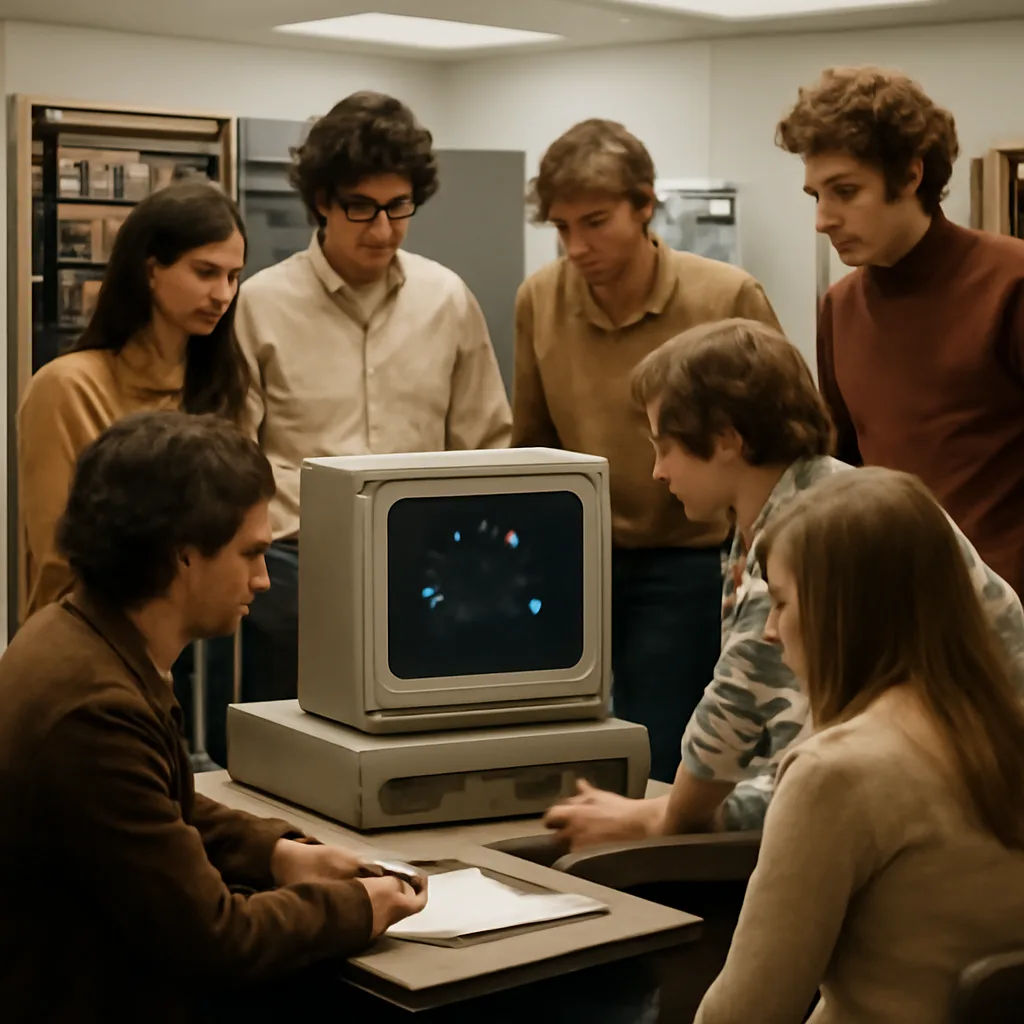
A 1970s university computing lab with students gathered around a terminal displaying a two-ship space combat game; CRT display, punched-tape or paper-tape equipment visible, no identifiable faces.

On May 30, 1972, students at Stanford held what is widely recognized as the first modern video game tournament, playing the early computer game Spacewar! in a competitive format that presaged later esports events.


On May 30, 1972, a competitive event at Stanford University brought together players of Spacewar!, an early interactive computer game developed in the 1960s, in what is widely considered the first modern video game tournament. The event took place amid a growing culture of experimentation with interactive computing on university campuses and at institutions that had access to time-sharing computers and mainframes.

Background
Spacewar! was created in 1962–1963 by Steve Russell and collaborators at the Massachusetts Institute of Technology for the PDP-1 minicomputer. The game simulated two starships maneuvering and firing torpedoes around a gravity well; it spread by word of mouth and by sharing the program on PDP machines at other institutions. By the late 1960s and early 1970s, interactive computer games were part of a broader exploratory computing culture on college campuses and in research labs.

The 1972 Event
The May 30, 1972 gathering at Stanford is commonly cited in historical accounts as the first instance in which players competed in an organized, publicized match for a computer game on-site at a university setting. Participants played Spacewar! on available computing equipment, and the format emphasized head-to-head competition and spectatorship, distinguishing it from informal play or one-off demonstrations. Contemporary descriptions and later historical summaries note the event’s role in framing interactive games as objects of organized competition rather than solely as programming curiosities or demonstration software.

Significance
This tournament is important because it illustrates an early transition from solitary or developer-focused play toward organized competition and public spectacle. The format — scheduled matches, spectators, and a focus on skillful play — anticipates later arcade contests of the 1970s and the competitive gaming cultures that evolved into esports decades later. It also reflects how access to computing resources at universities created opportunities for communities to experiment with new forms of entertainment and social gathering.

Context and Limitations
Historians of computing and gaming note that defining the “first” video game tournament depends on criteria: whether one requires an official prize, formal organization, public advertising, or recorded results. Earlier informal competitions or demonstrations may have occurred but were not documented in the same way. The 1972 Stanford event is frequently referenced in secondary sources as the first modern-style tournament because of its organized, competitive nature and its setting within a public campus event.

Legacy
While early home and arcade games later popularized public competitions more broadly, the 1972 tournament remains a touchstone in histories of competitive gaming for showing how interactive computer games moved into public, organized competition. The ethos of university-based experimentation continued to feed into the growth of video game cultures, influencing hobbyist groups, arcade operators, and eventually the structured competitive leagues and events of later decades.

Sources and Further Reading
Primary contemporary records of the event are limited; most references come from retrospective histories of Spacewar!, oral histories of early computing communities, and scholarly accounts of gaming history that discuss early competitive events. For readers seeking deeper verification, consult published histories of Spacewar! and academic work on the social history of computing in the 1960s and 1970s.

Share this

Email Share on X Facebook Reddit

Did this surprise you?