
← Back
11/23/2000 • 5 views

UK Government Publishes Long-Secret UFO Files From 1950s–90s
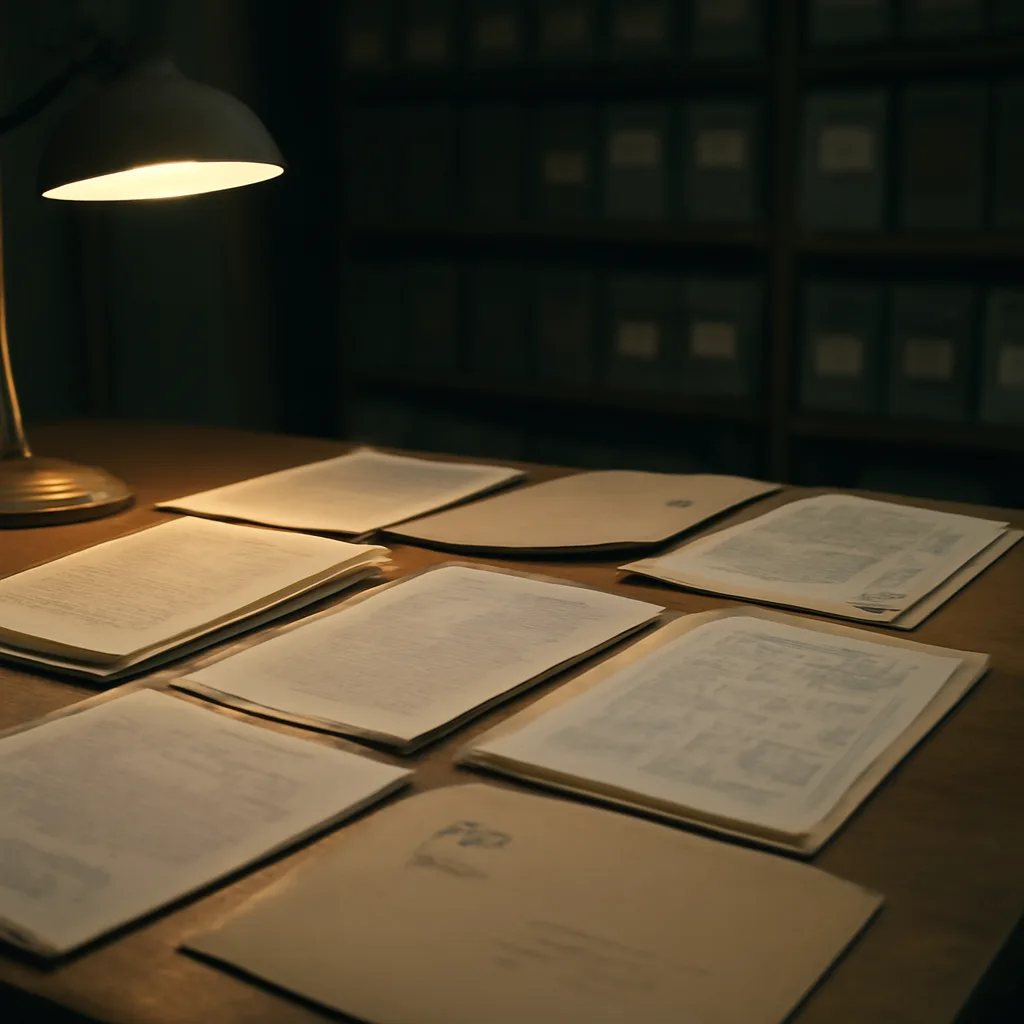
A stack of stamped government files labelled with dates and subject codes on a wooden table, with a partially visible Ministry of Defence letterhead at the top edge.

The UK’s Ministry of Defence has released previously withheld files on unidentified aerial phenomena compiled from the 1950s through the 1990s, detailing investigations, witness reports and internal assessments while stopping short of confirming extraterrestrial explanations.


On 23 November 2000 the British government released a tranche of files relating to unidentified aerial phenomena (UAP), commonly called UFOs, that had been held in Ministry of Defence (MoD) files and related government archives. The material covers decades of reports, correspondence and internal assessments by civil servants and military officers who handled sightings, public enquiries and occasional requests from researchers and parliamentarians.

Contents and scope
The released documents include incident reports from members of the public, police and military personnel; internal memoranda discussing possible explanations; correspondence between government departments; and occasionally transcripts of interviews. Many files focus on assessing whether sightings posed an air safety risk or a threat to national security, which shaped how the MoD prioritized responses. The papers span a range of explanations offered at the time, from misidentified aircraft, astronomical objects and atmospheric phenomena to hoaxes and optical illusions. In some cases the files record the difficulty of follow-up investigation due to incomplete information.

Government posture and policy
Across the decades represented in the files, the prevailing official approach was cautious and pragmatic: to log reports, seek corroborating evidence where practicable, and determine whether defence resources needed to be deployed. The MoD ultimately regarded most incidents as explicable through prosaic causes or insufficiently substantiated; only a small subset were classified as genuinely unidentified after initial screening. The documents show repeated attempts to balance public interest and transparency with concerns about diverting limited military resources.

Notable cases and limitations
The released records include several well-known incidents previously discussed in the press and by researchers, as well as many lesser-known local reports. In numerous entries analysts noted the limits of available data: eyewitness accounts without radar or photographic corroboration, poorly preserved paperwork, and delays that hampered timely inquiry. The files do not contain a definitive confirmation of non-human origins for any sighting, nor do they present conclusive evidence of extraterrestrial activity. Where uncertainty remained, officials generally classified incidents as unexplained rather than assigning extraordinary causes.

Context and public reaction
The publication followed long-standing requests by journalists, academics and members of the public for greater access to historical records on UAP. For researchers the files provide a window into how government agencies investigated and triaged reports. For the public, the documents have both satisfied curiosity about past incidents and prompted calls for continued openness. The release is part of a broader trend in several countries toward declassifying historical records related to aerial phenomena and making them available for independent analysis.

Historiographical value
As primary-source material, the files are valuable to historians of Cold War defence policy, civil–military relations and public perceptions of aviation and the unknown. They reveal administrative practices, the interplay between local and central authorities, and the shifting thresholds for allocating investigative effort. Scholars caution, however, that absence of evidence in the files is not evidence of absence: gaps in records reflect procedural priorities and archival survivorship as much as the nature of the phenomena reported.

What the files do and do not show
The documents illuminate how British officials handled reports and perceived risks, but they do not offer conclusive proof of extraordinary origins for any particular case. Many incidents were resolved with conventional explanations or remained unresolved due to insufficient data. The historical record is clearer about institutional responses than about the ultimate nature of all reported phenomena.

Further research
The released files provide a basis for more systematic study, including cross-referencing reports with meteorological, aviation and radar records, as well as oral histories of investigators and witnesses. Scholars and independent researchers continue to examine the material to better understand patterns in reporting and investigation across time.

In sum, the 23 November 2000 release added substantial archival material to the public record, clarifying official procedures and documenting many individual reports while leaving outstanding questions about some unexplained cases.

Share this

Email Share on X Facebook Reddit

Did this surprise you?