
← Back
01/22/1973 • 6 views

Supreme Court Decides Roe v. Wade, Recognizing Constitutional Right to Abortion
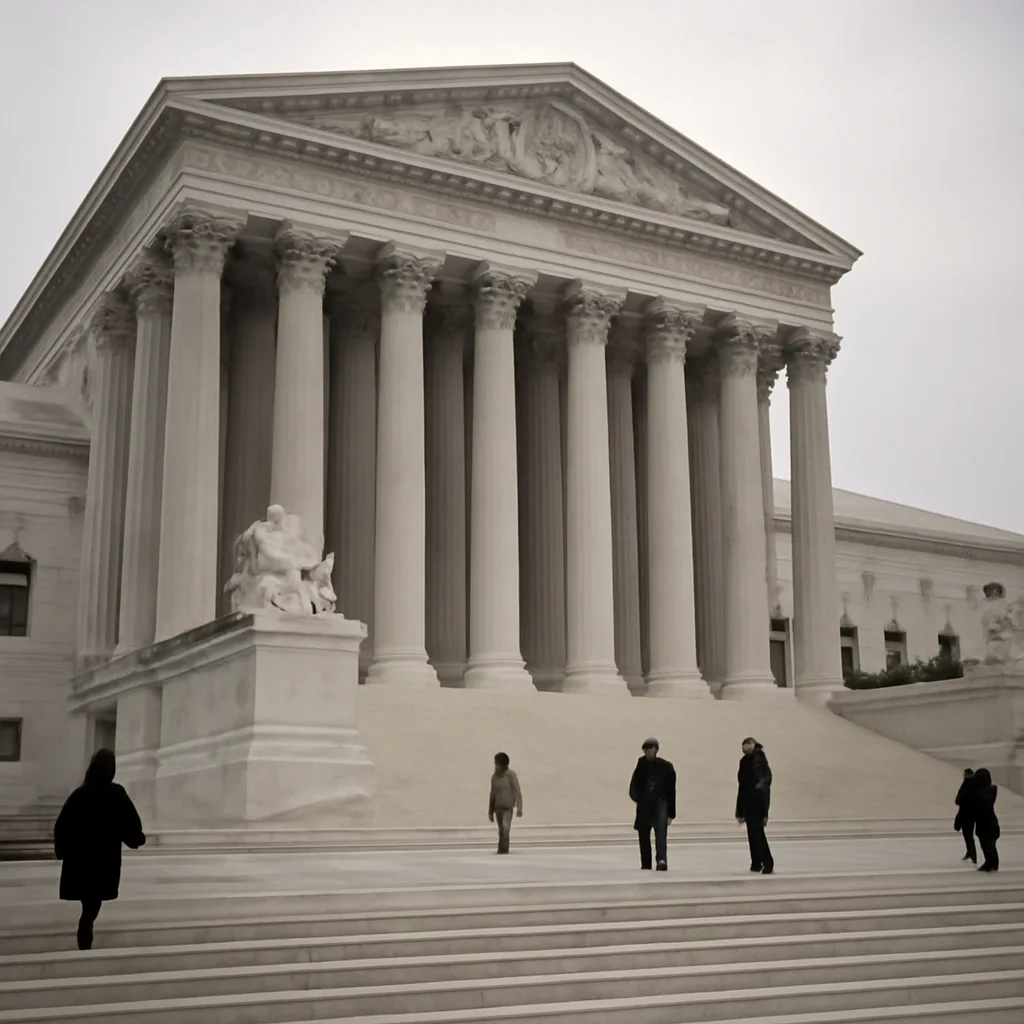
Exterior of the United States Supreme Court building in Washington, D.C., circa 1970s, showing classical columns and steps where people sometimes gathered during high-profile cases.

On January 22, 1973, the U.S. Supreme Court ruled in Roe v. Wade that the Constitution protects a woman's right to choose to have an abortion, invalidating many state restrictions and reshaping American law and politics.


On January 22, 1973, the United States Supreme Court issued its landmark decision in Roe v. Wade, 410 U.S. 113, holding that the Constitution protects a woman's right to choose to have an abortion. The Court, in a 7–2 opinion authored by Justice Harry A. Blackmun, grounded the decision in the Due Process Clause of the Fourteenth Amendment, finding that the right to privacy extended to a woman's decision whether to terminate a pregnancy. The opinion established a framework balancing that right against the state's interests in regulating abortions and protecting prenatal life.

Roe addressed a Texas statute that criminalized most abortions. The plaintiff, identified in court records as "Jane Roe" (a pseudonym for Norma McCorvey), challenged the law as unconstitutional. The Court held that states could not outlaw abortion outright before fetal viability. It divided pregnancy into trimesters for regulatory purposes: during the first trimester, the decision was primarily left to the woman and her physician; during the second trimester, states could impose regulations reasonably related to maternal health; after viability, states could regulate or prohibit abortions except when necessary to preserve the life or health of the mother. The Court emphasized that its ruling did not make abortion entirely unrestricted, but that states' ability to regulate increased as pregnancy progressed.

The decision had immediate and profound legal, social, and political consequences. Many state statutes that broadly criminalized abortion became unenforceable, and access to abortion services expanded in states where clinics and providers operated under the protections the Court articulated. Roe galvanized organized movements both in favor of and opposed to abortion rights, shaping electoral politics, judicial nominations, and legislative initiatives for decades. Subsequent Supreme Court cases would modify Roe's framework: notably, Planned Parenthood v. Casey (1992) discarded the trimester framework in favor of a viability-focused standard and introduced the undue burden test for evaluating state restrictions, while reaffirming the essential holding that states could not impose an undue burden on a woman's right to obtain an abortion prior to viability.

Roe remained a central, contested precedent in U.S. constitutional law for fifty years. Legal scholars and advocates debated its doctrinal foundations, the proper balance between individual rights and state interests, and the Court's role in resolving deeply divisive moral and political questions. The decision also affected public health, access to reproductive care, and disparities in who could obtain abortions. In 2022, the Supreme Court in Dobbs v. Jackson Women’s Health Organization overruled Roe, returning authority to regulate abortion to the states; that later ruling is a distinct and consequential development in the legal history initiated by Roe.

Roe v. Wade is widely regarded as one of the most consequential Supreme Court decisions of the 20th century, both for its immediate legal impact and for how it reshaped American civic life and legal debates about privacy, liberty, and federalism.

Share this

Email Share on X Facebook Reddit

Did this surprise you?