
08/12/2000 • 4 views
Russian Nuclear Submarine Kursk Sinks After Explosion, All 118 On Board Lost
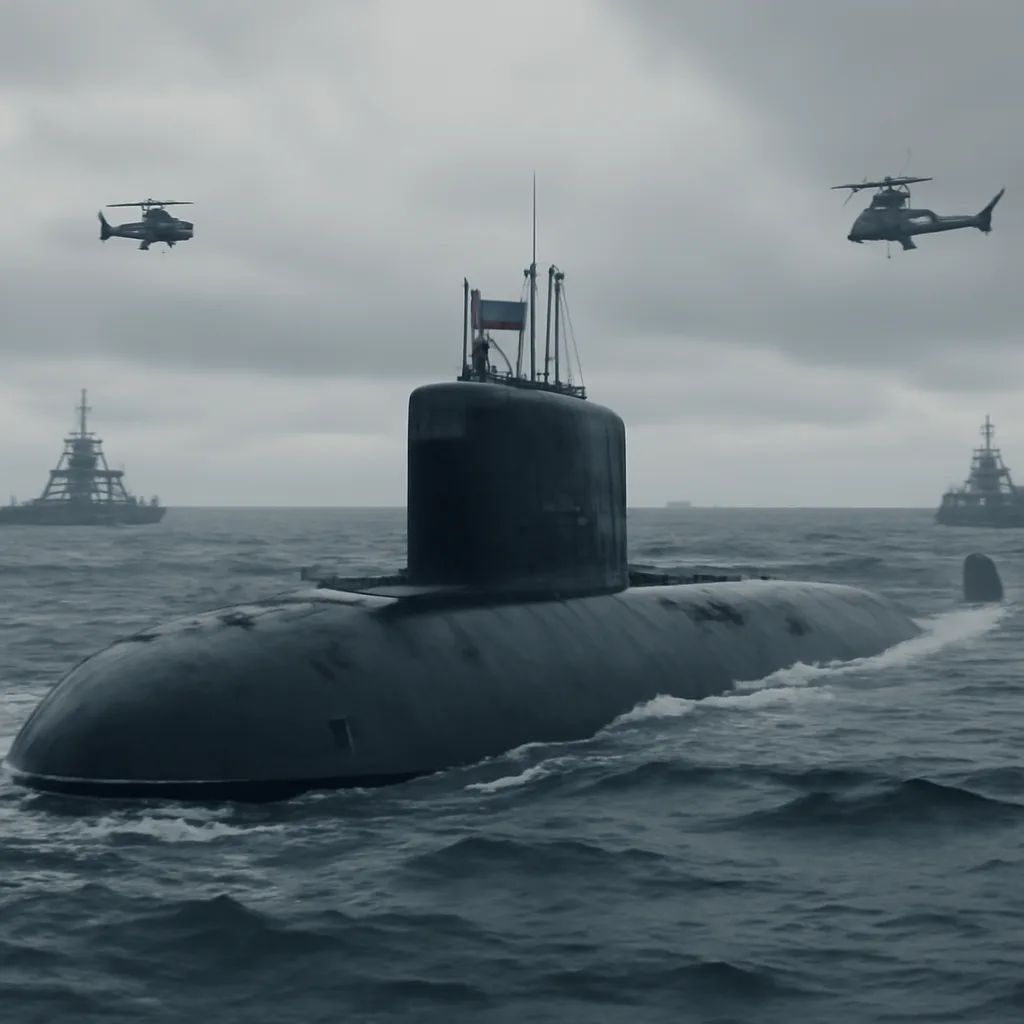
On 12 August 2000 the Russian Oscar II–class submarine Kursk suffered catastrophic explosions during a Northern Fleet exercise in the Barents Sea and sank to the seabed; all 118 crew members aboard died. Investigations cited an internal torpedo explosion as the likely trigger amid debates over rescue timing and response.
Sequence and immediate aftermath
At about 11:28 a.m. local time, Norwegian seismic stations detected a small explosion, followed two minutes later by a much larger blast. Russian navy sources initially reported that Kursk had suffered an explosion but at first denied that the vessel had sunk. It became clear, however, that the submarine had come to rest on the seafloor and that efforts to raise it or rescue survivors were urgently required. A number of Russian surface ships, submarines and helicopters responded, but the scale and complexity of the disaster, combined with procedural delays and damaged hatches, hampered early rescue work.
Rescue attempts and international involvement
Rescue efforts were complicated by political and logistical factors. Russian authorities initially declined international offers of assistance, including from the British submarine rescue ship and Norwegian and British divers, citing sovereignty and security concerns. After several days and growing public scrutiny, Russia accepted foreign help. British and Norwegian teams later assisted in opening the main escape hatch and in recovery operations, but by the time they gained access it was clear that no survivors remained. The first bodies were recovered in late August when the forward compartments were accessed; a major salvage operation to raise the hull was completed in October 2001.
Cause and investigations
Investigations by Russian and international experts looked at several possible causes. The consensus among many investigators is that an internal explosion—likely the detonation of a Type 65-76A torpedo or its high-test peroxide (HTP) propellant—triggered the initial blast, which then caused secondary explosions and catastrophic structural damage. Russian reports and independent analyses have noted design vulnerabilities in earlier torpedo types that used HTP, which can be unstable if it leaks or contacts organic materials. Some Russian officials initially suggested a collision with a foreign submarine or surface ship, but no evidence proved that scenario, and international naval records and acoustic monitoring did not corroborate a collision during the exercise.
Political and institutional fallout
The disaster exposed shortcomings in the Russian navy’s emergency preparedness, command-and-control procedures and communications. The delay in accepting international help, the initial lack of clear information, and the poor condition of some rescue equipment prompted domestic and international criticism. The Kremlin and the navy faced intense scrutiny from the Russian public and media; the event strained trust between officials and citizens and triggered inquiries into naval maintenance, safety protocols and the condition of Cold War–era hardware.
Salvage and legacy
In a complex and costly operation in 2001, the raised bow and forward sections of Kursk were lifted to allow recovery of the remaining bodies and to retrieve classified material. The damaged portions were ultimately cut away and taken to shore. The incident led to renewed emphasis on submarine safety worldwide, changes in some Russian naval practices, and ongoing debates about transparency and accountability in military accidents.
Uncertainties and disputed points
While there is broad agreement that an internal torpedo explosion was the most plausible immediate cause, some details remain disputed or uncertain—such as the precise chain of failures inside the torpedo room, the timing of survivors’ deaths, and whether specific decisions in the hours after the accident might have altered the outcome. Official Russian reports and independent analyses differ in emphasis and in certain technical conclusions, and some witnesses and commentators raised questions that continue to be discussed by researchers and journalists.
Kursk remains a potent symbol in Russia of the risks inherent in undersea operations, the human cost of naval accidents, and the political consequences of handling crises in opaque ways.