
← Back
08/12/1948 • 4 views

Berlin Airlift Tensions Peak During Cold War Standoff
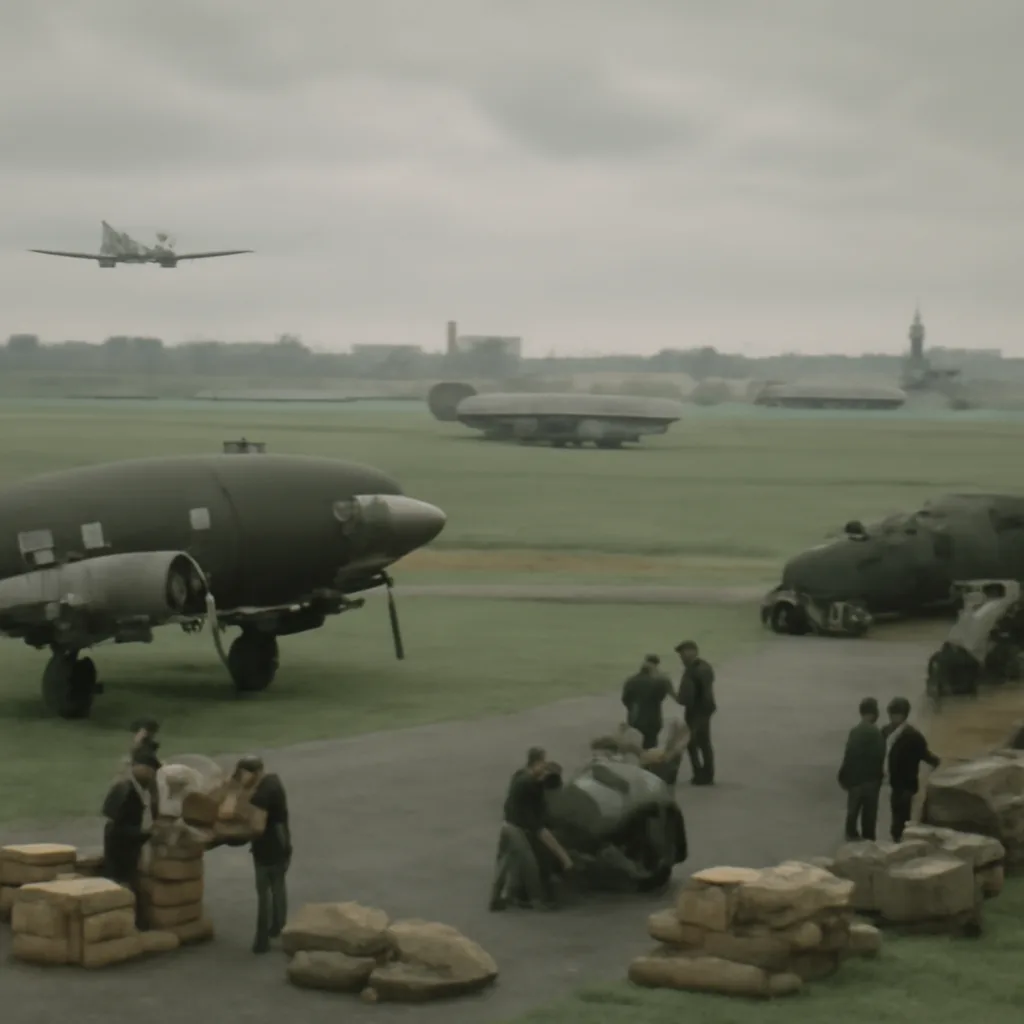
Allied transport aircraft lined up and landing at a West Berlin airfield in summer 1948, with ground crews unloading supplies and cargo vehicles waiting nearby.

On 12 August 1948 the Berlin Airlift reached a critical phase as Western and Soviet authorities intensified moves around the divided city, underscoring the stakes of the emerging Cold War and the effort to sustain West Berlin by air.


By August 1948, the Berlin Airlift had become the central confrontation of the early Cold War. After Soviet authorities blockaded land and water access to West Berlin in late June 1948, the Western Allies—principally the United States and Britain—launched a massive air supply operation to keep roughly two million West Berliners supplied. The crisis of 12 August 1948 occurred against a backdrop of mounting logistical, diplomatic and political pressure as the Soviets and Western powers tested each other’s resolve.

Operationally, the airlift had rapidly scaled up from improvised flights to a structured, round-the-clock program. Aircraft delivered food, coal, medical supplies and other essentials into the three Allied airfields in West Berlin. Maintaining an expanding tempo of flights required coordination among multiple air forces, rapid loading and unloading procedures, and careful scheduling of air corridors carved through Soviet-controlled airspace. By mid-August, the Allies were refining their techniques—shorter turnaround times on the ground at Gatow, Tempelhof and Tegel, and increased use of larger transport aircraft—while seeking ways to increase tonnage without provoking a military showdown.

Politically, tensions were high. The Soviets had intended the blockade to pressure the Western powers into conceding control over Berlin or renegotiating the currency reforms and administrative arrangements that had been implemented in the Western zones of Germany. Western leaders framed the airlift as a necessary and lawful response to keep West Berlin viable without resorting to armed confrontation. On 12 August and in the surrounding days, diplomatic exchanges remained strained: Western governments publicly affirmed their right to access Berlin and their commitment to sustain the civilian population by air, while Soviet and East German statements emphasized their enforcement of the blockade and criticized Western actions as escalation.

The human dimension was immediate. West Berliners experienced both the anxiety of being cut off from overland links and the visible signs of Allied determination—aircraft descending on the city at regular intervals, supplies unloaded and distributed, and workers laboring through the night. The operation also placed heavy demands on flight crews and ground personnel, whose hours and risks increased as sortie rates rose. Accidents and close calls occurred; the intensity of operations contributed to stress among military and civilian workers alike.

Internationally, the airlift influenced public opinion and policy. Coverage in Western and neutral press highlighted the humanitarian necessity of the mission and painted a stark picture of a besieged city sustained by aircraft. That perception bolstered political support for continued Allied efforts and hardened Western approaches to Soviet moves in Europe. At the same time, the Soviets sought to legitimize the blockade as a response to perceived Western infringements in Germany, aiming to win sympathy among countries wary of a new power balance imposed by the occupying powers.

Historians view the August 1948 phase of the airlift as part of a broader pattern in which both sides pushed to test limits without triggering direct military conflict. The airlift demonstrated Western logistical ingenuity and political resolve while exposing the limits of Soviet coercion in a situation where the besieged population could be sustained from the air. The crisis ultimately contributed to the longer-term division of Berlin and Germany, leading to institutionalized separation that lasted through the Cold War.

No single day in 1948 determined the outcome, but episodes like 12 August showed how close the standoff could feel—and how much depended on the choices of leaders, the endurance of crews and civilians, and the technical capacities of aircraft and airfields. The Berlin Airlift continued through 1949, gradually increasing its effectiveness and tonnage until the Soviets lifted the blockade in May 1949, leaving an enduring legacy in Cold War history.

Share this

Email Share on X Facebook Reddit

Did this surprise you?