
← Back
08/12/1960 • 4 views

NASA Launches Reconnaissance Satellite at Cold War Height
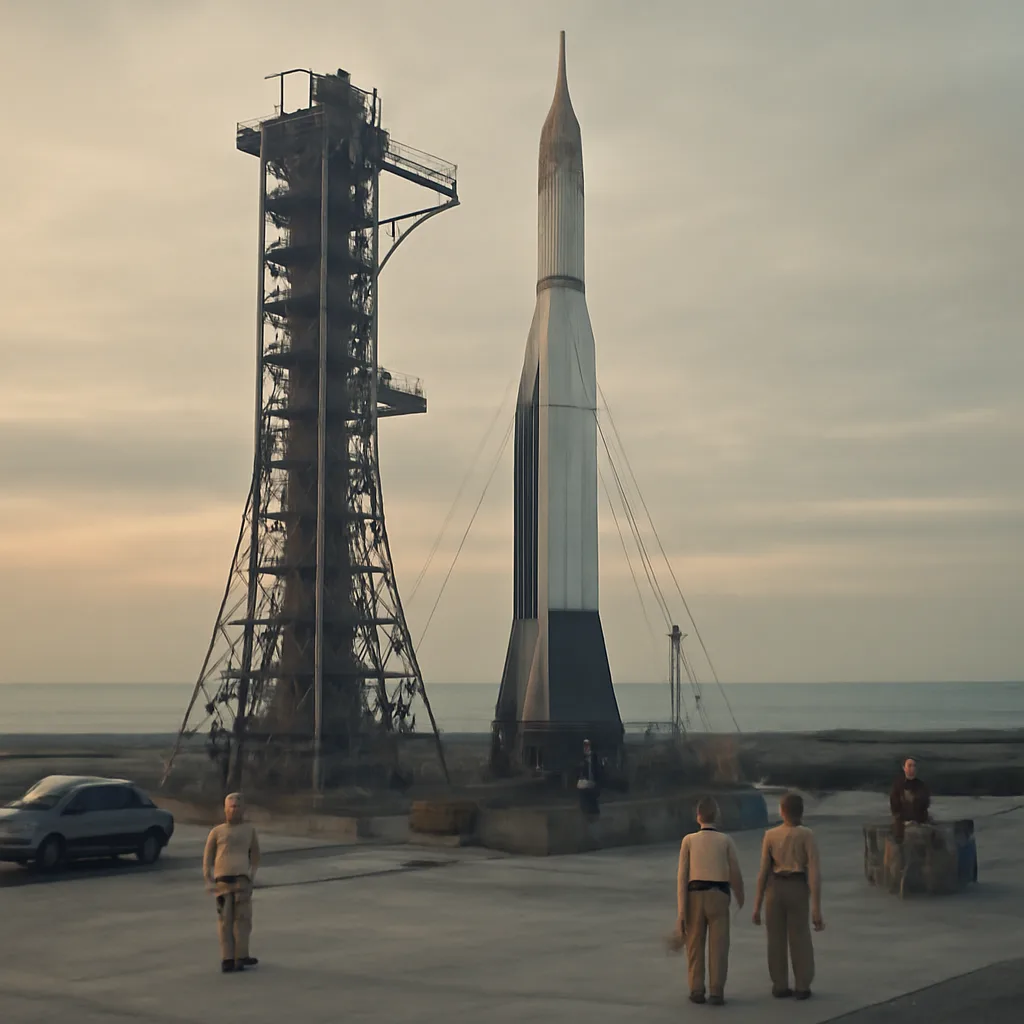
A mid-20th-century rocket standing on a launch pad at dawn, with service gantries and technicians in period coveralls; clear sky and coastal launch infrastructure visible.

On August 12, 1960, the United States launched a reconnaissance satellite amid heightened Cold War tensions, reflecting rapid advances in space-based intelligence and the strategic imperative to monitor Soviet capabilities.


On August 12, 1960, the United States placed a reconnaissance satellite into orbit during a period of intense Cold War rivalry. The mission exemplified the early use of space for intelligence gathering, a practice that had accelerated after both superpowers recognized the strategic value of orbital observation.

Background

By 1960, spaceflight had moved beyond demonstration launches and scientific probes into an operational phase with clear military and intelligence applications. The Soviet Union and the United States both pursued satellite programs to collect photographic, electronic, and telemetry intelligence. U.S. reconnaissance satellites were developed to reduce uncertainty about Soviet missile deployments, bomber bases, and other military installations at a time when timely, reliable information was politically and militarily crucial.

The Launch and Mission Context

The August 12, 1960 launch occurred against a backdrop of notable Cold War events: ongoing nuclear-arms competition, recent U-2 related tensions, and a general atmosphere of mistrust between Washington and Moscow. Reconnaissance satellites provided a means to gather imagery from above denied areas without risking pilots or aircraft. These missions typically carried film-return capsules or electronic sensors; film-return systems required precise de-orbit and recovery operations.

Technical and Operational Notes

Early U.S. reconnaissance programs were built around converted or purpose-designed launch vehicles and relatively small payloads by modern standards. Operations involved complex ground support: tracking stations, recovery teams, and image analysis centers. Photographic resolution improved rapidly during this era as optics, stabilization, and film technologies advanced. However, many program details were classified at the time, and some specifics remained restricted for years afterward.

Strategic Impact

The deployment of reconnaissance satellites shifted strategic calculations by providing more reliable information on force dispositions and developments. This reduced some of the fog of crisis decision-making, though it did not eliminate political risk. Satellite imagery influenced arms control debates, crisis management, and defense planning by offering empirical evidence of installations and activities that previously relied on human intelligence, aerial overflight, or indirect indicators.

Historical Record and Limitations

Documentation of individual early reconnaissance launches is uneven in the public record because of classification and program secrecy. While some missions and program names were later declassified, other specifics about payload capabilities or operational results remained limited or were disclosed incrementally. Historians rely on a mix of declassified government records, memoirs of participants, contemporary press reporting, and subsequent scholarship to reconstruct these events. Where individual technical or operational details remain disputed or classified, this account emphasizes the broader, well-attested significance of such launches in 1960.

Legacy

The satellite launches of 1960 helped establish space-based reconnaissance as a routine and essential tool of statecraft. Techniques and infrastructure developed during this period laid the groundwork for the sophisticated Earth-observation and intelligence architectures that followed. The era illustrates how rapid technological innovation can reshape strategic environments, creating new forms of transparency as well as new dependencies on space systems.

Share this

Email Share on X Facebook Reddit

Did this surprise you?