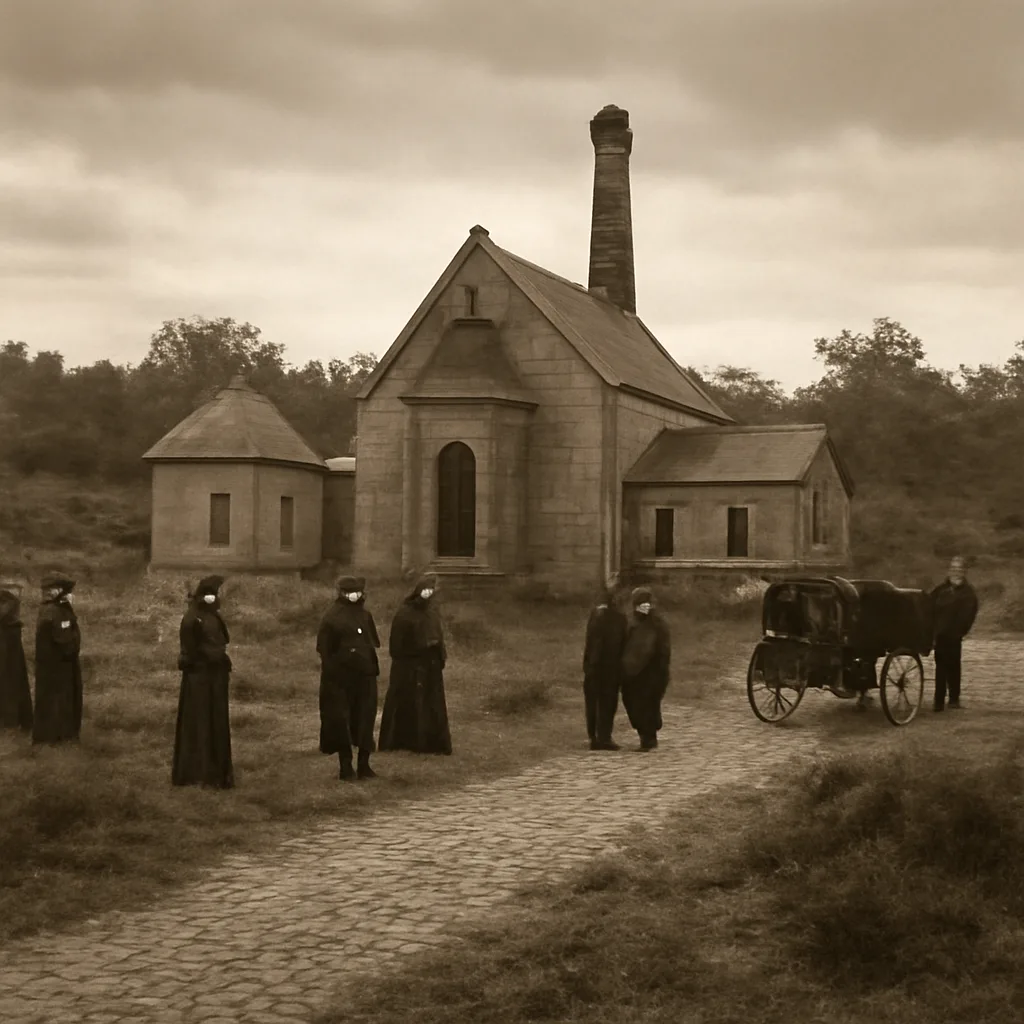
Britain's First Public Cremation Provokes Debate in 1876
On May 16, 1876, the first public cremation in Britain—performed at Woking—ignited public and legal controversy about burial practices, religion, and public health, prompting debates that shaped funeral reform in the late 19th century.
On 16 May 1876 a funeral practice that challenged Victorian norms moved into public view: the first widely publicized cremation in Britain took place at Woking in Surrey, provoking heated debate about religion, law, morality and public health. The episode reflected broader 19th‑century anxieties about urban overcrowding, sanitary reform, and changing attitudes toward death.
Background
Cremation as a deliberate alternative to burial was rare in Britain before the mid‑19th century. Growing urban populations, concerns about cemetery overcrowding and miasma theories of disease, and renewed archaeological and continental interest in cremation combined to produce advocates for a controlled, sanitary means of disposing of the dead. The Cremation Society of Great Britain, founded in 1874, campaigned publicly and sought a legal and socially acceptable model for the practice.
The event at Woking
In May 1876 a body was cremated at the Society’s new crematorium on the Woking Common site. The crematorium had been established specifically for experimental and demonstrative cremations. Contemporary newspapers covered the event closely, and immediate reactions ranged from curiosity to outrage. Supporters described the act as sanitary and modern; opponents framed it as irreligious and an affront to Christian burial customs.
Legal and religious controversy
The legality of cremation in England and Wales had not been clearly settled. Opponents argued that common law required burial and that cremation might contravene statutes or religious norms. Clergy and some church authorities denounced the practice on theological grounds, maintaining that traditional burial corresponded to Christian doctrine and resurrection beliefs. Others—including some medical and sanitary reformers—argued that cremation reduced risks from decaying bodies and offered a practical response to limited urban burial space.
Public reaction and press
Newspapers, pamphleteers and public meetings amplified the controversy. Reports emphasize alarm among conservative religious voices and fascination among reformers and scientists. The debate also intersected with broader Victorian anxieties: fears about moral decline, challenges to ecclesiastical authority, and shifting scientific understandings of disease and decomposition.
Aftermath and significance
The Woking cremation did not settle the matter legally or socially, but it made cremation a subject of national conversation. Subsequent legal clarification—most notably the 1884 case of R v. Price, in which a coroner returned a verdict of “lawful” after a cremation—helped establish that cremation was permissible when carried out with regulatory safeguards. Over the following decades cremation gradually gained acceptance in Britain, driven by public health arguments, the establishment of purpose‑built crematoria, and changing funeral practices.
Historians view the 1876 controversy as a turning point in modern British attitudes toward death and disposal of the dead. It illustrates how technological and sanitary innovations collided with religious tradition and law, producing contested public debates that shaped policy and social practice in the late 19th century.
Limitations and sources
Details about individual participants and some contemporary claims vary among newspaper reports and pamphlets of the period. This summary draws on contemporary press coverage and secondary historical treatments of Victorian funerary reform; it does not invent primary documentary specifics that are disputed or unresolved.