
← Back
01/15/2013 • 6 views

Pentagon Confirms Existence of Area 51
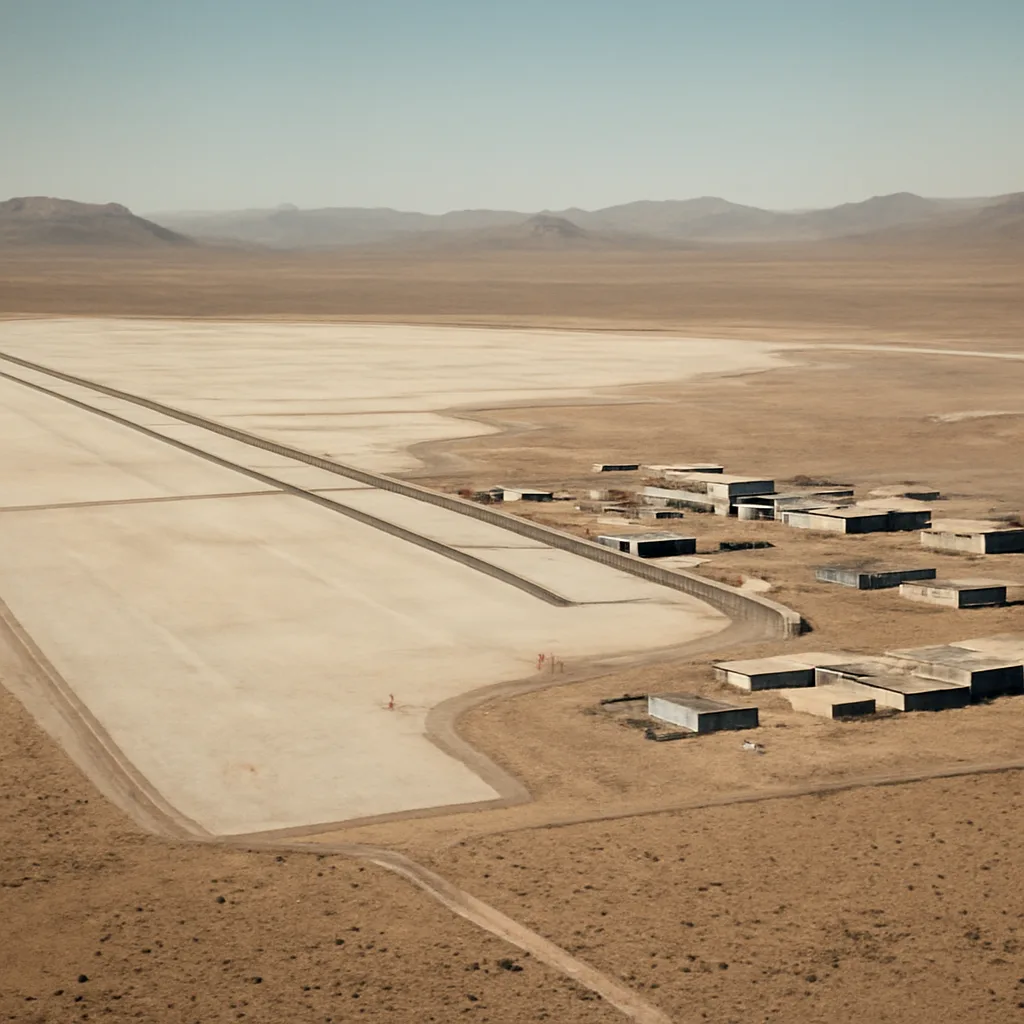
Aerial view of Groom Lake dry lake bed and surrounding desert where the Area 51 facility is located, showing runways and fenced perimeter from a distance.

On January 15, 2013, the U.S. Department of Defense formally acknowledged the existence of the Nevada Test and Training Range facility commonly known as Area 51, ending decades of official silence about the classified installation.


On January 15, 2013, the U.S. Department of Defense released documents that publicly acknowledged the existence of a classified facility in southern Nevada long referred to in popular culture and conspiracy lore as "Area 51." The acknowledgement appeared as part of a broader Freedom of Information Act (FOIA) response and accompanying historical documents that discussed the U-2 and other reconnaissance aircraft programs based at the site.

Background and secrecy
Area 51 had been the subject of rumors, speculation, and unofficial references for decades. The base is located within the Nevada Test and Training Range, near Groom Lake, and was used during the Cold War for testing and development of high-altitude reconnaissance aircraft such as the Lockheed U-2 and later the SR-71 and other experimental aircraft. For national security reasons, the U.S. government maintained a high level of secrecy about the facility, routinely declining to confirm its location or purpose in public statements. This secrecy helped fuel public fascination and a wide range of unverified claims about extraterrestrial activity and other extraordinary projects.

The 2013 acknowledgement
The 2013 public acknowledgement did not disclose operational details, technologies, or current missions. Instead, the documents—released in response to a FOIA lawsuit filed by journalist Jeffrey T. Richelson against the CIA and Department of Defense—included a history of the U-2 program and maps and descriptions that identified the Groom Lake facility as a testing and training site. The documents clarified that the facility existed as part of official U.S. defense infrastructure and provided historical context about aircraft development and testing activities carried out there.

What the acknowledgement did and did not resolve
The Pentagon’s acknowledgement resolved the long-standing official denial that had been used in public diplomacy and media avoidance but did not validate broader speculative claims that had proliferated about the site. The released materials focused on historical program records rather than contemporary operations; they did not confirm reports about nonconventional technologies or alleged extraterrestrial artifacts. Nor did they provide detailed inventories of aircraft, personnel, budgets, or security procedures.

Public and scholarly reaction
Scholars of intelligence and military history generally treated the 2013 disclosure as confirmation of what had been widely documented by researchers, journalists, and former personnel over many years: that Groom Lake was a center for classified aircraft R&D and testing. The release prompted renewed public interest and media coverage, primarily examining Cold War-era projects, test flight programs, and the legal and cultural history of secrecy in U.S. defense policy. Skeptical and conspiratorial communities continued to promote alternative narratives, but historians emphasize that public records released through FOIA requests and memoirs provide the most reliable sources for understanding the site’s official role.

Legacy and ongoing secrecy
Although the 2013 acknowledgement marked a notable moment of official transparency about the facility’s existence, Area 51 remains a classified and secured military area. Many aspects of its current operations are still not publicly documented for national security reasons. For historians and researchers, the event underscores the partial nature of public records about secret programs: disclosures can confirm presence and historical purpose without revealing operational specifics.

Sources and verification
This summary is based on public records released by the U.S. Department of Defense and CIA in 2013 in response to FOIA litigation, contemporaneous reporting by reputable news organizations, and scholarship on Cold War reconnaissance programs. Where accounts differ or claims remain uncorroborated, this summary notes the limits of available public documentation rather than asserting unverified details.

Share this

Email Share on X Facebook Reddit

Did this surprise you?