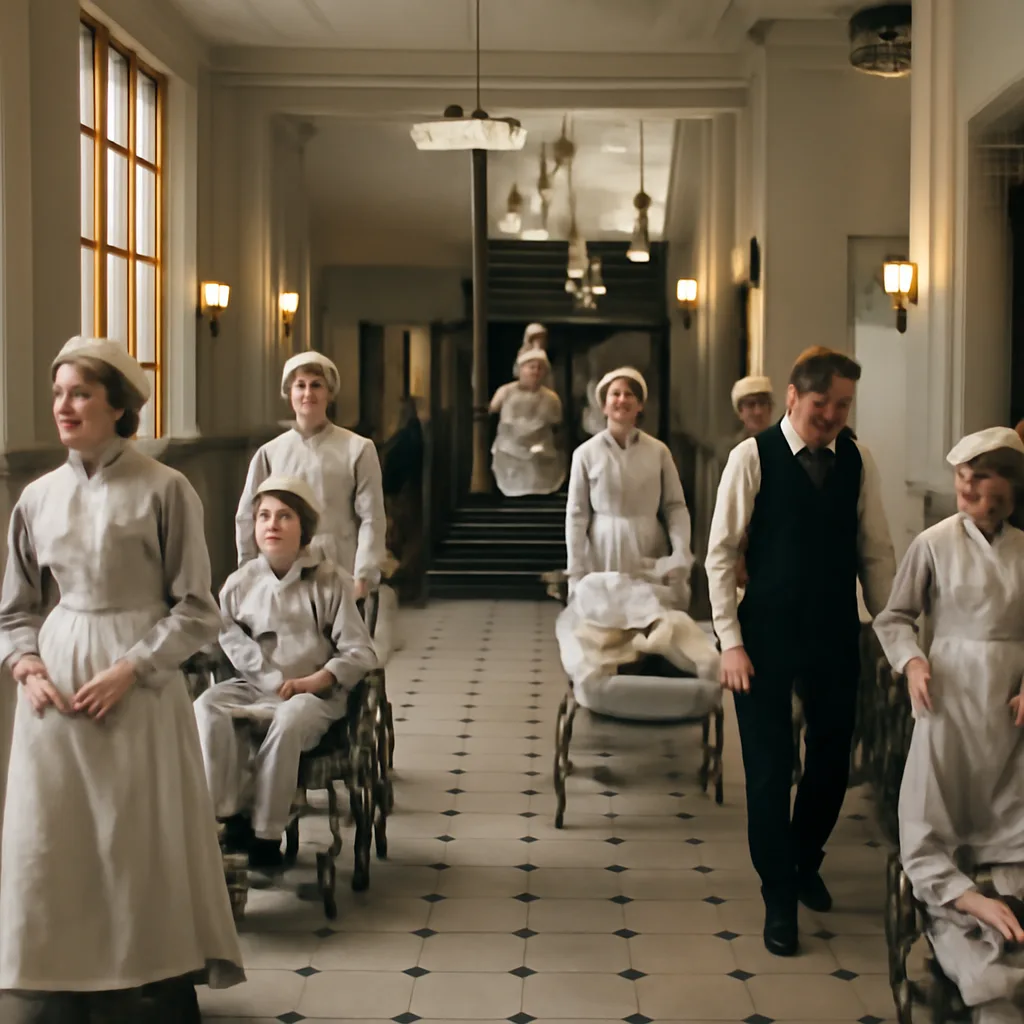
New York’s 1904 Bellevue drill: origins of the modern fire drill
On April 21, 1904, Bellevue Hospital in New York City staged what contemporaries and later historians describe as the first organized modern fire drill, introducing systematic alarm, evacuation and staff roles that informed later public safety practices.
On April 21, 1904, Bellevue Hospital in New York City conducted an organized exercise that hospital administrators and subsequent historical accounts have identified as an early example of the modern fire drill. The event followed growing public concern about urban conflagrations and institutional safety after high-profile fires around the turn of the century. In this period, hospitals, schools and factories began to formalize procedures for sounding alarms, evacuating occupants and assigning staff responsibilities.
Bellevue’s 1904 exercise emphasized rapid notification and orderly evacuation. The drill used alarm signals to alert staff and patients, tested stairway and corridor egress, and assigned specific duties to nurses, orderlies and attendants—anticipating later practices in which roles and routes are preplanned and rehearsed. Contemporary newspaper accounts and hospital records show the drill was intended as a practical measure to protect a vulnerable population and to evaluate the facility’s ability to respond without panic.
The exercise at Bellevue did not arise in isolation. The late 19th and early 20th centuries saw a wave of safety reforms: building codes, fire escapes, standardized alarm systems and municipal firefighting improvements. Institutions such as schools and factories were increasingly urged by municipal authorities, insurance interests and reformers to conduct regular evacuation drills. Bellevue’s 1904 drill is significant because it combined an institutional setting that required special attention (a large public hospital) with a systematic approach—clear alarm, designated personnel roles and an emphasis on orderly movement—that resembles what later became familiar as the “fire drill.”
Historians note, however, that the claim of a single “first” fire drill depends on how the term is defined. Prior to 1904, other organized evacuation exercises occurred in different contexts: military drills for fire response, factory evacuations, and school exercises with local variations. What sets the Bellevue event apart in many accounts is its combination of an alarm system, written procedures and public reporting that helped popularize the notion that institutions should rehearse evacuations as a routine safety measure.
The legacy of such early drills is visible in 20th-century practices: standardized alarms, posted evacuation routes, assigned wardens and scheduled rehearsals. Over subsequent decades, fire drills became codified in building regulations and institutional policies worldwide, adapted to various building types and occupant needs. Bellevue’s 1904 exercise is therefore often cited as an important milestone in the transition from ad hoc responses to routinized, institutional preparedness.
Sources for this summary include contemporary newspaper reports from New York City and institutional histories of Bellevue Hospital that document safety reforms in the early 1900s. Because records from the period can be incomplete and terminology varied, some historians treat the characterization of this single event as the “first” modern fire drill with caution, acknowledging parallel developments elsewhere. Still, the April 21, 1904 Bellevue exercise remains a useful reference point for understanding how modern evacuation practices began to take organized form in public institutions.