Hong Kong Returned to Chinese Sovereignty After 156 Years of British Rule
On 30 June 1997, the United Kingdom formally transferred sovereignty over Hong Kong to the People’s Republic of China, ending over 150 years of British colonial administration and inaugurating the Hong Kong Special Administrative Region under the ‘one country, two systems’ framework.
On 30 June 1997 at midnight local time, the British government handed sovereignty over Hong Kong to the People’s Republic of China, concluding a process set in motion by the 1984 Sino-British Joint Declaration. The transfer marked the end of more than 150 years of British colonial presence that began with the Treaty of Nanking (1842) following the First Opium War and subsequent treaties that expanded British control over Hong Kong Island, Kowloon, and the New Territories.
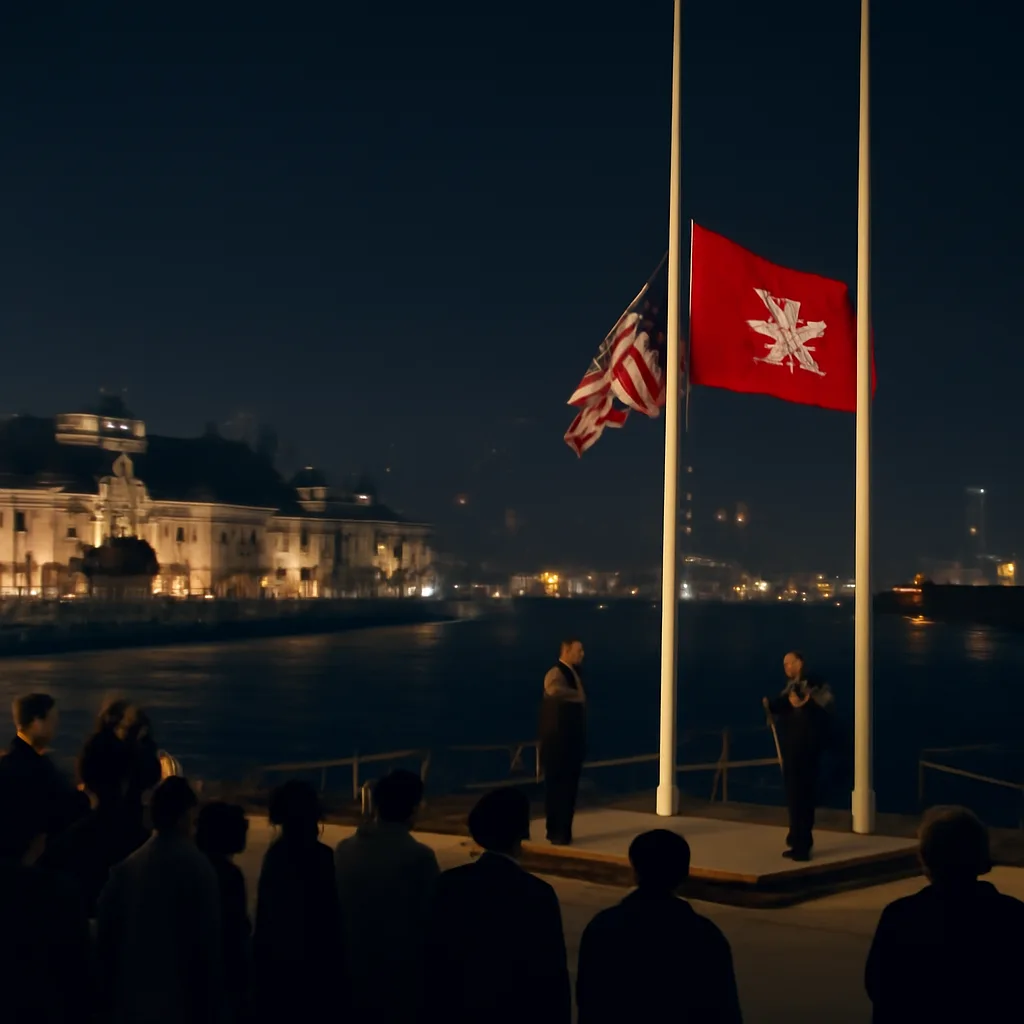
The transfer ceremony and formalities took place at Government House and across Victoria Harbour in a highly choreographed series of events. British flags were lowered and the Chinese flag was raised; the Union Jack was lowered for the last time at midnight on 30 June 1997, and the emblem and flag of the Hong Kong Special Administrative Region (HKSAR) were unveiled. Sovereignty passed to the PRC, and the Basic Law — Hong Kong’s mini-constitution drafted under Chinese authority and agreed with Britain — came into effect. The Basic Law enshrined the principle of “one country, two systems,” promising that Hong Kong would retain its capitalist economic system, legal system based on common law, and a high degree of autonomy in all matters except foreign affairs and defense for 50 years after the handover.
In the years leading up to the handover, negotiations between Britain and China focused on the status of the New Territories, leased to Britain for 99 years in 1898, and on ensuring continuity of Hong Kong’s social, legal and economic institutions. The 1984 Joint Declaration formalized the PRC’s commitment to maintain Hong Kong’s existing systems for 50 years, and the Basic Law (promulgated in 1990) provided the legal framework for the HKSAR’s institutions, including an executive led by a chief executive, a legislature with provisions for direct and indirect elections, an independent judiciary, and protections for rights and freedoms.
The handover generated mixed reactions in Hong Kong and abroad. Many residents and businesses expressed concern about future political and civil liberties under Chinese sovereignty; others welcomed the end of colonial status and anticipated new economic and cultural ties with the mainland. In the immediate aftermath, the territory retained a separate customs territory and currency, and continued to participate in many international organizations under the name “Hong Kong, China.”
Despite formal guarantees, debates over the meaning and implementation of “one country, two systems” have been central to Hong Kong’s subsequent political developments. Disputes over electoral reform, interpretations of the Basic Law, and the scope of Beijing’s authority have led to episodes of protest and legal challenge in the ensuing decades. Observers note that the Basic Law’s 50-year timeframe (until 2047) has shaped long-term planning and concerns about the durability of the arrangements set at the handover.
The 1997 transfer of sovereignty remains a defining moment in Hong Kong’s modern history: a negotiated end to colonial rule, the birth of the HKSAR under a constitutionally distinct status within China, and the start of an evolving and contested relationship between Hong Kong’s institutions, its people, and the central government in Beijing.